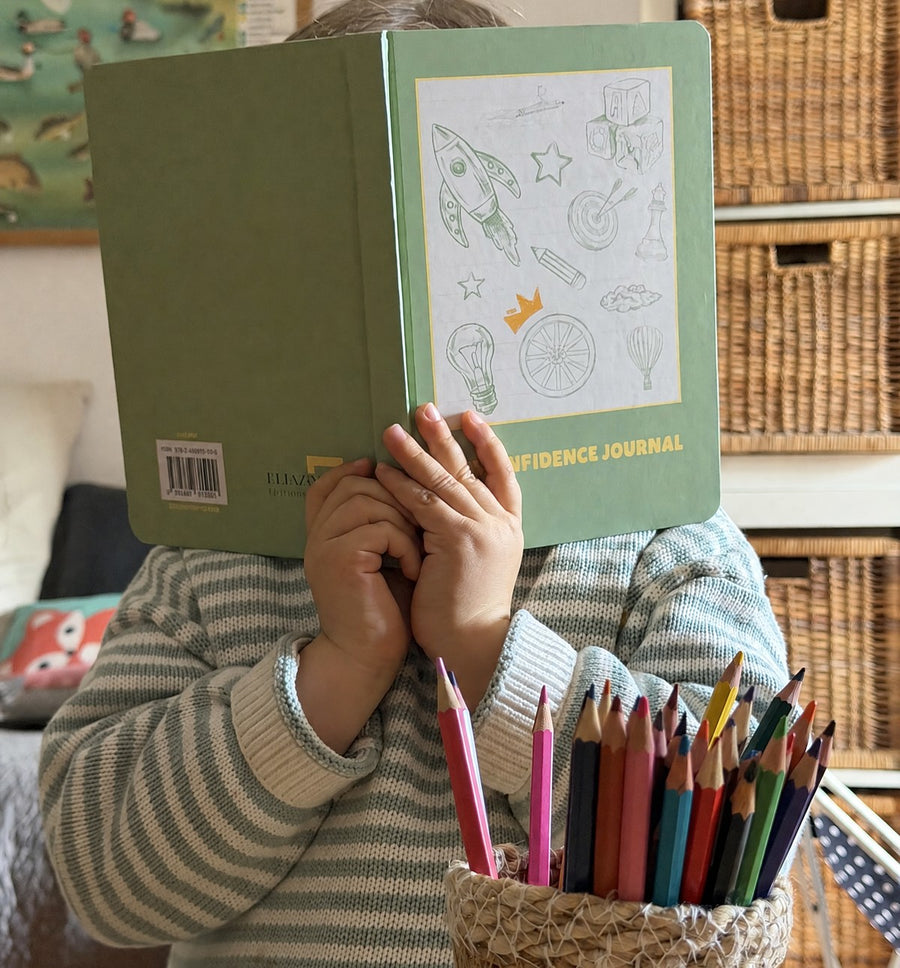
Helping a child find their purpose in life , as the English say, isn't about laying out a predetermined path for them. It's much simpler and more joyful than that: it's about guiding them in the discovery of their own talents and passions. By starting young, we give them the foundations for strong emotional well-being, greater resilience in the face of adversity, and a self-confidence that will sustain them throughout their life.
Why start talking about meaning with your child?
Discussing "purpose in life" with a child aged 6 to 12 can seem a little abstract, even intimidating. Rest assured, the idea isn't to put pressure on them by asking what they want to "do later." The real treasure lies in helping them put words to what excites them, here and now .
This quest is not a mountain to be climbed all at once. Imagine it rather as a series of small discoveries, of "clicks" that punctuate his daily life.

The goal is to transform this grand concept into a simple, continuous and caring conversation, woven into the fabric of your family life.
A gift for his future
In an ever-accelerating world, giving your child an inner anchor, a kind of personal compass, is one of the greatest gifts you can give them. Providing them with the tools to understand what truly motivates them prepares them to navigate life's challenges with greater calm and determination.
We are living longer and longer. In France, life expectancy in 2023 reached 80.0 years for men and 85.8 years for women . This increased longevity raises a crucial question: how can we ensure that these extra years are lived with a true sense of fulfillment? Introducing this reflection on meaning in childhood helps children build a richer, more fulfilling life. If these demographic trends interest you, you can consult the 2023 demographic report for more information.
The tangible benefits for your child
Starting this exploration very early brings very real advantages to its development:
-
Better emotional balance: A child who knows what matters to them is often happier and less prone to anxiety.
-
Greater resilience: Having a personal "why" helps him bounce back better after a failure or disappointment. He will see them less as dramas and more as opportunities to learn.
-
Natural self-confidence: Identifying one's strengths and what makes one unique fosters a positive self-image, which does not depend on the opinions of others.
The goal is not to find a definitive answer, but rather to instill in him the habit of asking himself the right questions. It's an internal dialogue that will grow and evolve with him.
For example, an activity as simple as keeping a journal can already lay the groundwork. By encouraging your child to write down their little joys, their dreams, or what they are proud of, you are simply teaching them to pay attention to what gives depth and meaning to their days.
Learn to identify your child's natural talents
To help your child find their path, your first mission is simple, but crucial: put on your detective hat and go on a treasure hunt for the secrets of their passions. The idea isn't just to note that they like LEGO, but to dig a little deeper. What do they truly enjoy about it? The satisfaction of following a plan to the letter? Or, on the contrary, the freedom to invent fantastic worlds from simple bricks?
The secret lies in observing carefully. It's about spotting the little sparks that betray their deepest motivations. And often, these clues are hidden in free play, far from structured activities.

The important thing is to create a space where he feels completely free to explore, without fear of being judged. Whether he spends an hour drawing highly detailed treasure maps, concocting improbable potions in the kitchen, or asking you a thousand questions about the stars, each burst of curiosity is a window into his personal world.
Becoming an expert in one's hidden passions
Your role is not to show him the way, but simply to notice what attracts him. The themes that constantly recur in his games, his drawings, or even his questions are golden clues.
A child who spends their time arranging their figurines isn't just tidying up; they may already be showing a talent for strategy or storytelling. A child who loves to play in the kitchen is exploring chemistry and creativity in their own way.
To sharpen your detective skills, pay particular attention to these signs:
-
Activities that captivate him to the point of making him forget about time. That's often where a true passion lies, one that comes from the heart.
-
The questions he asks endlessly. His curiosity fuels his interests. A simple "why is the sky blue?" can be the start of a great scientific adventure.
-
His reaction to difficulties. Does he persevere when his tower of cubes collapses? His tenacity speaks volumes about what truly matters to him.
The idea isn't to label them or draw up a career plan as early as elementary school. The goal is much simpler: to show them that you truly see them, that you value what makes them unique. This is a tremendous boost to their self-confidence.
Turning small conversations into great explorations
Everyday moments, like dinner or car rides, are perfect for gently probing the conversation. Forget closed questions like "How was school?", which only elicit a "yes" or "no." Instead, offer openings that encourage discussion.
Here are some ideas to get started:
- "If you could invent any game, what would it be like?"
- "What's the most interesting thing you learned today, even if it sounds a little strange?"
- "Imagine you have a magic wand. What problem in the world would you solve first?"
With these kinds of questions, a simple conversation transforms into a genuine exploration of his ideas. You might discover that he feels a sense of justice, an inventive streak, or that he loves the idea of helping others. These recurring themes are the first seeds of his purpose in life , this personal direction that will give him strength and motivation for the future.
Transform your values into an inner compass for your child
Your family values—empathy, curiosity, or perseverance—are more than just pretty words on a piece of paper. They are, in fact, the most powerful legacy you can pass on. Think of them as an inner compass that will guide your child long after you've stopped holding their hand to cross the street.
The idea isn't to launch into grand philosophical discourses, but rather to embody these principles in everyday life. A child learns much more by observing than by listening. It's by seeing you do it that they'll understand how to transform these beautiful ideas into concrete actions.
Defining your family's core values
Before you can share anything, it's essential to clarify things for yourself. Take a moment, alone or with your partner, to ask yourself what truly matters to you. What principles guide you?
There's no need to create an endless list. Ideally, choose three to five core values , those that seem essential to you for building a meaningful life.
If you're looking for inspiration, here are a few ideas:
-
Generosity: Is it important for your child to think of others, to learn to share?
-
Creativity: Do you want to encourage original thinking and self-expression without judgment?
-
Courage: Do you value trying, even when you're afraid of failing?
-
Respect for nature: Is connecting with our planet a priority in your home?
Once you have identified your key values, the next step, the most fun part, is to make them come alive and be visible at home.
To embody values through rituals and activities
This is where the magic happens. By linking your values to concrete and regular actions, you bring them down from their pedestal. They are no longer abstract concepts, but everyday actions that have meaning.
For example, if empathy is central to your family, you could:
- Organize a toy sorting before Christmas to donate to a charity.
- Make it a habit, when he tells you about an argument, to ask: "And in your opinion, how did your friend feel at that moment?"
If it's curiosity you want to nurture, why not start a "Discovery Friday"? Everyone shares something surprising they learned during the week. You could also read biographies of inventors or explorers together to show them that the greatest ideas often stem from simple questions.
Every ritual, even the smallest, sends a powerful message: "This is what really matters to us." This is how somewhat vague principles become a practical guide to help her make her own decisions.
The table below gives you some concrete ideas for translating your values into actions, whether through everyday micro-habits or larger family activities.
Ideas for family activities to cultivate key values
This chart is an excellent starting point for finding inspiration and easily integrating these learnings into your routine.
| Family Value |
Daily Activity (5-10 min) |
Weekly Activity (30-60 min) |
| Perseverance
|
Celebrate the effort put into a difficult assignment, even if the result is not perfect. |
Finishing a complex puzzle or LEGO construction as a family, without giving up. |
| Respect for nature
|
Taking care of a houseplant or sorting the waste together. |
Participate in a cleanup day at a park or beach in your area. |
| Gratitude
|
Each person shares a "little joy" from their day at dinnertime. |
Write a thank you card to someone (teacher, grandparent, friend). |
By incorporating these practices, you're not just giving moral lessons. You're building a solid framework for him. This framework will help him develop his own sense of things, his own direction, and move forward in the world with confidence and integrity.
Building self-confidence through simple and fun rituals
Self-confidence is like the fuel that allows a child to dare, explore, and believe in themselves. It's essential for them to find their path, because before following a direction, they must first feel capable of moving forward. And for that, family rituals, even the simplest ones, are invaluable tools.
They create special moments of connection and security. Your child learns to see their own worth, not through extraordinary achievements, but in their efforts, progress, and small, everyday successes. These habits make the abstract concept of "confidence" feel real and positive.
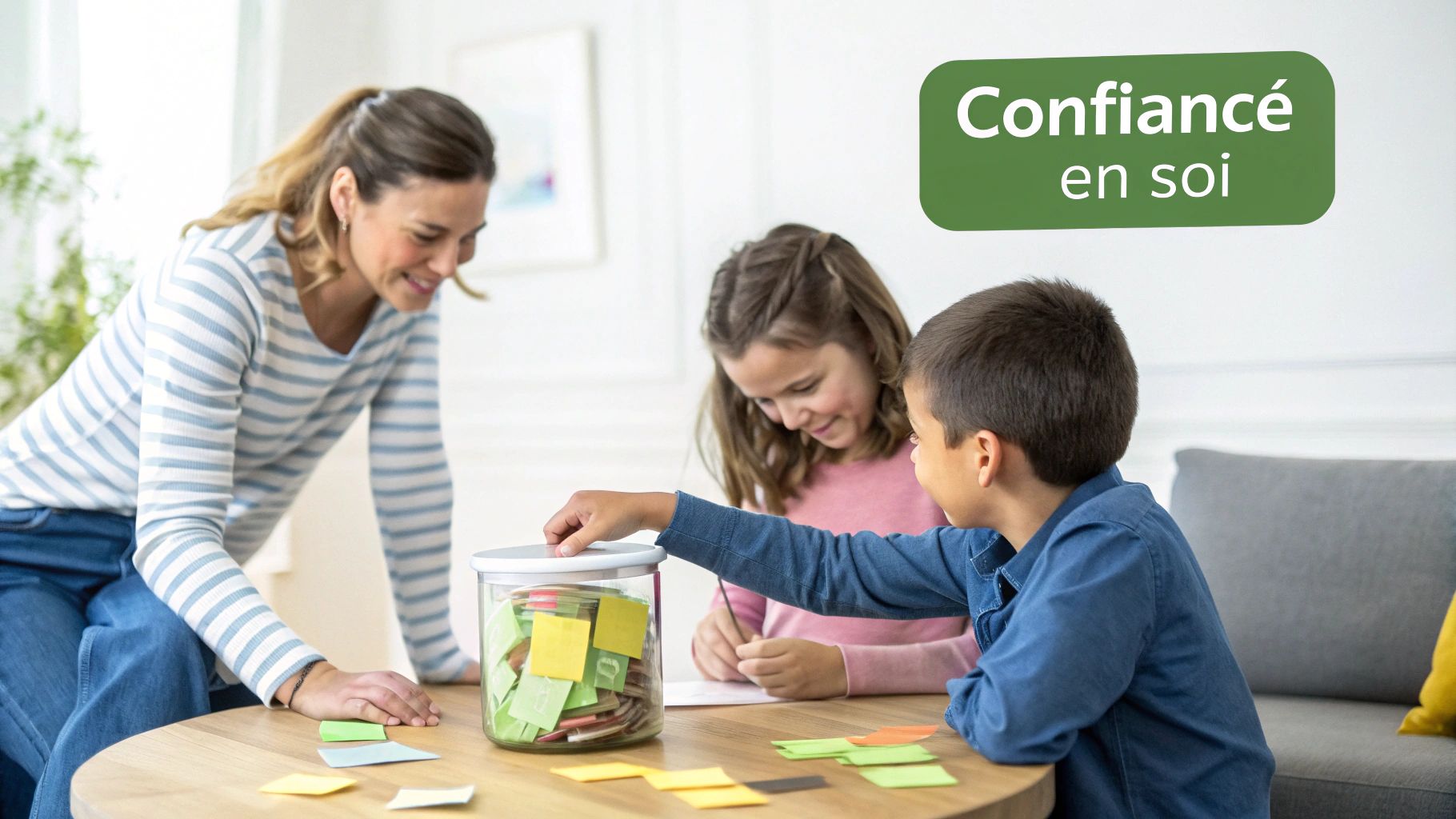
The Pride Jar: A ritual to celebrate every victory
Imagine a simple glass jar, placed somewhere everyone can see it, in the living room for example. Each week, set aside a short time for each family member to write down something they are proud of on a slip of paper. It doesn't have to be anything huge!
-
For your child, it could be: "I managed to tie my shoelaces all by myself" or "I helped a friend in the playground".
-
For you, as a parent: "I managed to stay calm this morning even though we were all running late" or "I completed an important project at work."
Once a month, or when the jar is full, gather together to read aloud all these achievements. This ritual is psychologically very powerful: it teaches your child that all successes, big and small, matter and deserve to be celebrated . It helps them develop a positive self-image and value both the effort and the result.
This simple gesture reinforces the idea that pride doesn't just come from good grades or winning competitions, but also from our ability to overcome the small challenges of everyday life. It's the foundation of genuine and solid self-esteem.
This week's mission: a game to cultivate independence
To help a child feel competent, there's nothing better than giving them small tasks suited to their age. The idea is to give them a personal challenge each week, something that pushes them to step a little outside their comfort zone.
Remember, it shouldn't be a chore, but rather a little adventure. For example, instead of saying "tidy your room," make him the "guardian of order" of his space for the week. He'll have the freedom to organize his toys as he sees fit.
Here are some mission ideas to inspire him:
-
The chef's mission: to choose the menu for a meal and help you prepare it from start to finish.
-
The explorer's mission: to learn five things about an animal he is passionate about and tell everyone at dinner.
-
The super handyman's mission: to repair a small broken object with your help.
Each completed task is concrete proof of what he is capable of. He learns to take initiative, find solutions, and, above all, sees that he can have a positive impact on those around him. This is a key step in giving him the courage, later on, to embark on bigger projects.
In the evening, tools like the My Book Story journal can also become a mini-ritual. Taking five minutes to jot down a small joy from the day or draw an emotion helps you get to know yourself better. And knowing yourself well is essential for building confidence that truly comes from within.
Developing resilience in the face of life's challenges
The world today is fast-moving and full of uncertainty. That's a fact. For our children, it's therefore essential to give them the right tools so they can face it with confidence. Having a purpose in life, even if it's not yet fully defined, acts as a true emotional shield. It provides them with a solid anchor that helps them weather the storms without losing their way.
The idea is not to burden them with our adult anxieties, but rather to give them the tools to feel like actors in their own lives, and not just spectators.
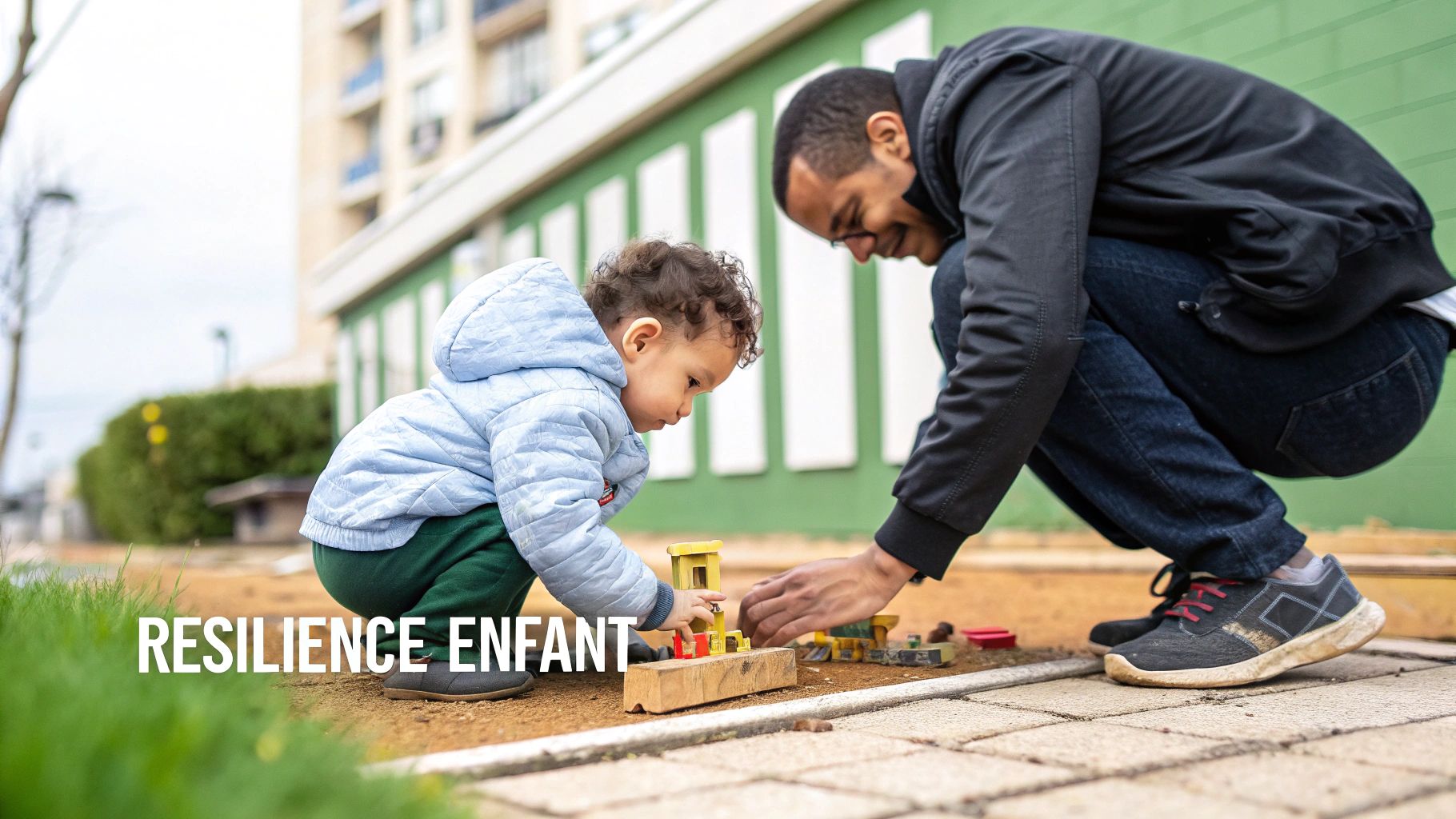
Turning obstacles into opportunities
It's all about perspective. We can help our children change their view of what they call "failure." A bad grade is no longer a catastrophe, but an opportunity to understand what went wrong. A Lego tower collapsing? It's a great lesson in physics and creativity to find a sturdier solution.
This approach teaches them a fundamental truth: their worth does not depend on external circumstances, but on their ability to act and bounce back . To help your child develop this resilience, it can be very useful to explore ways to create a recovery plan and learn to navigate difficult times.
In France, the economic climate can be a cause for concern. In 2023, the poverty rate affected 15.4% of the population, or 9.8 million people. Faced with this reality, cultivating a sense of purpose in children becomes a powerful antidote to feelings of helplessness. Providing them with creative tools, such as a personal journal to explore their strengths and desires, sows the seeds of healthy ambition. It is also a way to reduce the risk of psychological distress in the future. You can consult the key figures on the INSEE website for more details.
How to react to disappointment
When your child experiences failure or frustration, here are some concrete ways to support them without ever minimizing what they are feeling:
-
Validate the emotion first and foremost. The first step is always to acknowledge what he's feeling. A simple "I see you're really disappointed, and that's normal" can change everything.
-
Ask open-ended questions. Instead of jumping to solutions, guide their own thinking. "What do you think went wrong?" or "If you were to do it again, what would you try differently?"
-
Focus on the process. Highlight the effort he put in, regardless of the final result. "I saw how hard you worked on this drawing. I loved watching your concentration."
The goal is not to avoid difficulties, but to learn to dance in the rain. Each small obstacle overcome strengthens his conviction that he has the inner resources to face the greatest challenges.
By cultivating this growth mindset, you're not just teaching him to persevere. You're showing him that every experience, good or bad, is a building block that helps him become the unique person he is growing into.
Your questions as parents on this topic
Talking to your child about "purpose in life" can seem a little intimidating. That's perfectly normal! Rest assured, it's not about launching into deep philosophical discussions. The idea is simply to answer your most frequently asked questions with common sense.
The goal? To demystify this subject and give you the tools to approach it calmly, always keeping your child's well-being at the forefront.
At what age should we start talking about purpose in life?
There isn't really an ideal age, but the period between 6 and 12 years old is particularly favorable. At this age, children are like sponges: their curiosity is boundless and their thinking begins to take shape.
Rather than planning a formal conversation, the secret is to weave this notion of meaning into the small moments of everyday life. For example, after reading a story together, you could ask, "What do you like about this character?" or "If you had a superpower like theirs, what would you do to help others?" These seemingly insignificant questions plant the seeds of reflection on their values and what matters to them.
Should I be worried if he doesn't show any obvious passion?
Absolutely not! The absence of a consuming passion means absolutely nothing at that age. For a child, meaning often lies in much more subtle details.
Just look at what makes him happy and what captures his attention. It might be that child who loves to meticulously line up his toy cars, the one who takes infinite care of the houseplant, or the one who is always the first to comfort a friend in the playground.
Don't seek out a spectacular passion. Instead, look for small sparks of joy, curiosity, and empathy. It is these quiet qualities that, once nurtured, become the foundation of a solid and authentic life path.
These emerging talents are far more revealing than a passing interest in the latest trendy activity.
My child seems interested only in video games. What can I do?
This is a concern we hear very often. What if, instead of seeing video games as an enemy, we saw them as a window into our deepest motivations?
Try to observe what type of game he enjoys the most.
-
Building games (like Minecraft): He may have a creative soul. He likes to build, imagine worlds and find ingenious solutions to problems.
-
Strategy games: He surely enjoys anticipating, developing plans, and leading a team towards a goal. He's a natural leader!
-
Adventure games: He is undoubtedly drawn to exploration, discovery, and solving puzzles. A true adventurer!
By understanding what motivates him, you can offer him activities in the "real world" that call upon the same skills: a coding club, family board game afternoons, or why not organize a big treasure hunt with him for his birthday.
How can I talk about this subject without putting pressure on him?
The key is simple: stay focused on the game and exploration. The search for meaning should be a joyful adventure, not a knowledge test.
Avoid overly direct and somewhat anxiety-inducing questions like "What do you want to be when you grow up?". Opt instead for open-ended questions that encourage imaginative thinking: "If you could invent one thing to make the world a better place, what would it be?" or "Tell me about a time today when you felt really proud of yourself."
Of course, beyond this search for meaning, the safety of our children remains the priority. And to ensure the safety of your young children during car journeys , a suitable car seat is essential.
This gentle approach values his ideas without ever giving him the impression that he has to reach a specific goal. You simply show him that the most important thing is the pleasure of self-discovery, not the destination.
The My Book Story journal was designed to transform these conversations into a fun and creative habit. Through its guided activities, it helps your child explore their emotions, celebrate their successes, and build their self-confidence, day after day. Discover the My Book Story journal and give them a wonderful companion on their journey of self-discovery.