Blank Page Notebooks: A treasure to cultivate your child's creativity and confidence
Share
More than just a notebook, a blank-paged journal is a true space of freedom for a child aged 6 to 12. It's an intimate refuge where they can freely express their emotions and build their confidence, far from any judgment. A simple yet incredibly powerful tool to help them grow.
Exploring one's inner world, without limits
For a child between 6 and 12 years old, this notebook is a golden opportunity. Far from the lines and instructions of school or the overstimulation of screens, the blank pages are an infinite playground for the imagination. It's a secret garden, a silent confidant that welcomes everything, without ever judging.
This freedom is crucial for emotional balance. Your child can draw a fit of anger, express a secret joy, or scribble down a fear they can't put into words. This simple act helps them to understand and process their feelings, an essential step in learning to manage their emotions.
Giving weight to your ideas to build your confidence
When he puts his thoughts down on paper, whether it's the outline of a crazy story or the plan for his dream cabin, he makes his ideas concrete. Every line, every word is an affirmation: "What you think and feel has value." It's a very tangible way of validating his inner world, which directly feeds his self-esteem.
As a parent, encouraging this simple practice means giving your child a powerful tool to develop their independent thinking and confidence in their own ideas. These seemingly simple objects are part of a significant market, as evidenced by the details of the stationery market in France . This underscores how paper remains an essential medium for expression, even in the digital age.
Giving a child a notebook is like handing them the keys to a kingdom of which they are the sole ruler. It's a gift that cultivates independence, creativity, and balance, going far beyond the simple pleasure of drawing.
How to choose the perfect notebook with him
Finding the right blank notebook isn't just a quick trip to the stationery store. It's the start of an adventure. Take this moment to make it a shared experience with your child, an opportunity to talk and show that their wishes matter.
The best way to start? Simply ask him questions. What does he want to do? Draw imaginary worlds, invent stories of knights, or perhaps glue the leaves and flowers collected during your walks? His answers are the key to finding the ideal travel companion.
The details that make all the difference
Once you have a clearer idea of the use, you can look at the more technical aspects, still together.
The ideal size: A small A5 format? Perfect for slipping into a backpack and capturing an idea or sketch on the spot, in the park or in the car. A large A4 format, on the other hand, offers ample space for more ambitious artwork or complex collages.
Paper thickness: To prevent markers from bleeding through the page (a well-known source of frustration!), slightly thicker paper is essential. Aim for a weight of at least 90 g/m² . This is a good compromise to withstand the enthusiasm of budding artists.
The cover, his favorite part: It's undoubtedly the most important thing for him! Let him choose the cover that speaks to him. Colorful, simple, with a fun design or a pleasant texture... this personal choice makes the notebook a true treasure even before he's drawn anything in it.
In France, our attachment to paper is cultural. The national industry is a major player in Europe, as highlighted by INSEE's detailed report on the French paper industry . Choosing a notebook carefully is a way of perpetuating this beautiful tradition of writing and drawing.
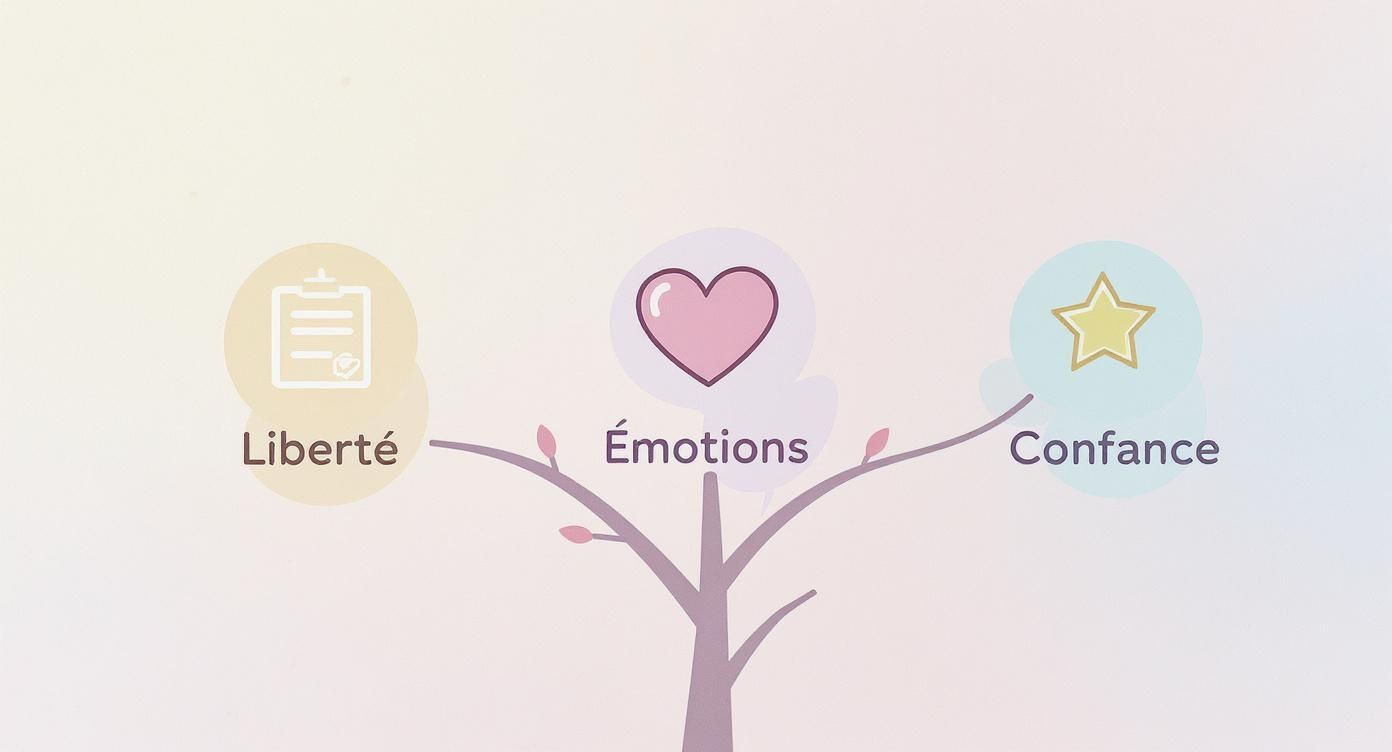
This infographic perfectly summarizes how a simple object like a notebook can become a powerful tool for developing freedom of expression, emotional management, and self-confidence.
It is clear that each feature of the notebook contributes to an essential benefit for its development.
To help you see things more clearly, here is a short guide to linking your child's favorite activity with the notebook that would suit them best.
Which notebook for which creative use?
Type of activity
Recommended notebook format
Paper quality (weight)
Suggested cover type
Pencil/felt-tip pen drawing
A4 or A5
90g/m² minimum
Rigid for good support
Watercolor/Painting
A5
180g/m² or more
Rigid and waterproof
Diary/Writing
A5
80-90g/m²
Soft, pleasant to the touch
Collage/Scrapbooking
A4
120g/m² minimum
Spiral-wound for thickness
This painting is just a suggestion; the important thing is to adapt to the wishes of the budding artist.
By making this choice a small ritual for two, you show her in a concrete way that her opinion is valuable and that her creativity deserves the best.
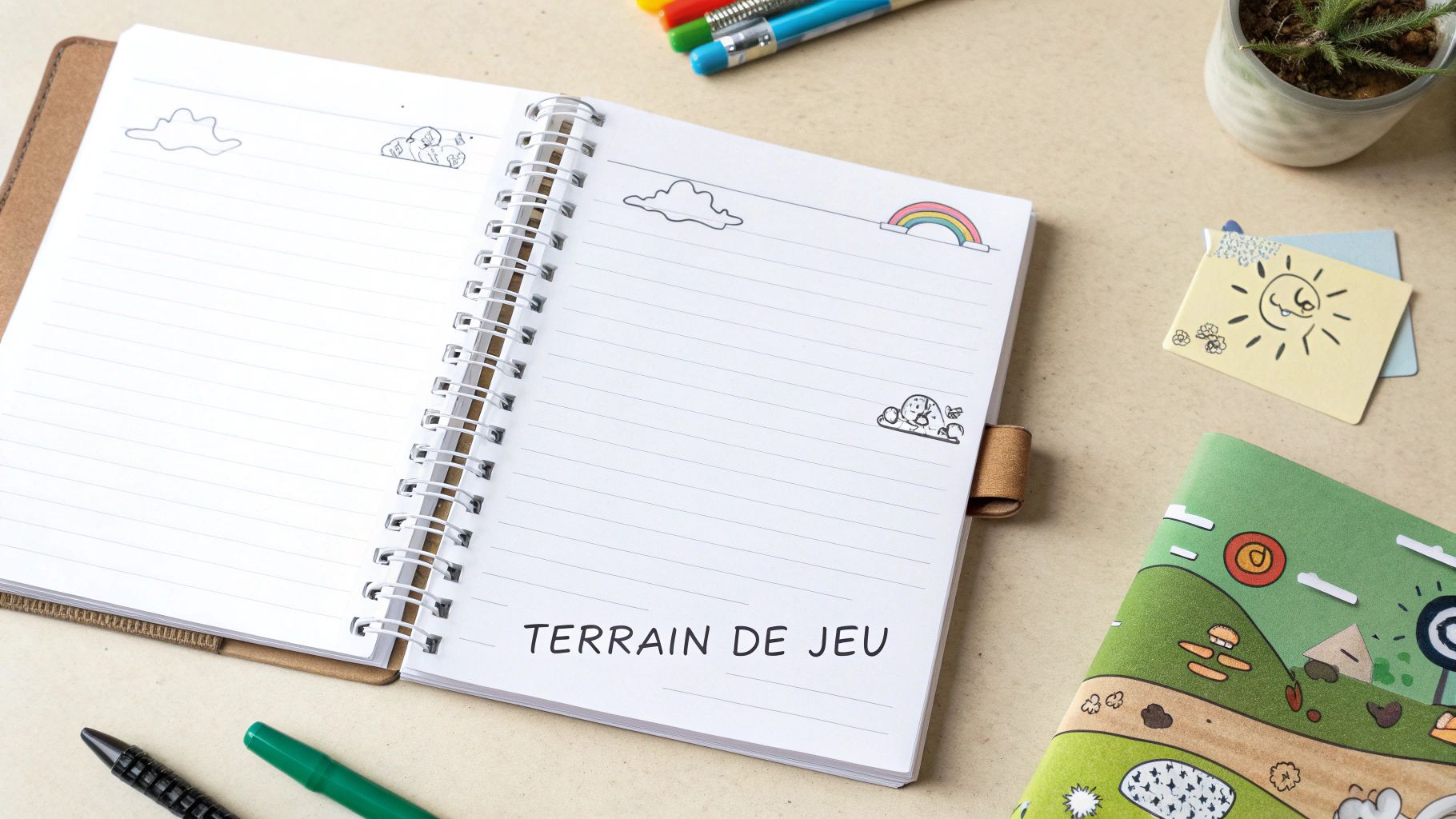
Transforming the blank page into a playground
The infamous "writer's block" isn't just for great authors! For a child, a brand new page can be a little intimidating. It's a bit like a silent test. Our role, as parents, is to defuse this slight pressure and make each page an invitation to have fun, without any expectation of perfection.
The idea is to show him that this blank notebook is first and foremost a space for freedom. The only rule? Try things out, experiment, have fun. Forget about making something "pretty"; the goal is to let loose and express yourself.
Some ideas to break the ice
To help your child get started, nothing beats simple, fun activities with no pressure. Here are some concrete suggestions for parents:
The illustrated gratitude journal: Every evening, suggest that she illustrate three small joys from her day. It could be the delicious taste of chocolate cake, a big hug, or a fit of laughter with a friend. It's a simple routine that helps her cultivate a positive outlook on life.
Imagination triggers: Challenge them creatively with open-ended questions. For example: "If you discovered a new planet, what would it look like?" or "Imagine your toys could talk, what would they say about their day?" These simple questions are perfect for stimulating their imagination without being pushy.
Creative collage: Collage is a great entry point, especially for children who aren't always comfortable with drawing. Provide them with old magazines, stickers, colorful packaging, and why not natural treasures like tree leaves or dried flowers.
Scribble monsters: The principle is very simple: you make a random scribble on the page, and your child transforms it into a monster by adding eyes, arms, horns... It's collaborative, funny, and it completely demystifies the act of drawing.
The key is to make them feel that their notebook is a refuge. A safe place where all their ideas, even the wildest ones, have a place. Here, there are no right or wrong answers, just the joy of creating.
With these simple and fun techniques, the notebook quickly becomes a playmate. It's no longer about "filling" a page, but about exploring it. Your child then learns that creativity is not a performance, but a joyful adventure within oneself.
Make it a soothing family ritual
To ensure the notebook becomes a true companion for your child, the best approach is to gently integrate it into their daily routine. The idea isn't to add a new task, but rather to create a special moment, a welcome pause in the whirlwind of the day.
No need to set aside an hour. Often, 10 or 15 minutes is enough to relax and unwind. The important thing is consistency. This little ritual can be done after homework to de-stress, or just before bedtime stories to wind down. It's up to you to find the time that works best for your family.
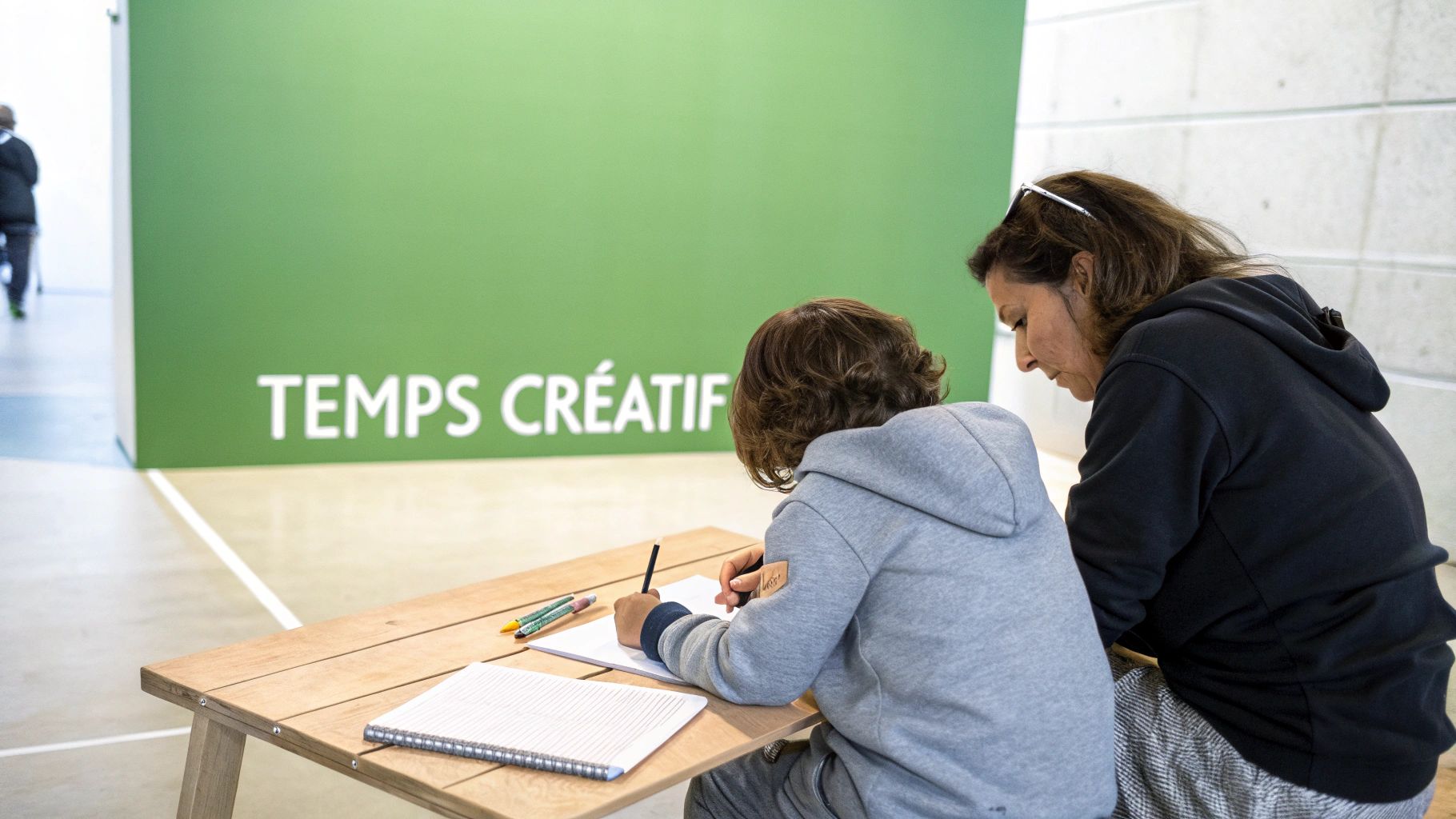
Share a moment of creativity
Find a quiet corner with soft lighting and perhaps some gentle music. The atmosphere is very important! And why not take a notebook for yourself too? Seeing you drawing or doodling next to him shows him that it's a pleasant, shared activity, without you even having to say it.
Your role is not to direct, but to support. The goal is to create a bubble of trust where he will feel completely free.
Show genuine interest in what he's doing. Ask simple, open-ended questions: "I see you've used a lot of yellow on your page. What does that make you think of?"
Encourage the process, not just the result. Instead of a "That's pretty," which can sometimes put pressure on people, try something like: "Wow, I love how you filled the whole space!" or "You took the time to do that little detail, it's really nice."
You too can participate. Simply creating alongside them strengthens your connection and makes the moment even more special.
Over time, this notebook can become his secret garden, his personal diary. If so, it's essential to respect this privacy. Never try to read what he writes without his permission. By showing him that you respect his space, you build a solid foundation of trust that will encourage him to express himself even more freely.
What begins as a simple activity can quickly transform into a precious ritual. It's a moment of calm and sharing that strengthens family bonds while helping your child grow, more confident and independent. A true gift, for them as well as for you.
The notebook, a bridge to open dialogue
A blank notebook can become much more than just a place to scribble. It's a wonderful communication tool, especially when your child doesn't yet have the words to express what's going on inside.
Sometimes, a brightly colored monster drawing or a page covered in gray clouds speaks volumes more than a conversation. If you see your child using their notebook to express sadness, anger, or frustration, consider it an outstretched hand, a subtle invitation to talk.
The important thing is how you approach the subject. Instead of directly asking, "Why are you angry?", which might put him off, try a gentler approach. A phrase like, "This drawing seems to tell an important story; would you like to talk about it?" opens the door to discussion without any pressure.
Create a space for compassionate listening
The notebook serves as an intermediary here. It becomes a tangible tool that helps your child put images or words to emotions that, at their age, can be confusing or even overwhelming. It's their way of showing you their inner world without having to express everything all at once.
By welcoming his creations with curiosity and without judgment, you send him a powerful message: all his feelings are valid and deserve to be heard . You show him that he can trust you, no matter what's on his mind. This approach deeply strengthens your bond and his sense of security.
Your role isn't to solve everything immediately, but simply to offer a listening ear. By validating what he expresses in his journal, you're telling him: "I'm here for you, I'm listening, and what you feel really matters."
This approach is also part of a broader movement towards responsible consumption. In France, environmental awareness is high in the paper sector: as the SNE's 2023 paper survey shows, the vast majority of paper used is now certified or recycled. Choosing an eco-designed notebook is also a way to pass on this important value to your child.
Your frequently asked questions about notebooks
You like the idea of giving your child a notebook, but you probably have some practical questions. That's perfectly natural! You want to do the right thing and support them as best you can. Here are some answers to guide you.
This is a wonderful opportunity to strengthen your bond while stimulating their imagination.
At what age can one start?
A toddler can certainly start doodling in a notebook as early as 3 or 4 years old . But the period from 6 to 12 years old is truly a golden age for it. This is the time when they begin to juggle drawings and words, to shape their first real thoughts. Their notebook then becomes a key tool for structuring their inner world.
The most important thing? Adapt to their pace. The goal isn't to create a work of art, but to have fun and express yourself freely, without any pressure.
My child is stuck in front of a blank page, how can I help them?
That dreaded blank page... it can be intimidating, even for adults! Your role is to make it less daunting. Take a pencil and get started: make a simple dot, a small wave in the middle of the page. Show them that it's okay to "begin," even if it's clumsy.
Here are a few simple ideas to break the ice:
Fingerprints with a touch of paint. It's fun and creative!
A shower of stickers or decals, just for the pleasure of colors and shapes.
A drawing done collaboratively : you start a shape, and he finishes it. Or vice versa!
The idea is to turn this blank page into a playground where anything goes.
Do I have the right to look at what he writes or draws?
It's primarily a question of trust. This notebook is his secret garden. A place where he must feel completely free and safe to express himself.
The golden rule is simple: this journal is his territory. Encourage him to show you what makes him proud, what he wants to share with you. But never read it without his permission . Respecting his privacy is giving him an immense gift: the confidence he needs to thrive.
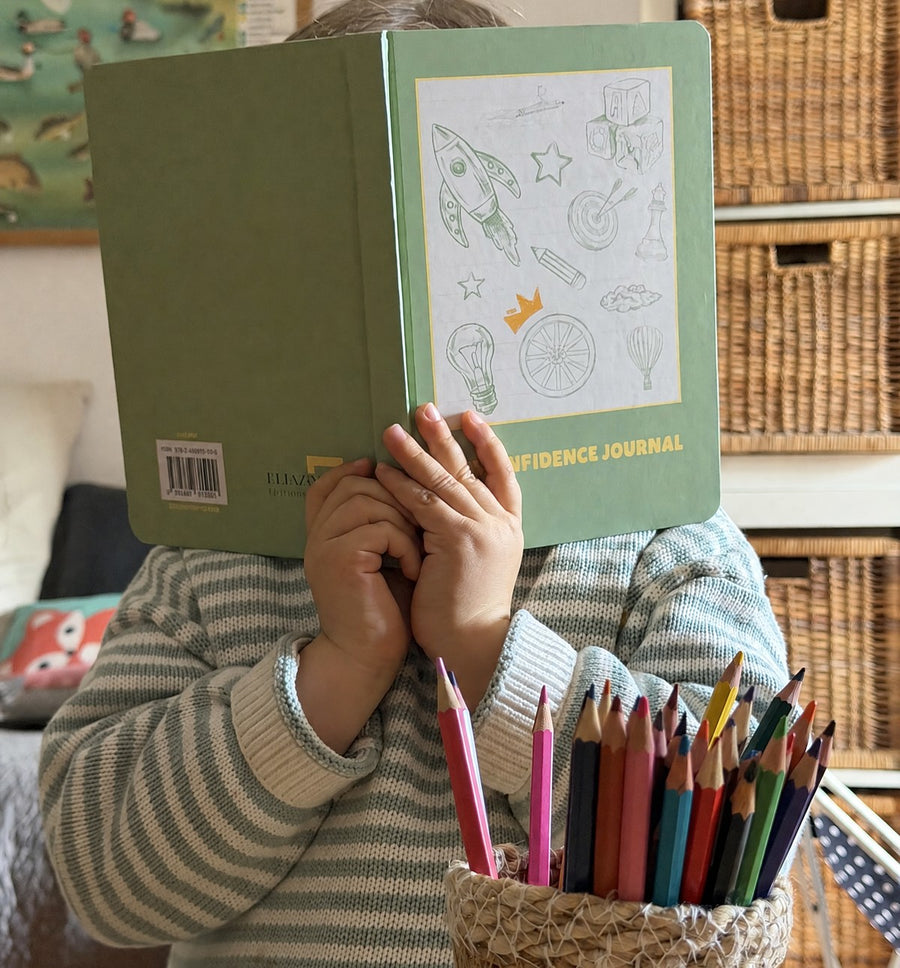
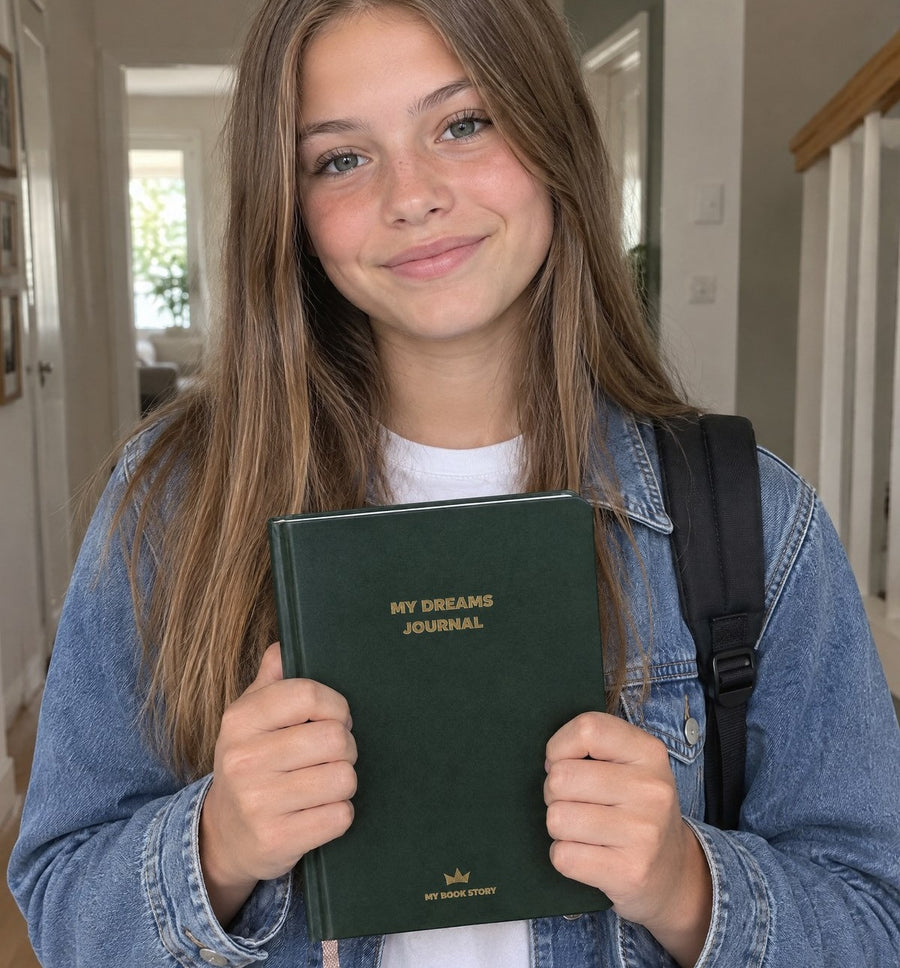
The My Book Story journal was designed specifically to guide this inner exploration. It offers a reassuring framework for your child to learn to express their emotions and build self-confidence, one page at a time. Take a look here: Discover the My Book Story journal


1 comment
Je trouve cette idée 💡 excellente
Merci beaucoup pour l’inspiration…
Voilà une routine du soir que nous allons adopter en version mère / fille