


Far from being just a little jitters before a test, performance anxiety is a real source of suffering for a child. It's that knot in the stomach that comes from the fear of disappointing others, a need for everything to be perfect, or the feeling of always being less capable than others. This anxiety can truly hold your child back and prevent them from thriving. As a parent, your role is to help them transform this fear into a quiet strength.
Understanding what lies behind performance anxiety
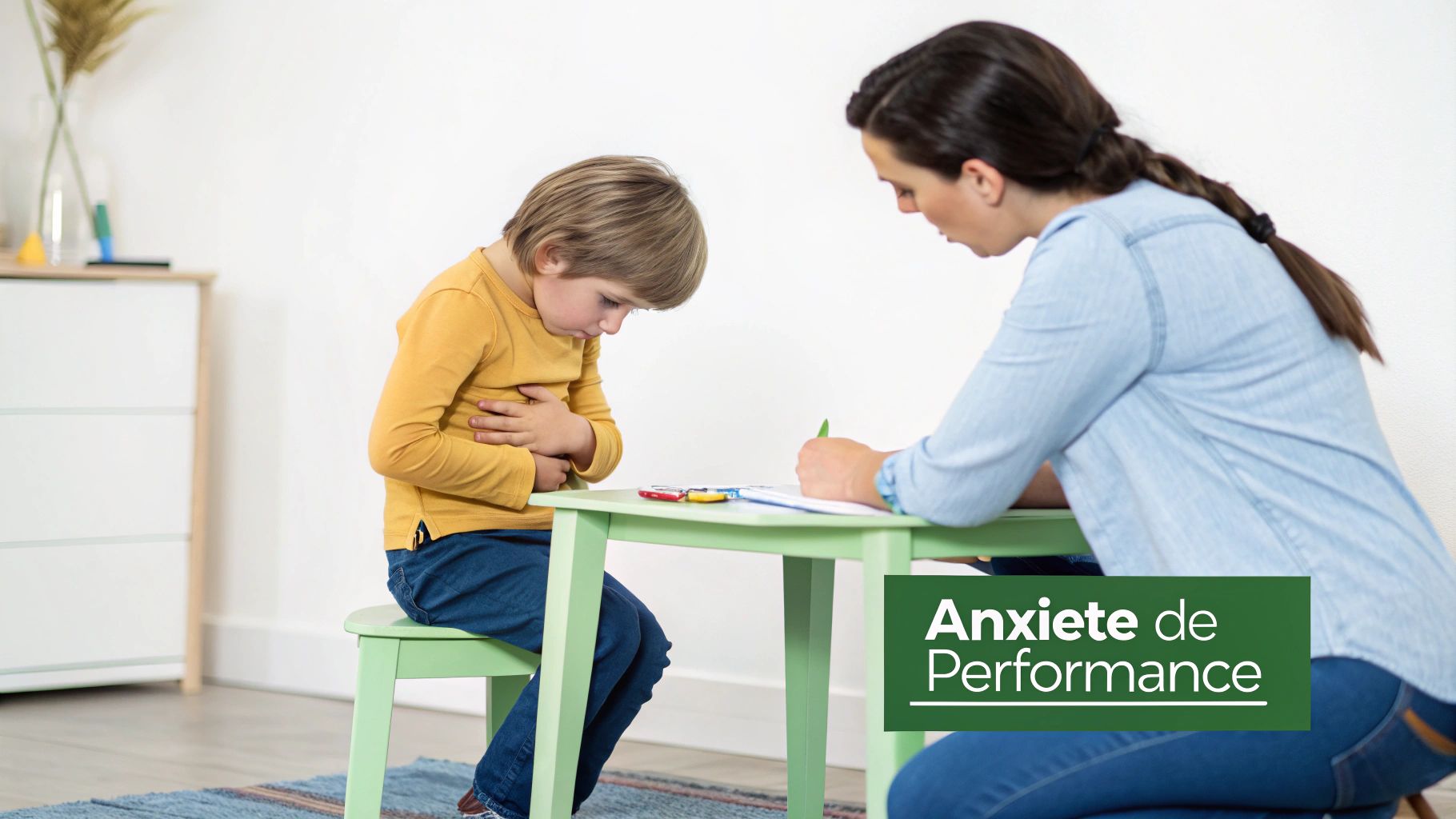
It's neither a tantrum nor a lack of motivation. Performance anxiety in children is a silent storm raging inside. You may have already seen it: your child with a stomachache before a simple spelling test, or bursting into tears because their drawing isn't "good enough." These aren't exaggerated reactions; they are signals that need to be heeded.
This anxiety arises when a child feels that their self-worth depends solely on their achievements. The goal is no longer to learn or have fun, but to prove their worth, whether at school, on a sports field, or even during a music lesson.
Where does this fear of not succeeding come from?
This pressure doesn't come from nowhere. Often, it arises in an environment that, even with the best intentions, places too much emphasis on results. Several things can fuel this anxiety:
- The fear of disappointing dad, mom or his teacher whom he admires so much.
- Excessive personal expectations , a perfectionism that drives him to want to be irreproachable.
- Constant comparison with his brother, sister, or classmates.
- An ambient academic pressure that values grades more than the learning process.
And the figures confirm it. A recent study by Public Health France showed that 13% of primary school students have at least one probable mental health disorder. Among them, 5.6% suffer from emotional disorders such as anxiety, often exacerbated by the pressure to succeed. To learn more, you can consult the findings of the Enabee study on santepubliquefrance.fr .
Why it is crucial to change our perspective
When we see our child stressed, our first instinct is often to reassure them with a "No, don't worry!" or to boost them with a "Come on, you can do it!" But unintentionally, we risk minimizing what they are really feeling.
The goal isn't to eliminate all challenges, but to teach your child how to navigate them. And that starts with something simple: validating their emotions. "I can see this presentation is stressing you out a lot. It's normal to feel that way."
Acknowledging someone's anxiety without judging them offers a safe space where they can be themselves. It shows them that what they're feeling is legitimate and that you're there to support them, not to demand anything. This is the very first step in shifting the focus from performance to effort, curiosity, and, above all, the joy of learning. This guide is here to give you the tools.
Learn to recognize the signs of your anxiety
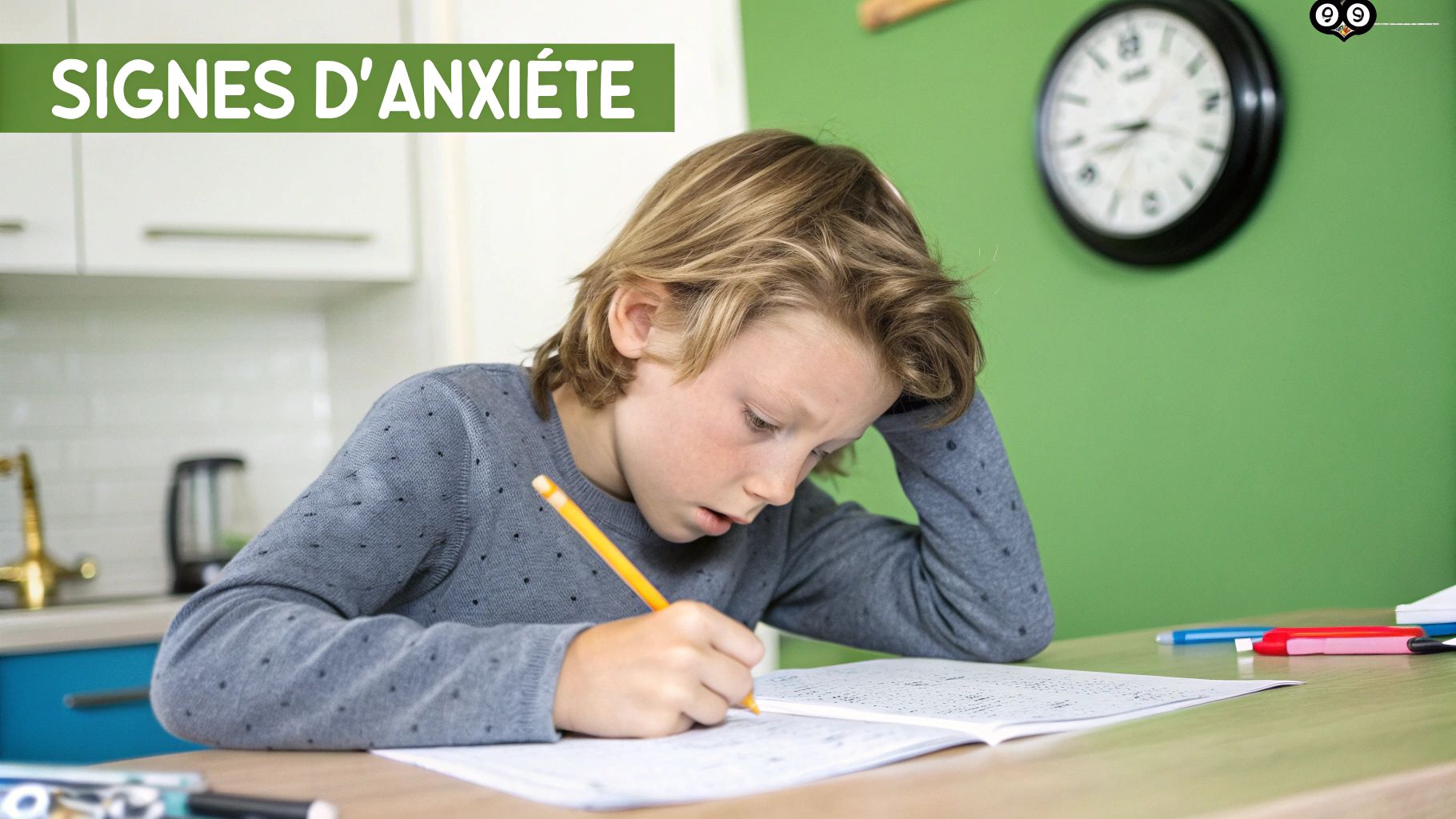
Performance anxiety in a child isn't always manifested as tears or an obvious panic attack. Often, it's masked, hiding behind attitudes that could easily be labeled as laziness, a tantrum, or even rudeness.
Understanding how to decode these signals is the very first, and most crucial, step in being able to help him. These clues generally fall into three main categories: what the child does (behaviors), what he feels (emotions), and what his body expresses (physical reactions).
When his behavior changes completely
Have you noticed that your child keeps putting off doing their homework? This procrastination might not be a simple lack of willpower. It's possible that their fear of not being good enough is so intense that they prefer not to even begin.
Other signs in his behavior should raise your suspicions:
- An excessive need to control everything : He will repeat the same exercise ten times, or erase a sentence until he has a hole in his paper.
- Avoidance at all costs : He "forgets" his flute as if by chance on the day of music class or suddenly feels ill just before a sporting competition.
- A sudden agitation or blockage : He can no longer stay in place or, conversely, he seems completely frozen, passive, in front of a task to accomplish.
This fear of failure is what can lead a child to abandon a board game as soon as they start losing. It's also what makes them refuse to participate in group activities, terrified of being judged by others.
This anxiety about performance is particularly strong in the school context. In fact, 62% of primary and secondary school students report experiencing stress related to grades and assessments. To delve deeper, the results of the Ipsos barometer on ipsos.com offer an illuminating glimpse into the morale of our young people.
The emotional rollercoaster
Performance anxiety colors your child's entire emotional landscape. They may become very irritable, almost angry, for a reason that seems tiny to you, like a puzzle they can't finish.
This heightened sensitivity often masks immense vulnerability. You might also observe a tendency toward harsh self-criticism , with cutting remarks like "I'm useless" or "I'll never succeed," even after a minor setback. A noticeable drop in self-esteem is a telltale sign.
When the body sends SOS
Your child's body is like a sponge for emotions. When words are no longer enough to express stress, the body takes over.
Those famous stomach aches or headaches that magically appear on Sunday evenings or just before going to school are very rarely a hoax.
Pay attention to these recurring physical symptoms:
- Difficulty falling asleep the night before an assessment.
- Nausea or loss of appetite before an important event.
- Sweaty palms, a racing heart, or trembling.
These manifestations are genuine warning signs. They tell us that the internal pressure has become far too great for your child to handle alone.
To help you gain a clearer understanding, here is a table summarizing the main signs to observe in your child. It is designed to give you quick and concrete guidelines.
Table of signs of performance anxiety to watch for
| Category of signs | Concrete examples in children | What this could mean |
|---|---|---|
| Behavioral | Procrastination, avoidance (activities, school), extreme perfectionism, quick giving up, restlessness or passivity. | The child puts in place strategies to escape the anxiety-provoking situation, because the fear of failure is stronger than the desire to succeed. |
| Emotional | Irritability, disproportionate frustration, severe self-criticism (“I’m no good”), heightened sensitivity, crying spells, low self-esteem. | The child is overwhelmed by negative emotions related to their perception of performance and self-worth. |
| Physics | Recurrent stomach aches or headaches, sleep disturbances, loss of appetite, muscle tension, palpitations, nausea. | The body expresses the stress that the mind can no longer contain. These are very real symptoms of stress. |
Keeping this chart in mind can help you connect seemingly isolated points. A stomach ache and a tendency to erase everything on your paper might not be two separate problems, but rather two facets of the same anxiety.
Building a family haven where trust can flourish
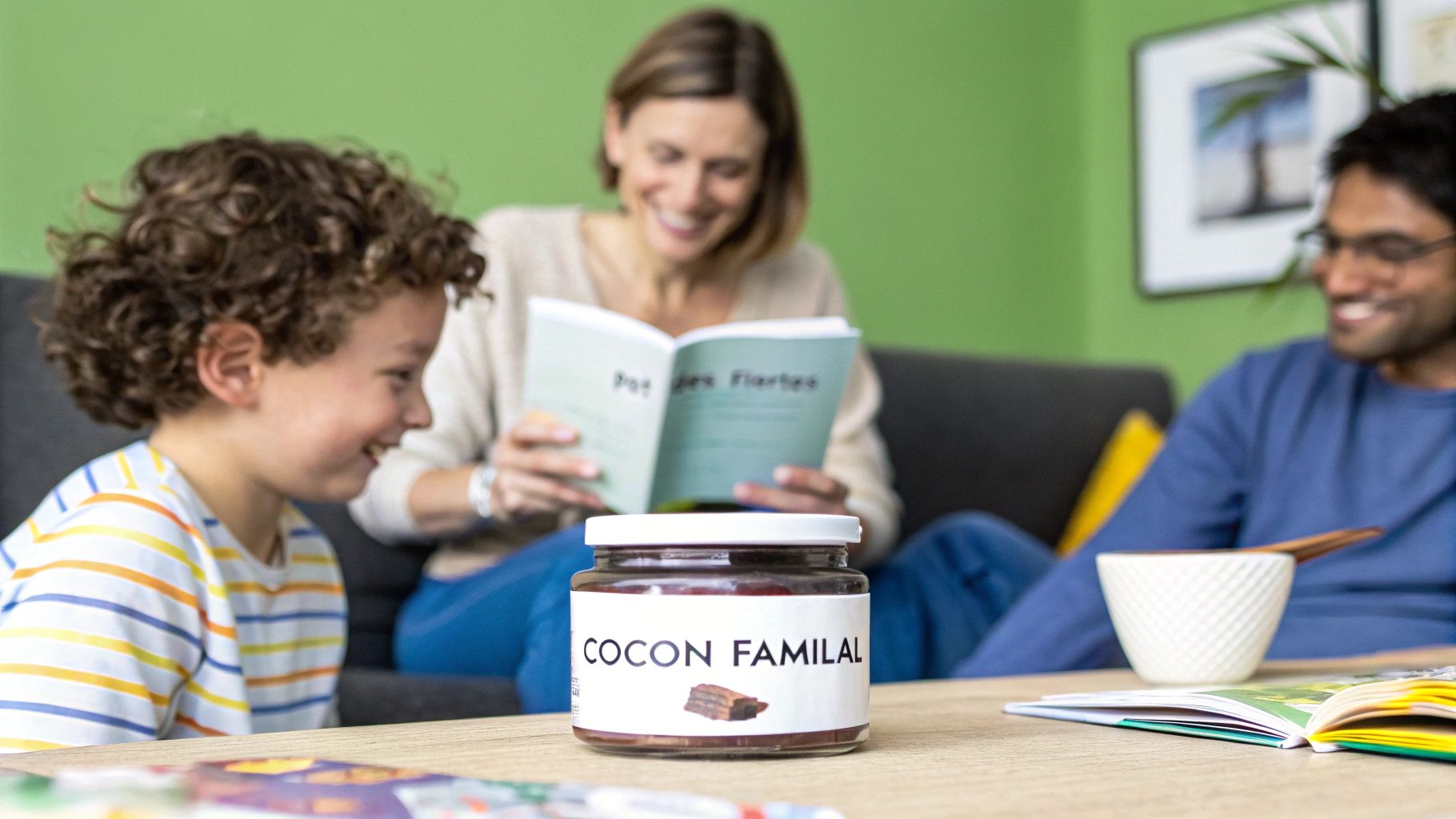
Faced with the pressures of school, friends, or activities, home should be the only place where your child can finally let their guard down. It's their refuge, their safe haven. A place where their worth is never measured by a grade or a goal scored.
Creating this cocoon of emotional safety is one of the most precious gifts you can offer to counter performance anxiety . And often, it all starts with small adjustments in our everyday conversations, those phrases we say without even thinking.
Changing questions to change perspective
After school, our first instinct is often to ask, "So, did you get a good grade?" or "Did you pass your test?" Without meaning to, we send a very clear message: the result is what matters most.
What if we tried shifting the focus? By changing our questions, we show our child that we are interested in their experience, their journey, much more than their raw performance.
Here are some alternatives to try tonight:
- "Tell me something interesting you learned today."
- "What was the funniest moment of your day?"
- "Was there ever a moment when you felt proud of yourself?"
- "What did you find difficult, and how did you try to overcome it?"
These open-ended questions encourage genuine dialogue. They value curiosity, effort, and the simple pleasure of learning, showing that one's inner experience matters, beyond visible successes.
The goal is not to ignore the results, but to put them in their proper place: one piece of information among others, and not the final verdict on its value.
Family rituals to celebrate effort, not just victory
To ensure this message takes root, nothing beats simple, fun family rituals. These shared moments reinforce the idea that effort is far more important than perfection.
One ritual I really like is the "pride jar" (or the "effort box"). The principle is very simple. Once a week, for example on Sunday evening, each family member writes on a small piece of paper an effort they made or a challenge they took on, whether they succeeded or not.
Taking turns, we draw a slip of paper and read it aloud. We're not celebrating a victory, but courage and perseverance. Dad could write, "I managed to stay calm in the traffic jam this morning," and your child could write, "I dared to ask a question in class even though I was scared."
This little game teaches two fundamental things:
- Everyone faces challenges , even mom and dad.
- The real victory is having the courage to try , not just to succeed.
By making your home a place where mistakes are seen as a normal part of learning, you give your child the roots they need to develop strong and lasting self-confidence.
Fun tools to ease tensions
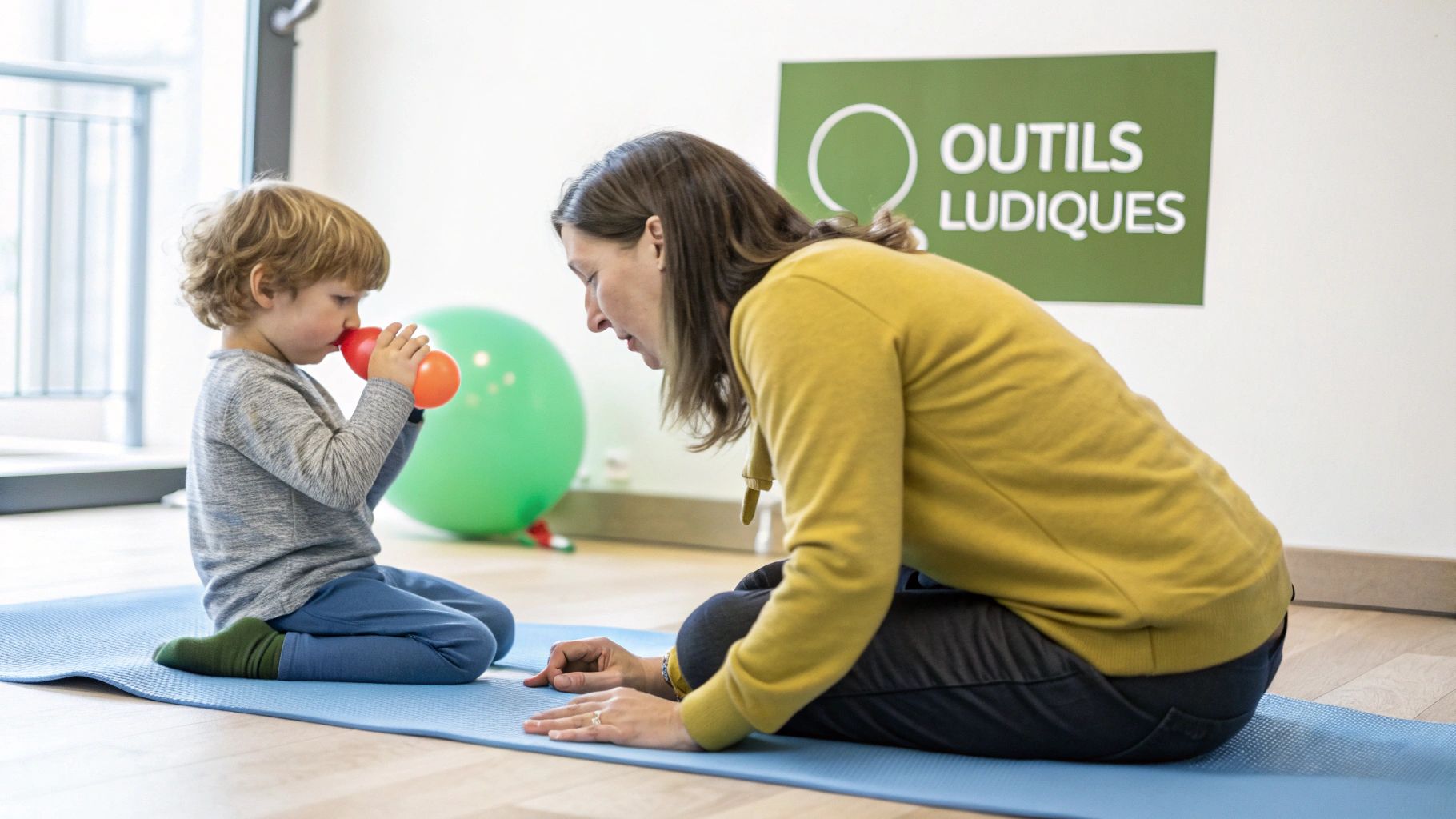
Having a safe and secure home is one thing. But how do you empower your child to navigate their own inner turmoil? The goal isn't to eradicate anxiety—it's a normal emotion—but to equip them with a toolbox of simple and fun strategies to manage it.
By transforming the management of a child's performance anxiety into a game or a shared experience, we empower them. They are no longer victims of their emotions; they become the agents of their own calming.
The magical power of breathing
When stress levels rise, the body sounds the alarm. The heart races, breathing becomes shallow. Teaching your child to control their breathing is like giving them a remote control to calm their brain. It's one of the quickest and most effective methods there is.
No need for complicated theoretical lessons. The secret is to make it fun.
- The flower and the candle : Imagine holding an imaginary flower in one hand and a candle in the other. Breathe in deeply through your nose to smell the flower's fragrance, then gently blow on the candle through your mouth to make the flame dance without extinguishing it.
- The belly-balloon : Lying on their back, the child places their hands on their tummy. As they inhale, their tummy inflates like a large balloon, causing their hands to rise. As they exhale slowly, the balloon deflates.
Practiced for just a few minutes a day, these little games become second nature. A tool he can discreetly use before a presentation or a match.
Building an armor of positive words
Anxiety feeds on negative thoughts that loop endlessly. The infamous "I'm useless" or "I'll never succeed." Our role is to help her build a mental shield with realistic and supportive statements.
The idea isn't to pretend everything is easy, but to change the perspective. Take a moment with him to come up with a short list of phrases he can repeat to himself when he feels the pressure building.
Some examples of shield phrases
- "I'm doing my best, and that's the most important thing."
- "A mistake isn't a tragedy, it's just a way to learn."
- "It's normal to be afraid, but I know how to calm myself down."
- "I remember all the times I've already succeeded at difficult things."
These affirmations help him replace the harsh little critic in his head with a more encouraging voice. It's an excellent way to strengthen his resilience.
Putting emotions on paper to free oneself from them
Sometimes, emotions are so overwhelming inside that they paralyze you. Simply naming them, drawing them, or writing them down can change everything. It allows you to get them out of your head and look at them with a little more distance.
This is where a simple notebook can become a valuable ally. By inviting your child to express their feelings in it, you offer them a safe space, free from judgment.
- Draw your fear : Ask them to give their anxiety a shape. Is it a hairy but slightly ridiculous monster? A big spider web? A grey cloud? The exercise makes the emotion much less overwhelming.
- Inner weather : Each evening, he can draw or write in his notebook about the weather of his day. Bright sunshine? Light rain? Big storm? It's a simple way to help him identify and name what he felt.
Through these creative activities, the child understands that their emotions do not define them. They are merely fleeting, like clouds in the sky. By giving them form, they regain control.
When should you seek help? A guide to finding help
As a parent, you sometimes feel helpless in the face of your child's anxiety. That's perfectly normal. Recognizing that you need outside help is never a failure. On the contrary, it's a sign of strength and love for your child.
The time to take action often comes when anxiety feels overwhelming. If you notice your child's sleep is constantly disrupted, their appetite changes drastically, their friendships are fading, or they fight every morning to avoid going to school, these are warning signs. These persistent changes indicate it's time to seek support.
Who to turn to? The right people to talk to for your child
Several professionals can support you, each with their own set of tools. The choice really depends on your child's situation and personality.
- The psychologist : He is a bit like an emotions translator. Through discussion, play or even drawing, he helps the child to put words to what he feels and to understand where his fears come from.
- The specialized therapist (CBT) : Some are trained in Cognitive Behavioral Therapy (CBT). This is a very practical approach, ideal for giving children practical techniques to calm their intrusive thoughts and manage their daily stress.
- The psychomotor therapist : Perfect if anxiety is largely physical. If your child often has stomach aches, neck tension, or constant restlessness, this specialist will help them reconnect with their sensations and release stress through movement.
A good starting point? Talk to your family doctor or the school psychologist. They are familiar with local resources and can direct you to the right person.
How to talk to your child about it (without scaring them)
The idea of a first appointment with a therapist can be incredibly intimidating for a child. How you present it to them is crucial. The goal is to completely demystify the situation.
Avoid phrases like, "We'll see someone to fix your problem." at all costs.
Opt for a positive approach, as if you were offering them a new superpower to learn: "We're going to meet someone whose job is to teach children tricks to feel stronger and calmer inside when emotions become too overwhelming, like fear or stress."
You can even draw an analogy with sports: it's like a coach helping you improve at soccer, but here, it's to become a champion of inner calm. The idea is for him to understand that he isn't the problem . Anxiety is just a somewhat intrusive visitor that he can learn to recognize and manage.
Taking this step is a huge step towards a more peaceful daily life for him, and for the whole family.
Your questions, our answers about performance anxiety
As a parent, you inevitably have a thousand questions when you see your child struggling with performance anxiety . It's a situation that can be confusing. Let's gather the most frequently asked questions here to gain some clarity and help you find the right strategies for everyday life.
Can a child who gets very good grades really suffer from this?
Yes, absolutely. It's a classic trap that many "good students" fall into. Performance anxiety has little to do with actual academic difficulties. It feeds on the fear of not being up to the task, whether that pressure comes from outside or, more often, from within.
A child accustomed to excellence can experience enormous pressure to maintain that level. For them, a 17/20 can feel like a complete failure. This fear of disappointing you, disappointing their teacher, or simply losing their image as "the one who succeeds" becomes a source of stress that can paralyze them.
How can you tell if it's just a passing disappointment or real anxiety?
That's an excellent question, because the line can seem blurry. Disappointment is normal; it's a healthy, temporary emotion when you miss out on something. It eventually passes. Anxiety, on the other hand, takes hold. It's a fear that precedes the event and becomes all-consuming.
To get a clearer picture, look at the frequency and impact of his reactions.
- Disappointment comes in hindsight . It follows a disappointing result.
- Anxiety comes before . Fear is there long before the ordeal.
If the mere thought of starting homework paralyzes him, if he refuses a new activity for fear of not succeeding, or if he has a stomachache every Sunday evening before a week of school, it's no longer simple disappointment. It's anxiety.
Should we make him stop his piano lessons or his football club if it stresses him out?
Not necessarily. The instinct to protect him by removing the source of stress is understandable, but avoidance is often only a short-term solution. Worse, it can send him the message that he is not capable of overcoming difficulties.
The first thing to do is talk to him. Try to understand where this pressure is coming from. Is it the competition? The coach? His own unrealistic expectations? Sometimes, all it takes is redefining the goal of the activity together. You can then refocus on the enjoyment of playing, his friends, the progress he's making, or simply the pleasure of letting off steam. Winning isn't always the most important thing.
To help your child put words to their emotions and value their efforts rather than just their results, we created the My Book Story journal. It's a wonderful tool to help them understand what they're feeling, celebrate their daily achievements (even the smallest ones!), and build self-confidence that isn't solely based on performance.