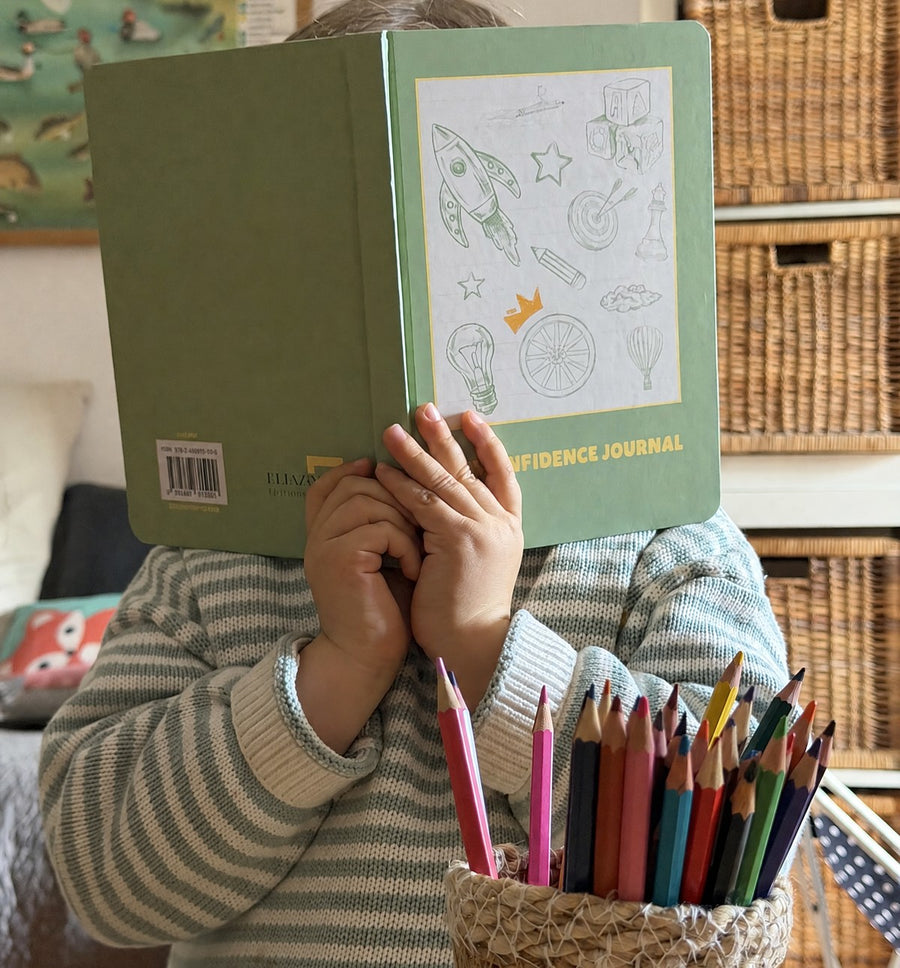
What to do when you're bored? 12 ideas to transform your child's boredom into a creative adventure
Share
The phrase "Mom, Dad, I'm bored!" is familiar to all parents. But what if, instead of seeing boredom as a void to be filled, we considered it an open door to imagination, creativity, and self-discovery? For children aged 6 to 12, these moments of stillness are essential. They learn to listen to their desires, develop their independence, and strengthen their self-confidence.
This article offers a toolbox filled with concrete ideas to transform these moments into opportunities for growth. We'll explore a variety of activities, from sensory treasure hunts and creative writing to art projects and mindfulness practices. To enrich your child's play and discovery experience, also explore our diverse art activity ideas for even more inspiration.
Each suggestion is designed not as a mere pastime, but as an opportunity to nurture emotional well-being, build self-confidence, and create positive family rituals. Wondering what to do when bored and how to guide your child? Get ready to discover how a simple afternoon can become an unforgettable adventure, where your child is the hero of their own story.
1. Organize a sensory treasure hunt at home
Transform your home into an adventure playground! When boredom sets in, a sensory treasure hunt is the perfect solution, engaging your child far beyond a simple search for objects. The goal isn't to find a specific list of items, but to discover objects that correspond to different sensations. It's a fantastic activity to sharpen the senses, develop concentration, and reconnect your child with their surroundings.
How can you, as a parent, do this? It's very simple. Prepare a short list with instructions based on the five senses. Your child will then explore the house to find an object for each category, thus developing their independence and curiosity.
Examples of clues to give:
Touch: "Find something very soft" or "Bring back a rough object".
Sense of smell: "Look for something that smells good like a flower" (a soap, a cream, a spice).
Sight: "Find an object the color of the sun."
Hearing: "Find something that makes a small noise when you shake it."
This activity requires no special equipment and transforms an ordinary afternoon into a conscious and fun exploration. It's a great way to stimulate your child's sensory development while having fun as a family.
2. Launch a creative writing or diary workshop
Writing is a gateway to imagination and a powerful tool for emotional well-being. When your child wonders what to do when bored, suggesting they create their own stories or keep a journal is a wonderful answer. It's an activity that stimulates creativity, enriches vocabulary, and provides a safe space to express thoughts and feelings without judgment, thus boosting their self-confidence.
To get started, all you need is a notebook and a pen. The goal is to let the words flow freely, whether it's to invent a fantasy world, recount your day, or describe a dream. For children who need structure, a guided journal like My Book Story can be an excellent tool, offering age-appropriate prompts for reflection to cultivate introspection.
Some ideas to get started:
The beginning of the story: Offer an intriguing first sentence like "The dragon didn't like chocolate..." and let your child imagine the rest.
The gratitude journal: Each day, invite him to write down three things he is grateful for. A simple and powerful family ritual.
The Chinese portrait: "If you were an animal, which one would you be? Why?"
The secret character: Ask them to invent a character with a superpower and describe their first adventure.
This quiet activity transforms boredom into a moment of connection with oneself and personal growth. It's a valuable skill that will help him structure his thoughts and cultivate his inner world throughout his life.
3. Discover a passion through a creative tutorial
The internet is a veritable treasure trove for curious minds. When a child is bored, guiding them towards learning a new creative skill can transform downtime into an exciting adventure. From drawing and modeling classes to creating small pieces of jewelry, the possibilities are endless and allow children to nurture their passions or discover new ones.
How can you, as a parent, help? The idea is to prioritize activities that encourage creativity and fine motor skills. Many YouTube channels and platforms offer fun tutorials adapted for children. Support your child in their first steps so they can gain confidence.
Examples of creative skills to explore:
Drawing: Follow a tutorial to learn how to draw your favorite manga character or a fantasy animal.
DIY (Do-It-Yourself): Learn how to make a friendship bracelet or customize an old t-shirt.
Magic: Discover some simple magic tricks to amaze the family.
Music: Learn the basics of the ukulele with online lessons for beginners.
This approach promotes independence and shows your child that boredom is a wonderful opportunity to learn. It's a modern and accessible way to develop self-confidence and cultivate the joy of creating with their own hands.
4. Expressing oneself through drawing, painting, or sculpting
Immersing oneself in the world of visual arts is a wonderful antidote to boredom, offering endless possibilities for creativity. Whether using a simple pencil, brushes and paint, or modeling clay, creating a work of art is a calming activity that helps children channel their emotions and develop patience. It's a concrete way to transform an abstract idea into a tangible and rewarding result, which boosts self-esteem.
How can you guide your child? The important thing is to let them explore without pressure to achieve a specific result. Provide them with a variety of materials so they can experiment and discover what they enjoy most. The goal is to have fun and freely express their inner world.
Examples of ideas to get started:
The sketchbook: Encourage him to draw a little each day to capture what surrounds him or what he imagines.
Intuitive painting: Suggest that he/she paint his/her emotions by choosing colors that represent what he/she feels (joy, anger, calm).
Modeling: Using salt dough or self-hardening clay, he can create characters, animals or objects from his imagination.
Create a family art gallery: Showcase their creations by displaying them in a corner of the house.
This activity promotes concentration, boosts self-confidence, and offers a healthy alternative to screens. It's a skill that develops with practice and can become a true passion.
5. Create a family movie ritual
Sometimes, the best way to combat boredom is to escape into another world. Watching a movie or documentary as a family is a comforting activity that allows you to share a quiet moment while stimulating your child's imagination and curiosity. It's an opportunity to discover new stories together, explore themes related to personal development (courage, friendship, perseverance), or simply have a good laugh.
The idea is to transform screen time into an enriching family ritual. Rather than leaving the child alone in front of a screen, choose together a program that is age-appropriate and that sparks conversation.
Ideas for a successful session:
Explore the world: Opt for a wildlife or nature documentary. These programs are often visually stunning and very informative.
Time travel: Choose an animated film or a classic movie that tells an inspiring story.
Create an atmosphere: Prepare popcorn, arrange cushions and blankets to recreate a movie theater atmosphere at home.
Discuss after viewing: Take a few minutes to talk about the film. Ask your child how they felt, what they learned, or which character inspired them.
When properly managed, carefully chosen screen time can become an excellent tool for opening up discussions, developing empathy, and strengthening family bonds.
6. Play board games as a family
Away from screens, board games offer a constructive solution when you're wondering what to do when you're bored. When chosen carefully, they become stimulating tools that develop problem-solving skills, strategy, patience, and above all, social skills. From cooperative games to classic strategy titles, the world of board games is rich and varied.
The trick is to make this a family ritual. A well-chosen game can transform a moment of boredom into an epic adventure or a session of fits of laughter, while stimulating essential cognitive and emotional skills.
How to choose and play well:
Adapt to development: Choose games that are age-appropriate and suitable for your child's abilities to avoid frustration.
Emphasize cooperation: Cooperative games (where everyone plays against the game) are perfect for strengthening teamwork and communication.
Learning to lose: Playing together is an excellent opportunity to learn how to manage disappointment and congratulate the winner, a key skill for emotional development.
Create a homemade game: Why not invent your own board game? Draw a board, imagine some rules and make some playing pieces.
Playing games as a family is a great way to disconnect from daily distractions and reconnect with each other.
7. Practice meditation, yoga, or mindfulness
Sometimes, boredom isn't a lack of activity, but a signal to reconnect with oneself. Introducing meditation, yoga, or mindfulness exercises is a wonderful way to bring calm and focus when your child is feeling restless or idle. These practices help soothe the mind, better manage emotions, and develop greater body awareness—all pillars of emotional well-being.
How can you, as a parent, do this? You don't need to be an expert. The goal is to create a short ritual of a few minutes to refocus. You can use guided apps like Calm or Headspace, or simply follow children's videos, such as those from "Yoga with Adriene," which are designed to be fun and accessible.
Examples of simple exercises to try as a family:
Balloon breathing: "Imagine your belly is a balloon. Inhale slowly through your nose to inflate it, then exhale gently through your mouth to deflate it."
The tree pose: "Stand on one leg, place the other foot on your ankle or calf, and raise your arms like the branches of a tree."
Attentive listening: "Close your eyes and listen to all the sounds around you, from the closest to the furthest, without judging them."
These moments of pause are precious for teaching children that calmness is also an activity. It's an essential skill for their well-being, transforming a moment of boredom into an opportunity for inner renewal.
8. Cooking or baking as a family
Putting on an apron and becoming a little chef is a great way to beat boredom. Cooking or baking isn't just a practical activity; it's also a wonderful creative and sensory adventure that strengthens family bonds. Following a recipe develops concentration and the ability to learn instructions, while the result offers the pride of having created something delicious to share.
To begin, choose simple and visually appealing recipes that allow the child to actively participate. The idea is to make the experience fun and accessible, transforming cooking into a shared game of precision and flavors.
Some tips for budding chefs:
Start simple: Opt for easy recipes like cookies, mini pizzas or colorful fruit salads to build your child's confidence.
Read first: Make it a habit to read the entire recipe together before starting to fully understand the steps and prepare the ingredients.
Age-appropriate tasks: Give your child tasks that are appropriate for their age: mixing ingredients, washing vegetables, or decorating the final dish.
Cooking is a perfect way to transform free time into a moment of shared learning and fun. It's an essential life skill that nourishes both your child's body and creative mind.
9. Go exploring in nature
When the walls of the house seem to close in, nature offers the perfect escape. A simple walk in the woods or a short hike can transform a boring day into a memorable adventure. It's the perfect opportunity for your child to expend energy, breathe fresh air, and reconnect with nature. This activity stimulates the body while calming the mind.
The goal as a parent is to make this outing a moment of discovery. It's not about walking for the sake of walking, but about observing, listening to, and experiencing nature. It's an excellent way to develop your child's curiosity and strengthen family bonds away from screens.
Some ideas to make the walk fun:
Nature bingo: Prepare a grid with items to find (a red leaf, an insect, a flat stone, a feather).
Treasure hunting: Ask your child to collect natural treasures (pine cones, pretty pebbles, acorns) to create a work of art at home.
Active listening: Take a break, close your eyes and ask everyone to describe all the sounds heard.
This activity requires only good shoes and a dose of curiosity. It's a simple and effective way to transform boredom into a moment of wonder and sharing, creating precious memories for the whole family.
10. Create a Land Art project
Land art is a fascinating creative activity that uses only elements found in nature. It's the perfect solution when boredom sets in outdoors, transforming a simple walk into an artistic endeavor. The goal is to create an ephemeral work of art with leaves, branches, stones, flowers, or moss, directly on the ground.
This approach encourages children to observe their environment with fresh eyes and to interact respectfully with nature. It's an excellent way to develop their artistic sensibility, patience, and sense of composition, all without any materials other than what nature provides.
Some ideas to get started as a family:
A spiral of stones: Arrange pebbles of different sizes to form a hypnotic spiral.
A leaf mandala: Create a circular pattern by arranging leaves of various colors and shapes.
A natural portrait: Use twigs for hair, stones for eyes and petals for the mouth.
A colorful path: Draw an imaginary path with flowers and dead leaves.
Exotic gardens, like the Exotic Gardens of Bouknadel , offer an ideal setting for launching a Land Art project, allowing children to discover new shapes and colors. It's a calming activity that grounds children in the present moment and teaches them the beauty of impermanence—a valuable life lesson.
11. Organize meetups or video calls with friends
Friendship is a cornerstone of a child's development. When your child wonders what to do when bored, encouraging them to connect with friends is an excellent way to nurture their social and emotional needs. A simple video call or a meeting at the park can transform a moment of solitude into a joyful and shared experience.
As a parent, you can facilitate these moments of connection. Whether it's sharing the latest news, collaborating on a creative project, or simply laughing together, these interactions strengthen bonds and teach your child how to nurture relationships. It's an excellent way to combat isolation and cultivate empathy.
Some ideas for connecting:
Themed video call: Propose a call where everyone shows their latest drawing or LEGO construction.
Create together, even remotely: They can write a story together via a shared document.
Virtual book club: Suggest that your child and a friend read the same book and then discuss it.
Organize a short outing: An afternoon in the park or a visit to the library can be enough to recharge your social batteries.
These social moments are essential for emotional well-being, providing support and a sense of belonging.
12. Launch a DIY or reorganization project
Turning boredom into an opportunity to create and accomplish is an excellent strategy for developing independence. Starting a DIY project or reorganizing their room allows your child to channel their energy productively. It's an activity that develops planning and problem-solving skills and provides immense pride once the project is finished.
How can you support them? Choose a project suited to their age and interests. The idea is to give them the tools they need to complete their task, whether it's making a decorative object or sorting their toys according to a new system. It's an excellent way to teach them to take initiative.
Examples of projects to propose:
DIY: "What if we made a birdhouse for the balcony?" or "Let's create a personalized pencil holder with this glass jar."
Organization: "Would you like to reorganize your books by color to make your library prettier?" (inspired by the Marie Kondo method).
Projects: "Let's find a tutorial to make homemade bath bombs" or "Let's build a castle with these cardboard boxes."
These activities transform a moment of inactivity into a practical and rewarding learning experience. By seeing the tangible results of their efforts, your child strengthens their confidence in their abilities.
Comparison: 12 anti-boredom activities for child development
Activity
🎯 Focus on Development
⚡ Required Equipment
👨👩👧👦 Family Potential
💡 Ideal For
⭐ Key Benefit
Sensory treasure hunt
Awakening of the senses, concentration
⚡ Low (household items)
Pupil
💡 Rainy day, quick activity
⭐⭐⭐⭐ — Stimulates curiosity
Creative writing / personal journal
Emotional intelligence, creativity
⚡ Low (notebook, pen)
Moderate
💡 A quiet moment, self-expression
⭐⭐⭐⭐⭐ — Boosts self-confidence
Creative Tutorial
Autonomy, new skills
⚡ Moderate (depending on the activity)
Moderate
💡 Discover a new passion
⭐⭐⭐⭐ — Values learning
Drawing, painting, sculpting
Self-expression, fine motor skills
⚡ Variable (supplies)
Pupil
💡 Channeling emotions
⭐⭐⭐⭐ — Develops creativity
Family Cinema
Sharing, empathy, culture
⚡ Low (screen, film)
Very high
💡 Relaxing evening, family ritual
⭐⭐⭐ — Strengthens family bonds
Board games
Strategy, social skills
⚡ Moderate (board game)
Very high
💡 Learn to lose and to win
⭐⭐⭐⭐ — Cultivates team spirit
Meditation, yoga, mindfulness
Stress management, concentration
⚡ Low (quiet area)
Pupil
💡 Wellness routine, return to calm
⭐⭐⭐⭐⭐ — Essential for emotional balance
Cooking or baking
Autonomy, following instructions
⚡ Moderate (ingredients)
Very high
💡 Hands-on learning, sharing
⭐⭐⭐⭐ — Tangible and rewarding result
Exploring in nature
Physical and mental health, curiosity
⚡ Low (good shoes)
Very high
💡 Get active, disconnect
⭐⭐⭐⭐⭐ — Anchored in the present
Land Art
Creativity, connection to nature
⚡ Very low (natural elements)
Pupil
💡 Walk in the forest, creativity
⭐⭐⭐⭐ — Raising environmental awareness
Social connections (friends)
Social skills, empathy
⚡ Low (phone, exit)
Weak
💡 Fighting against isolation
⭐⭐⭐⭐ — Nourishes the need for belonging
DIY / Organization
Autonomy, planning
⚡ Moderate (materials)
Moderate
💡 Channeling energy, empowering
⭐⭐⭐⭐ — Develops pride and autonomy
Boredom: Your child's best ally in development
Throughout this article, we've explored a multitude of answers to the famous question, "What can I do when I'm bored?" From a creative drawing session to an outdoor exploration, each activity represents much more than a simple pastime. They are gateways to new skills and, above all, greater self-awareness for your child.
These suggestions show that boredom is not a void to be filled at all costs, but a fertile space for growth. It is in these moments of apparent calm that the imagination is activated, curiosity is awakened, and resilience is built. As a parent, your role is not to provide constant entertainment, but to offer the tools and confidence necessary for your child to learn to navigate these moments independently.
The lessons hidden behind "I'm bored"
When your child comes to you saying they're bored, they're offering you a valuable opportunity. It's an invitation to help them connect with their own inner resources. Rather than giving them a ready-made solution, encourage them to choose an activity that truly nourishes them.
The activities we have listed share a common thread: they transform a passive moment into an active and enriching experience.
Creativity : Drawing, writing, or embarking on a DIY project teaches your child that they are capable of creating something unique from nothing.
Mindfulness : Practices like yoga or meditation help her understand and manage her emotions, an essential life skill.
Autonomy : Learning a new recipe or organizing his space gives him a sense of control and competence, boosting his self-confidence.
Transform boredom into an adventure of discovery
The next time boredom rears its ugly head, consider it a sign. It's the perfect time to suggest an activity that goes beyond mere entertainment. It's an opportunity to cultivate emotional intelligence, stimulate creativity, and strengthen family bonds. By accompanying your child through these moments, you teach them that finding something to do when bored is a skill that will serve them throughout their life. You show them that they have everything they need within themselves to transform a dreary afternoon into an unforgettable adventure.
Ultimately, the goal isn't to eliminate boredom, but to reimagine it. See it as the breeding ground for imagination, the fuel for curiosity, and the starting point for independence. Smile, because when your child says "I'm bored," they're actually on the cusp of a new discovery about themselves and the world around them.
Ready to give your child a powerful tool to transform boredom into a creative and introspective adventure? The My Book Story journal is designed to guide children in exploring their emotions and imagination, making every quiet moment an opportunity for growth. Discover how this unique journal can become your child's best companion on the My Book Story website.