


Self-help books aren't just for adults! For children aged 6 to 12 , they are invaluable resources for putting words to big emotions, building self-confidence, and cultivating empathy. They transform somewhat vague ideas into concrete and easy-to-understand life lessons, while also giving you, as a parent, precious tools to support their development.
Why these books are valuable allies for your child
For a child, opening a self-help book is a bit like embarking on an inner adventure. The period between 6 and 12 years old is a key stage, full of discoveries but also challenges with others. These books are like kind friends who take them by the hand. They don't just tell a story: they provide tools to decipher the sometimes complicated world of emotions and open a door to discuss them with your child.
Imagine your child frustrated after an argument at school, or hesitant to share a great idea for fear of judgment. A well-chosen book can introduce them to a character experiencing the same thing, showing them a path to get through this difficult time. It's a gentle way of saying, "What you're feeling is perfectly normal, and here's how you can cope."
Practical tools for growing up well
These books transform everyday challenges, both big and small, into learning opportunities. They help build essential skills for feeling confident and comfortable in one's own skin.
- Self-confidence : By identifying with heroes who overcome obstacles, the child understands that he, too, has everything it takes to succeed.
- Resilience : Stories show that failure is not an end in itself, but just a step to learn and bounce back even stronger.
- Empathy : Putting yourself in the characters' shoes helps you understand the point of view of others, an essential quality for building strong friendships.
A children's self-help book is not a moral lesson. It's a mirror that helps them understand themselves better and a bridge that helps them understand others better.
Ultimately, these books become true companions for your family. They open up dialogue between you and your child, creating a safe space to talk about their fears, joys, and dreams. They lay the foundation for a solid emotional balance that will support them throughout their life.
How to choose the right book for your child's personality
Every child is a unique individual. A book that captivates one young reader might leave another completely unmoved. When choosing a self-help book, age is a factor, but what truly matters is your child's personality and needs at that particular moment. The key is to observe and listen to find the story that will resonate with them.
Think of yourself as an emotions detective. Is your child rather shy and could use a little boost to speak up? Or perhaps they're going through a phase of major tantrums and need tips to calm down? Understanding their current challenge is the starting point for finding a book that will truly resonate with them.
This infographic perfectly illustrates the benefits of well-chosen reading for personal development.
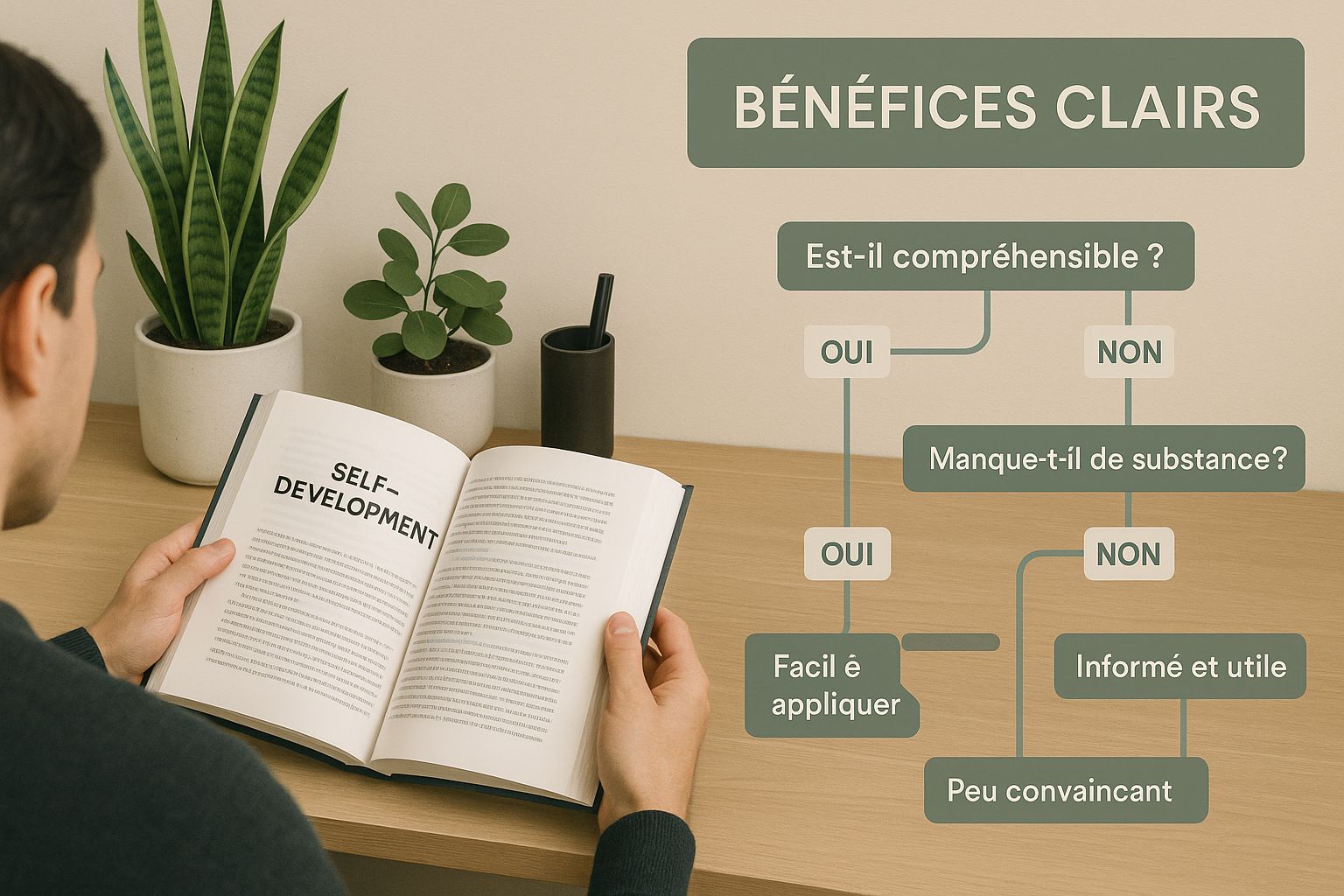
It shows in concrete terms how an adapted book can boost your child's confidence and well-being.
Decoding your child's needs
Beyond the challenges, consider what fascinates him. A child who loves animals will be far more moved by a story of friendship between a fox and a squirrel than by a theoretical guide. The idea is to find a self-help book where the message is conveyed through a world he already knows.
Here are some suggestions to guide you:
- For the dreamy and creative child : Focus on stories that celebrate imagination and show that all ideas, even the most far-fetched, have their importance.
- For the sensitive child who feels overwhelmed by their emotions : Turn to books that put simple words to sadness, fear or anger, often through characters with whom they can identify.
- For the child who doubts himself : Favor stories where the heroes are not perfect, make mistakes, but manage to overcome obstacles by persevering.
The book's format is just as important. Younger children, between 6 and 8 years old , will be captivated by colorful picture books where the illustrations tell as much of a story as the text. For older children, from 9 to 12 years old , interactive journals or short novels allow them to explore themes in a more personal way.
To help you see things more clearly, this table summarizes the essential criteria to check according to your child's age.
Criteria for choosing a suitable personal development book
This chart helps parents quickly assess whether a book is suitable for their child based on their age and emotional needs.
| Selection criteria | Points to check for 6-8 year olds | Points to check for 9-12 year olds |
|---|---|---|
| Main theme | Address a simple emotion (fear, joy, anger) in a concrete way. | Explores more complex topics such as friendship, self-esteem, and change. |
| Format and illustrations | Large and expressive illustrations, short and simple text. | More text, shorter chapters, may include activities or quizzes. |
| Characters | Animal or child characters with whom it is easy to identify. | Heroes with doubts and flaws, who evolve throughout the story. |
| Tone and language | Reassuring and positive language, accessible vocabulary. | Encouraging tone, humor and language that reflect their reality. |
Keep in mind that the most important thing is that reading remains a moment of pleasure, not a chore.
The best book is the one that resonates with what your child is feeling. The goal isn't to change them, but to give them the tools to flourish fully, just as they are.
Exploring the major themes of personal development
Children's self-help books aren't just a collection of pretty stories. They're so much more. They tackle the big issues that shape their inner world, from minor playground troubles to their big existential questions. As a parent, understanding these themes gives you the tools to choose books that will truly resonate with your child.
Each book then becomes a perfect pretext for addressing sometimes complicated topics. A story about friendship can help ease a conflict with a friend, and a tale about courage can give them the strength to present their report without trembling.

Building strong self-confidence
Self-confidence is the foundation upon which everything else is built. It's not just about daring to raise your hand in class; it's primarily about believing in your own worth, even when you make a mistake. It's that little voice that whispers, "Okay, I got a bad grade, but I know I can do better next time."
Books on this topic feature characters who doubt themselves, make mistakes, but ultimately discover their own strengths. They remind us that no one is perfect and that every attempt, even a failure, is an opportunity to learn. This is a very powerful message for a child who tends to compare themselves to others.
This interest in personal development is far from trivial. The global personal development market exceeded $40 billion in 2022, demonstrating a growing awareness of the importance of self-esteem. This trend shows that providing these tools from a young age has become a priority. To delve deeper into the subject, feel free to check out the personal development market analyses on gminsights.com .
A confident child is not a child who never doubts. It is a child who knows that their doubts do not define them and that they have the inner resources to overcome them.
Putting words to one's emotions
Between the ages of 6 and 12, emotions are a real rollercoaster. A child can go from explosive joy to profound sadness in a matter of minutes, often without even understanding why. Books are wonderful allies in helping them name what they are feeling.
- Anger : Instead of the classic "don't get angry", a story will show a character who feels a great anger rising and who learns to let it out without hurting anyone.
- Fear : A good book can help him understand that even the greatest heroes are afraid sometimes, and that this is perfectly normal.
- Sadness : The story can validate his grief, for example when a friend has left him out, and show him that he has the right to be sad and to cry.
These books don't just normalize emotions; they also provide practical tools. For example, a story might suggest "drawing your anger" or "breathing deeply like a volcano calming down." These are simple tips you can easily use at home to help your child navigate their inner turmoil.
Create a reading ritual to strengthen your bonds
The true treasure of a children's self-help book lies in the shared experience it creates. Transforming reading into a special moment of connection doesn't require much, but the benefits for your relationship are immense. The idea is to build a cozy haven where your child feels truly listened to and understood.
Establishing a small ritual can make all the difference. It doesn't have to be anything complicated or lengthy. It could be a "reading session" on Sunday afternoon, or simply enjoying the time before bed to discuss the day's story. These special moments quickly become a haven of trust and connection.
Questions to open the dialogue
To go beyond simply asking "Was it good?", active listening is your best friend. This involves asking open-ended questions, those that encourage reflection and the sharing of emotions, without ever judging the answers.
Here are some ideas to start the conversation:
- "And how would you have felt in the character's place?"
- "Is there a sentence in the book that stood out to you?"
- "If you could give the hero one piece of advice, what would it be?"
In France, we are fortunate to have a genuine book culture. A study by the National Book Centre reveals that the French read an average of 17 printed books per year, and 86% of them swear by this format. This provides a wonderful foundation for making reading a family ritual, building on an already deeply ingrained pleasure. If this topic interests you, you can find all the data on French reading habits here.
The important thing is not to read more, but to read better, together. A shared chapter can be the starting point for a conversation that brings you much closer than a simple activity.
By kindly acknowledging your child's feelings and sharing your own emotions, you show them that everything they experience is valid. Reading then becomes much more than just a story: it's a bridge between their inner world and yours.
Transforming reading into a creative adventure
What if reading a book was just the beginning of an adventure? For a story to leave a lasting impression and for its positive messages to truly resonate, it must be experienced, not just read. This is where creativity takes over, transforming your child from a simple reader into a true explorer of their inner world.
Imagine for a moment that turning the last page isn't an ending, but rather an invitation. An invitation to draw, to write, or simply to let your mind wander. This small, simple step helps the child digest the book's lessons, make them their own, and connect them to their everyday experiences.
Going beyond words
Creative journals, for example, are fantastic tools for this. They offer a space of their own, a bit like a secret garden, where your child can continue the story. The idea isn't to write a summary like at school, but to give free rein to their imagination.
Here are some suggestions to encourage him:
- To represent an emotion with color : "The little fox was sad at the beginning, how would you draw him? And what would his joy at the end look like?"
- Changing the course of history : "If you were the hero, what would you have done? Come on, let's invent a new ending together!"
- Create a "courage box" : After reading a book on self-confidence, why not suggest that he write down three courageous things he would like to try on small pieces of paper?
By making reading a moment of introspection, you're not just helping your child understand a story. More importantly, you're helping them understand themselves. It's the beginning of an intimate and precious dialogue.
Anchoring lessons through play and action
This approach makes somewhat abstract ideas like resilience or empathy much more concrete for a child. When they draw or put words to what they felt while reading, they strengthen the connections in their brain related to that learning. It's a bit like building a solid bridge between the story and their own life.
For example, after a story about managing anger, you could suggest they draw their own "inner volcano" and brainstorm ways to calm it down together. This is a very effective way to ensure that lessons learned from self-help books don't just sit there and become real tools in their everyday emotional toolbox.
We answer your most frequently asked questions
Choosing a self-help book for your child raises a lot of questions. That's perfectly normal! As parents, we want the best for our children. We've gathered answers to the most frequently asked questions here.
Isn't my child too young?
Not at all, quite the opposite! The period between 6 and 12 years old is a key time when your child's emotional intelligence is developing. It's not about giving them a psychology lesson, but about offering them a story that speaks their language.
Using metaphors and relatable characters, these books simply address themes like self-confidence, managing fear, and the richness of friendship. It's the perfect age to give him an emotional toolkit that will serve him throughout his life.
How can we know if the book has a real effect?
The impact isn't always spectacular or instantaneous. Real changes often lie in the small details of everyday life. Pay attention.
- Does he use a new word, learned from the book, to explain to you what he feels?
- Have you seen him dare to do something new, inspired by the courage of his hero?
- Does he find it a little easier to talk to you about what's bothering him at school?
The idea isn't to "change" your child, but to give them the tools to better understand themselves. Every little conversation sparked by reading is a huge victory.
And if he doesn't connect with the book?
Above all, never force reading. It should remain a pleasurable experience. If a book falls flat, try to understand why, without judgment.
Was it the story that didn't resonate with him? The characters? The format? This minor disappointment can become a wonderful opportunity to discuss and choose the next book together. It strengthens your bond while also refining his reading tastes.