


A self-care journal is much more than just a secret diary for your child. Think of it as a creative toolbox, specially designed to help them cultivate their emotional well-being every day. It's a safe space where children, usually between 6 and 12 years old , can explore their feelings, celebrate their successes, and build their self-confidence through fun activities like drawing, collage, or writing. A wonderful family ritual to establish to support their personal development.
Discover the self-care journal for your child
Imagine a little secret garden where your child learns to cultivate self-confidence and nurture their emotions. That's the idea behind a self-care journal . It's not a writing assignment, but an invitation to play and self-expression. It's a private, judgment-free space where there are no right or wrong answers—a key space for their development.
The goal is to transform introspection into a real adventure. Instead of simply recounting their day, the child is encouraged to:
- Identify and name one's emotions : Put words or colors to what one feels, whether it be joy, anger or sadness.
- Celebrating small victories : Learning to recognize one's own successes, even the most discreet ones, to build a positive self-image.
- Give free rein to your creativity : Use drawing, writing or collage as ways to express yourself and unleash your imagination.
A self-care journal is first and foremost a tool for emotional autonomy. It gives your child the keys to understanding their inner world and better navigating the challenges of daily life, all in a creative and engaging way.
This approach, well-known to adults, is perfectly suited to children's needs. It acts as a powerful preventative tool for managing stress and emotions. In fact, according to a study by Public Health France, nearly 22% of adults in France already use a journal to take care of their mental health. By introducing our children to this practice, we give them a solid foundation for their future well-being. To learn more, you can consult the mental well-being trends on the Public Health France website .
This diagram clearly illustrates how the journal links emotions, creativity, and self-confidence.
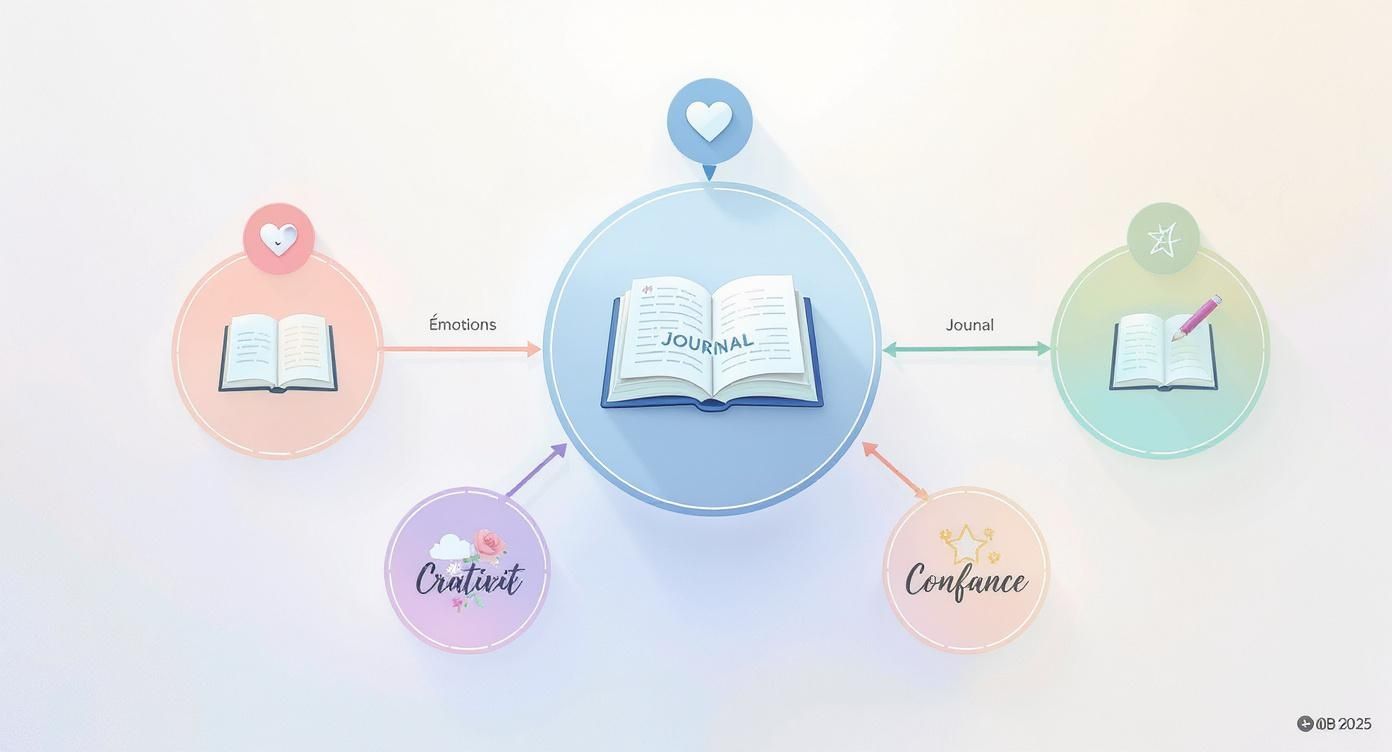
It is clear here that the journal is not a simple activity, but a true bridge that connects the different pillars of the child's personal development.
The superpowers of a well-being journal for your child
Offering a child a wellness journal is much more than just an activity. It's giving them a key to explore their inner world and build their sense of balance, page by page. For children aged 6-12 , it's a wonderful tool for learning to navigate life's ups and downs with greater serenity and strengthening their self-confidence.
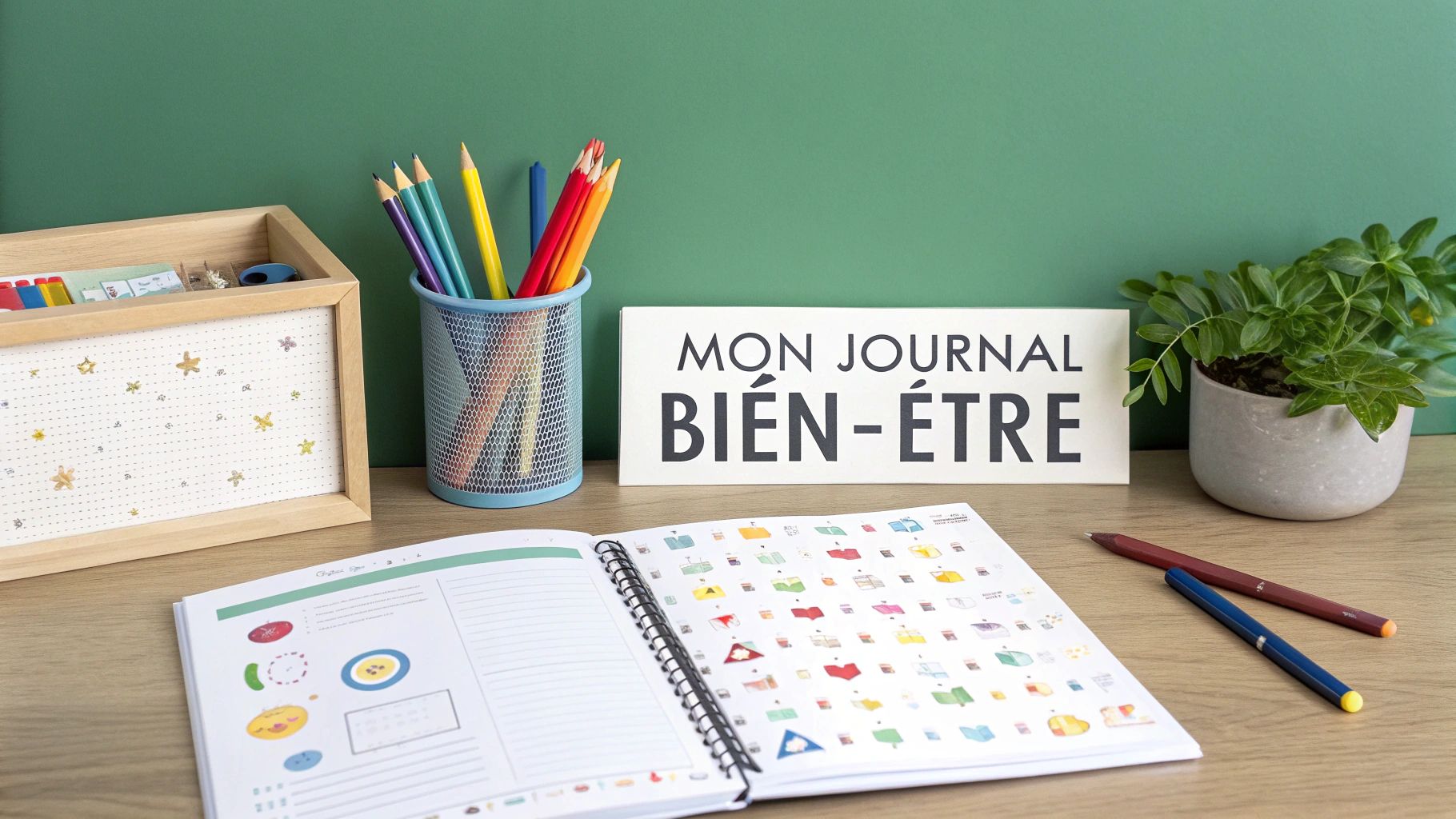
The magic of the self-care journal operates on three major playing fields which, by combining, help the child to flourish in a holistic way.
Better understand and manage your emotions
A journal is first and foremost a safe space, a kind of secret garden where your child can say anything, unfiltered and without fear of judgment. Learning to express things like "today I feel like an angry volcano" or "my heart is a bright sun" is the first step towards organizing their thoughts and fostering their emotional development.
By putting words or colors to their emotions, your child stops being overwhelmed by them. They learn to observe them, to accept them, and, little by little, to find solutions to feel better.
This skill, which is called emotional intelligence, is a true gift for life, a pillar of caring education.
Unleash your creativity and imagination
A journal is a boundless playground for the imagination! The goal isn't to create a masterpiece, but simply to let go. It's the perfect place to invent wild stories, draw your deepest dreams, or create a collage with your current treasures.
This total freedom stimulates his creative thinking and helps him find original solutions in other areas of his life.
Here are some concrete ideas for parents:
- Drawing my superpower : Invite them to imagine one of their qualities (kindness, courage, etc.) and draw it as a superpower. A great way to become aware of their strengths!
- My mood animal : Suggest that they invent an imaginary animal that represents how they feel today. What would its colors be? Its characteristics?
Building solid self-confidence
Each completed page is a small victory in itself. Writing down achievements, even the simplest ones, like completing a difficult task or helping a friend, boosts self-esteem. An activity like "What made me proud this week" teaches him to recognize his own worth and build his self-confidence.
By keeping track of his progress and qualities, he builds a positive self-image, a solid foundation on which to grow.
This approach is part of a broader awareness: taking care of one's mental health from a young age is essential. A self-care journal is a first step towards greater autonomy and resilience in the face of life's challenges, a major societal issue as highlighted in this Red Cross report on prevention and local healthcare .
How to integrate this ritual into your family life
The key is to make journaling a moment of shared enjoyment, not just another chore on the to-do list. The secret? Gently integrate it into your routine, without ever imposing anything. The idea is to create a small family ritual that brings you closer and helps your child become more independent.
To begin, find the perfect moment. It could be right after homework to release the day's stress, or a few minutes before bed to calm your mind. Five minutes every day is better than an hour once a week. Consistency is your best ally for this ritual.
Create a haven conducive to creativity
Having your own space can change everything. No need to rearrange the whole house, a small corner is more than enough.
- The creative corner: Set up a cozy space with all the materials within easy reach. Think colored pencils, markers, stickers and, of course, the self-care journal .
- The ambiance: Dim lighting, soft background music, a few cushions on the floor... and there you have it, you've created a little bubble of well-being.
Your role as a parent is to guide, not to supervise. Why not keep your own journal alongside your child to set an example? But never forget that their journal is their private space.
By respecting his privacy, you give him the confidence he needs to express himself freely. If he knows his journal is a safe space, where no one will read his thoughts without his permission, he will dare to put what's truly on his mind into it.
The goal isn't to know everything, but to give him a tool to learn about himself. It's a wonderful gift you're giving him for his self-confidence and personal growth.
Creative ideas to liven up your wellness journal
To prevent a self-care journal from gathering dust, it needs to remain a fun adventure for your child. We all know the dreaded writer's block, and for younger children, it can be incredibly discouraging. The good news is that a few simple tricks are all it takes to transform this journal into a real playground for their creativity.
The idea is to offer him activities that he enjoys, so that he connects with his emotions almost without realizing it.
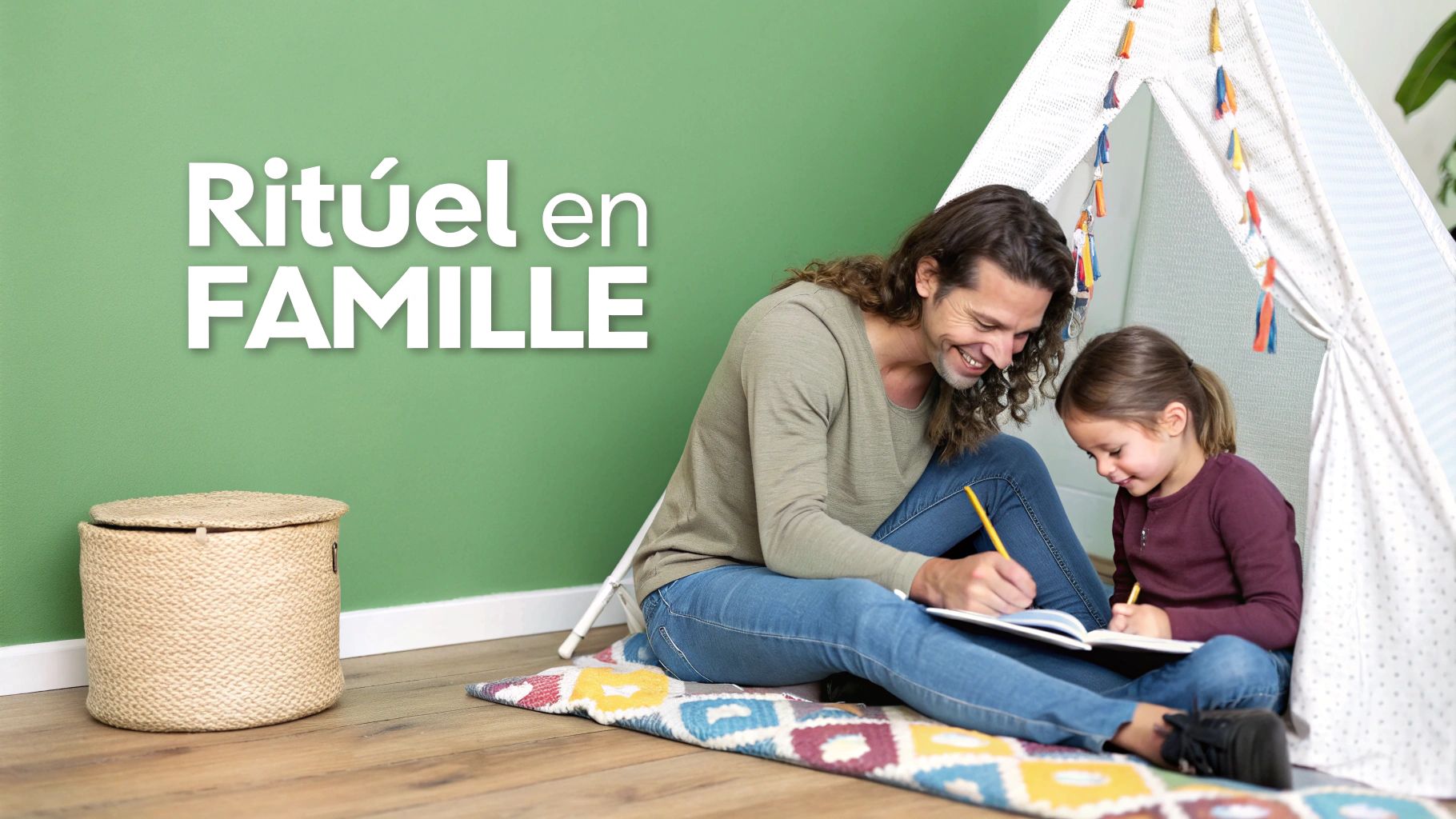
These invitations to creativity are designed to be fun and engaging. Each page becomes a new discovery, and you don't need to be an artist to get started!
Putting images to one's emotions and cultivating gratitude
When you're little, it's not always easy to find the right words to express what you're feeling. Fortunately, drawing or making short lists are wonderful tools to help them gently explore their inner world.
Here are some very simple ideas to suggest to him:
- Inner weather: Ask them to draw the weather in their heart. Bright sunshine for joy? Clouds for sadness? A storm for anger? It's a very visual and super intuitive way to put an image to an emotion.
- The list of little joys: Each day, suggest that they write down or scribble down three things that made them happy. A hug, a nice snack, a game... This simple exercise is great for cultivating a positive outlook on everyday life and developing gratitude.
- The Wheel of Emotions: Draw a circle together, divided into several sections, like a pie chart. Each section represents an emotion: joy, fear, surprise... All they have to do is color in the one they feel most strongly at the moment.
These activities are much more than just pastimes. They are real tools for developing emotional intelligence, helping one to recognize and accept what is happening within oneself.
Boost self-confidence and imagination
A well-being journal is also a secret place to dream big and remind yourself how amazing you are. By encouraging them to see themselves in a positive light, you help them build a solid foundation for their self-confidence.
For example, suggest that they create a page dedicated to their biggest dreams or write a letter to their "inner superhero." These little games stimulate their imagination and help them envision a future full of promise.
To help you choose the right activity at the right time, here's a small chart. It can guide you depending on your child's emotions or needs.
Examples of activities for parents based on well-being goals
This chart helps you choose an activity that is appropriate for your child's current emotion or need.
| Target | Creative activity idea for your child | Benefit for its development |
|---|---|---|
| Expressing joy | Draw your "happiness monster" with lots of bright colors. | Anchoring the feeling of joy in a positive and playful way. |
| Calming the anger | Scribble all over a page with a red pencil, then cover it with calming drawings. | Releasing tension in a controlled manner and learning to transform it. |
| Managing sadness | Create a "hug jar" where he draws all the people who can comfort him. | Remember your support network and find comfort. |
| Strengthening trust | List 3 of your superpowers (e.g., being a good friend, drawing well...). | Identify and value one's personal qualities. |
| Calming anxiety | Draw a maze and trace the exit path, while breathing slowly. | Focusing on a simple task can calm the mind. |
Each activity is a gateway to greater self-awareness. The important thing is that your child feels free and safe to express themselves, without judgment.
My Book Story, the perfect journal to embark on an adventure
Embarking on the quest for a self-care journal for your child can sometimes feel like a real puzzle. Where to begin? Which one to choose? My Book Story was designed precisely to simplify this process and transform it into a fun adventure for children aged 6 to 12.
This isn't just a simple notebook, but a story to build. The journal is organized into chapters that guide the child step by step through important themes such as self-confidence, emotional management, and pursuing dreams. Thanks to this approach, the child is never alone facing the dreaded blank page that can sometimes be intimidating.
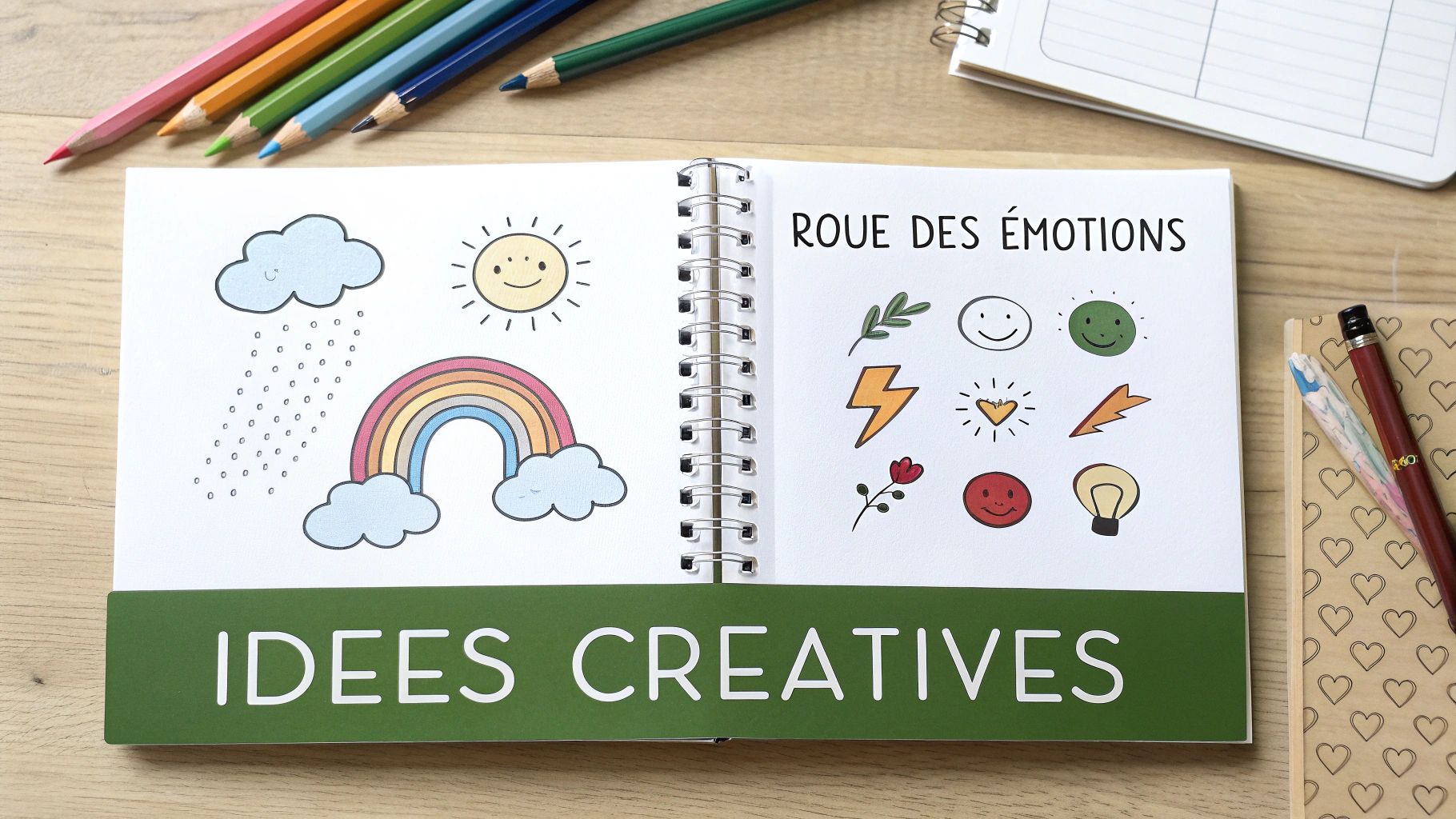
A perfect balance between structure and freedom
My Book Story was designed to strike the right balance between supportive guidance and a space for completely free expression. Each double page is designed with this in mind:
- A page to gently guide: It contains simple questions and small creative activities to help the child reflect on their day and how they feel.
- A page to express yourself: Here, it's carte blanche! Drawing, writing, collage... Your child has all the space they need to let their imagination run wild.
And for you, the parents, a short guide is included. It gives you tips on how to support your child in this discovery, without ever being intrusive, thus encouraging a moment of family sharing.
As we know, the mental well-being of young people is a growing concern. Simple tools like a personal journal can truly make a difference. They help children get to know themselves better, put words to their emotions, and gradually build their own sense of balance. To learn more, you can find information on youth well-being at irdes.fr .
My Book Story is more than just a notebook. It's the beginning of a story that your child writes for themselves, developing their autonomy and resilience page by page.
Your questions, our answers from parents
Are you still hesitant to embark on the self-care journal adventure with your child? It's perfectly normal to have some questions. Let's clear up any remaining doubts together so you can support them with complete peace of mind.
At what age can one start?
You can start gently from the age of 6. At that age, everything is visual! The idea is really to adapt the journal to where they are in their development.
For younger children (between 6 and 8 years old), drawing, collages, or even stickers to symbolize emotions work wonderfully. Writing will come later, without any pressure, as they become more comfortable with words.
Do I have to read what he writes?
Here, trust is key. The journal is his secret garden, a space of his own where he must feel completely safe to express everything that is on his mind, without filter.
Make sure he knows you're there if he wants to show you a page or discuss a feeling, but never read his notebook without his permission. This mutual respect is essential; it's what will encourage him to be truly honest with himself, and subsequently with you.
Respecting the privacy of her journal shows her that her thoughts and emotions are important and deserve to be protected. It's a huge step in building her self-worth.
What if he doesn't want to use it?
Above all, don't force anything. Keeping a journal should remain a pleasure, never a chore. If he resists, try to understand what the problem is.
- Is this the right time? Perhaps he's simply too tired after his school day.
- Does he enjoy the activities? Suggest something else, why not a creative activity just for fun, to do together, without even mentioning the journal.
Sometimes, all it takes is putting the notebook aside for a few days for the urge to return on its own. Curiosity often works wonders!
How much time should be devoted to it each day?
No rules! Five to ten minutes a day is already fantastic for establishing a good habit. What matters is not the duration, but the regularity of the ritual.
The goal is to turn this moment into a small, soothing ritual. Even if it's just a quick jot down your inner weather before bed, that's already a victory.
So, ready to embark on this wonderful family adventure? The My Book Story notebook has been designed to guide your child, step by step, in discovering their emotions and building their self-confidence.
Discover the My Book Story notebook and give them a wonderful tool for growing up.