


Mindfulness is simple. It's the art of truly being there, with your child, in the present moment, without judgment. It's feeling the warmth of the sun on your skin during a walk in the park without thinking about the grocery list, or listening to your child's laughter without glancing at your phone. It's a superpower for calmer parents and happier children.
What is mindfulness, concretely?
As a parent, we often feel like a conductor juggling a thousand thoughts per second. Between homework, meals, work, and activities, we quickly switch to "autopilot" mode. We get things done, it's true, but our minds are already on to the next step.
Mindfulness is exactly the opposite. The idea isn't to clear your mind, which is impossible, but rather to observe your thoughts with gentle curiosity. A bit like watching the clouds roll across the sky with your child.
The goal isn't to stop the flow of thoughts, but rather to not let yourself be swept away by the current. It's simply a pause, a moment to reconnect with yourself and your child, amidst the daily whirlwind.
Think of it not as another task to cram into your schedule, but rather as a new way to experience the moments you already share. It's the art of transforming a simple routine, like brushing your teeth, into a meaningful ritual of connection.
A skill that we all have within us
Children are champions of mindfulness, without even knowing it. Have you ever seen a six-year- old totally absorbed in their LEGO building or fascinated by a little ladybug? They are 100% in the present moment. We all have this capacity within us, but adult life often makes us forget it.
Practicing mindfulness as a family simply means relearning how to:
- Observe without judging what is happening in ourselves and in our children. (“I see that you are angry, and that’s okay.”)
- Listen for real , with full attention, without already preparing your response.
- Feeling sensations , like the warmth of a hug or the sweet taste of a strawberry shared at snack time.
This simple approach helps reduce parental pressure and stress. Instead of being swept away by the surrounding chaos, you learn to navigate it with greater calm. It's a great tool for strengthening your bond with your child and turning small, ordinary moments into true family memories.
Why mindfulness is on everyone's lips
It's not just another fad. Mindfulness is actually a very ancient practice, but it's been rediscovered and adapted to meet our very modern challenges: constant stress, screen overload, and the pressure to always be on top of things.
If everyone's talking about it today, it's because it's been simplified and science has confirmed its benefits. No need to go on a spiritual retreat anymore! It's simply about finding short breaks to breathe in a daily life that often moves too quickly.
For parents, it's a valuable tool for relieving stress and managing their own anxiety. But above all, it's a huge gift to offer children: a skill that will help them grow up more serene, better understand their big emotions, focus at school, and feel good about themselves.
A bridge between tradition and science
Far from being just a trendy concept, mindfulness is a tool whose effectiveness has been proven for family well-being.
Its roots lie in ancient meditation traditions. But it was in the 1970s that everything changed for us in the West, thanks to pioneers like Jon Kabat-Zinn. He developed the famous MBSR (Mindfulness-Based Stress Reduction) program, a completely secular approach to helping people cope better with stress and difficult emotions. The principle? Learning to focus on the present moment, without judgment. To learn more, the history of this approach is well summarized on Wikipedia .
Mindfulness has become so popular because it provides a simple and profound answer to a universal need: to find a little calm within, when everything outside is hectic.
Today, its benefits are so well recognized that it is found everywhere: in hospitals, in businesses, and increasingly, in classrooms. It is this democratization that explains why it has become an essential subject for parents who want to give their children a solid foundation for their emotional well-being.
Concrete benefits for your child
Mindfulness practice isn't just a trendy relaxation technique. It's much more than that. Think of it as a kind of superpower you're giving your child, a toolbox to help them navigate everyday challenges big and small, whether at school, at home, or on the playground.
Imagine for a moment... Your child is able to focus on their homework, even with their little brother yelling right next to them. Or, instead of exploding in anger after losing a game, they take a deep breath, observe their frustration, and let it pass. These are the kinds of concrete changes that mindfulness can bring about.
The image below highlights some of the key benefits children can develop through this practice.
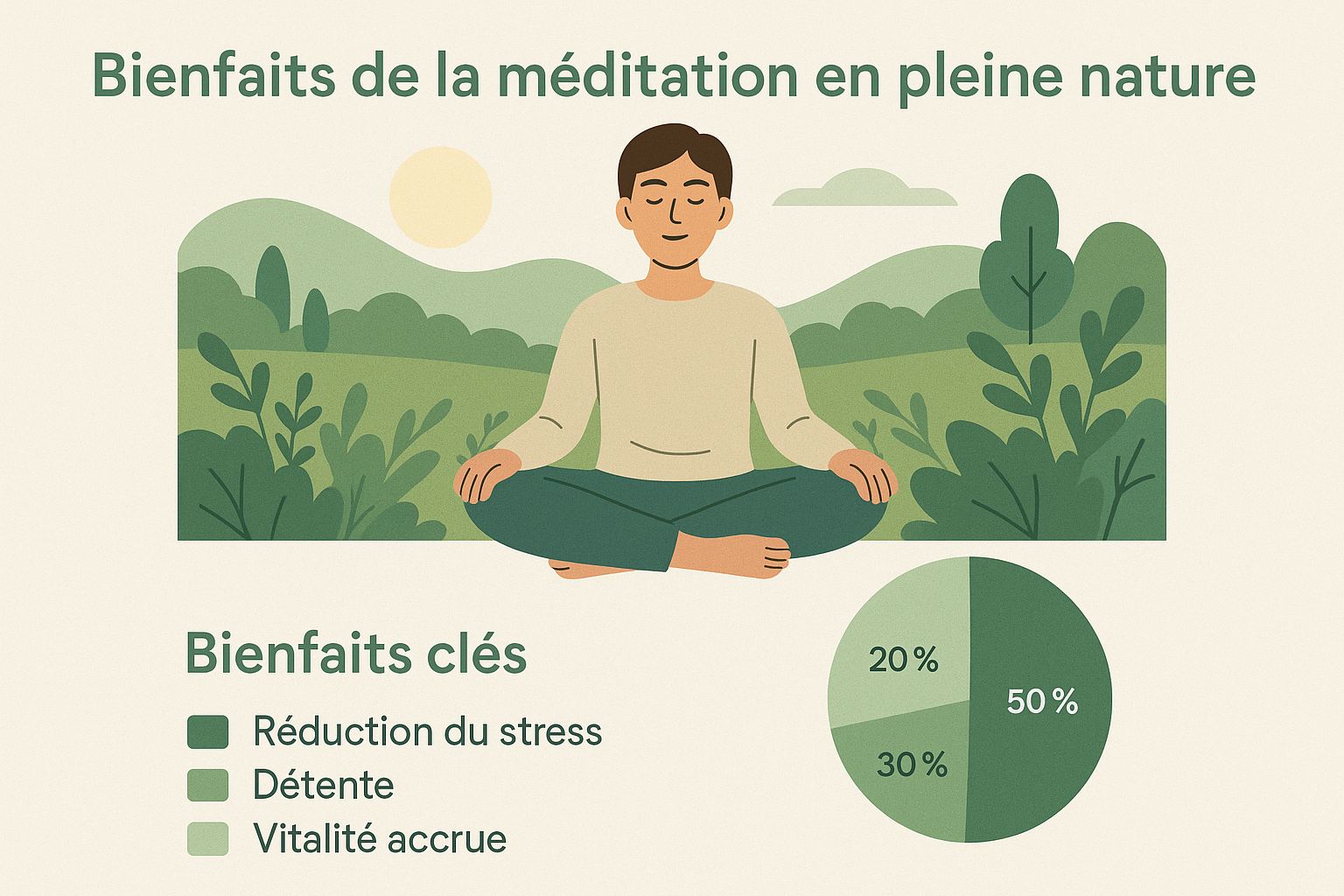
As you can see, mindfulness touches on several essential pillars of a child's well-being. It helps build a stronger mental and emotional balance, which strengthens their confidence as they grow.
Better manage your emotions and stress
One of the greatest gifts you can give a child is teaching them to recognize their emotions without letting them get overwhelmed. Mindfulness helps them distinguish: they are not their anger or sadness , they simply feel anger or sadness. This nuance changes everything.
Scientific research confirms this. Mindfulness is defined as "the awareness that emerges from paying attention on purpose, in the present moment, and without judgment." A major meta-analysis has even shown that it significantly reduces stress, anxiety, and depression. To learn more, be sure to check out this article from Sciences et Avenir, which details these findings.
Practicing mindfulness is like giving your child an inner compass to navigate the sometimes fickle weather of their emotions. They learn to remain calm in the midst of the storm.
In concrete terms, this translates into essential skills for everyday life.
The following table summarizes how these benefits translate into useful life skills for children aged 6 to 12.
Impact of Mindfulness on Child Development
| Benefits of Mindfulness | Skill developed in the child | Concrete example for a parent |
|---|---|---|
| Better concentration | Sustained attention span | Stay focused on a math exercise despite the ambient noise. |
| Emotional regulation | Stress and Impulsivity Management | Take a break to breathe instead of yelling in frustration. |
| Self-confidence | Self-esteem and resilience | Dare to speak in class without fear of being judged by others. |
| Empathy and Kindness | Social and relational intelligence | Understanding a friend's sadness and offering comfort. |
| Creativity stimulated | Open-mindedness and curiosity | Invent games or stories more easily with a calm mind. |
Ultimately, by teaching him mindfulness, you're not asking him to suppress what he feels. Rather, you're showing him how to dance with his emotions. It's a fundamental skill that will serve him throughout his life, helping him build healthier relationships and believe in himself.
Five mindfulness exercises to do as a family

Do you like the idea of mindfulness, but aren't sure where to start? The secret is to gently integrate it into your daily life, like a game. No need to aim for perfection! The goal is simply to share a moment of connection and calm, even if it's only for a few minutes.
Here are five very simple exercises , designed for children aged 6 to 12 , which require no preparation.
1. The internal weather
This is a simple way to help your child put their feelings into words, without any pressure. It's a great way to understand what's really going on inside them and create a sharing ritual.
Advice for parents:
Simply ask him, "So, what's your internal weather like today?" He might say bright sunshine (joy), clouds (confusion), rain (big sorrow), or even a thunderstorm (anger). The important thing is to welcome his answer without trying to "fix" his weather, but just to observe it with him. ("Ah, I see, a thunderstorm. It's okay to feel like that sometimes.")
2. The comforter's breathing
This exercise is perfect for your bedtime routine. It uses an object your child loves to make breathing concrete and visible. It's a great technique for calming the body and mind just before sleep.
Advice for parents:
Lying on his back, he places his comforter or a small toy on his stomach. He just has to watch the comforter rise gently when he inhales, then fall again when he exhales. His attention naturally focuses on this slow and regular movement, and calm sets in on its own.
It's not the duration that matters, but the consistency. A short two-minute ritual every night is much more powerful than a long session every now and then.
3. The magic tasting
This playful exercise transforms snack time into a true exploration of the senses. It encourages children to slow down and truly savor what they're eating, which also helps develop a healthy relationship with food.
Advice for parents:
Take a simple food, like a grape, a square of chocolate, or a strawberry. Invite your child to discover it as if they were seeing one for the very first time:
- With the eyes: We look at its color, its shape, its small details.
- With the hands: We feel its weight, its texture (smooth? rough?).
- With the nose: We breathe in its scent. Does it smell strong?
- With the ears: We listen to the noise it makes when we bite into it.
- With the mouth: We take a very small bite and try to guess all its flavors.
4. The Explorer's Walk
For children who are restless, this exercise is ideal. It transforms a simple walk into a sensory adventure. It's perfect for developing curiosity and awareness of our surroundings.
Advice for parents:
Take a walk and play explorer. The challenge? Find five things you've never noticed before. It could be a flower growing in a crack in the sidewalk, the funny shape of a cloud, or the reflection of the sky in a puddle.
5. Listening to the bell
Simple, short, and super effective for training concentration. This exercise teaches you how to follow a sound from beginning to end without getting distracted.
Advice for parents:
Ring a small bell (an app on your phone works too) and ask your child to raise their hand at the exact moment when they no longer hear the sound at all. This is a very concrete way to help them feel what it means to "pay attention."
Integrate mindfulness into your daily life
Now that you have a few exercises in mind, how can you gently infuse mindfulness into your family life? Far from being another task to fit into an already busy schedule, it's more about changing your perspective on the moments you already share.
The goal isn't to force yourself into long meditation sessions, but to sprinkle in little touches of awareness here and there. It's a philosophy of life, much more than just an activity.
This gentle and natural approach allows for effortless anchoring of the practice. In France, mindfulness has gained popularity by moving beyond the purely spiritual framework to enter the medical world, notably thanks to psychiatrist Christophe André. His work has made the practice accessible to all, structuring it around therapeutic programs such as MBSR (Mindfulness-Based Stress Reduction). You will find more information on the scientific research that validates its benefits at Centrepleineconscience.fr .
The goal isn't perfection, but intention. Every little moment of presence is a victory for family peace.
Transforming routines into rituals
Everyday gestures are an ideal playground. Instead of experiencing them on autopilot, why not turn them into small, soothing rituals for both you and your child?
Here are some simple ideas to try today:
- Curious listening: When your child tells you about their day, pause. Put down your phone and really listen. Look them in the eyes, acknowledge their emotions, and simply be there, without already thinking about dinner.
- Sensual Dishwashing: While doing the dishes together, focus on your sensations. The warmth of the water on your hands, the sound of the sponge, the soap bubbles bursting... A simple exercise, but incredibly refocusing.
- 5 Senses Walk: On the way to school, set a little challenge. Invite your child to find one thing they can see , one thing they can hear , one thing they can smell , and one thing they can touch .
By incorporating these micro-habits, you're showing your child that mindfulness isn't a weird exercise, but a richer, more connected way to experience each moment. It's a valuable gift you're giving them to nurture their creativity , self-confidence , and emotional balance .
Your questions, our answers
Embarking on a mindfulness journey with your child can seem a little daunting at first. It's completely normal to have questions! To help you get a clearer picture, here are answers to the most common questions parents ask.
My child won't stop moving, is this really right for him?
Yes, absolutely! We often have this clichéd image of meditation, where you have to sit still, but mindfulness for children is the complete opposite. We're not trying to immobilize them, but rather to harness their boundless energy.
Practical tip: Offer them movement exercises, such as an "explorer walk" in the living room or an "inner weather dance." The idea isn't to stop the restlessness, but to learn to feel and channel it. This is a way to help them tame their own whirlwind of energy.
Mindfulness for a child who fidgets isn't about asking them to stop. It's about teaching them to move while being present in what they're doing. We transform chaos into a dance.
At what age can you really start?
You can start awakening the senses from a very young age with small games. But for more structured exercises, the period between the ages of 6 and 12 is often ideal. This is an age when their ability to concentrate and understand what they feel is developing.
The most important thing is to stay in the game and adjust the duration of the exercises. For a child, a few minutes is more than enough to start. There are no strict rules; the main thing is to adapt to their pace and mood of the day.
Do you have to practice for a long time to make it work?
Not at all! The key to success is consistency, not duration. It's better to practice for five short minutes every day , for example before going to sleep, rather than one long session once a week. A small daily ritual is much more powerful.
You might be surprised to see the first effects quite quickly, such as an easier time regaining your composure after a fit of anger. Remember that this isn't a race for performance. It's above all a moment of pause and connection that you share together.
If you want to go further and make these moments a creative and fun ritual, I recommend you take a look at the My Book Story notebook. It's a great companion to help your child explore their inner world, cultivate their confidence and serenity. Discover the My Book Story Notebook to begin the adventure.