


In a world where screens are everywhere, notebooks and journals offer a vital respite for children aged 6 to 12. It's a space of their own, away from constant distractions, where they can finally find themselves. More than just a notebook, it's a secret garden where their thoughts, dreams, and emotions can flourish freely, without fear of judgment.
Why a notebook is much more than just a simple notebook
At first glance, a notebook just looks like a pile of blank pages. But in a child's hands, it's a true invitation to inner exploration. Unlike homework, with its rules and grades, a personal journal is a realm of total freedom. Imagination is the only rule.
This difference is crucial. The notebook is not a tool for "success," but a true companion on the journey. It allows the child to share their joys, anger, questions, and discoveries without ever fearing punishment.
A space of one's own to grow up in
Between the ages of 6 and 12 , having one's own private space is essential. This is the age when children begin to forge their identity, feel different from others, and navigate sometimes complicated emotions. A diary then becomes that silent confidant who listens without ever judging.
Keeping a journal provides a safe haven where children learn about themselves and accept their feelings. It's an essential skill for building strong self-esteem.
This simple habit helps to organize your thoughts. Putting words or drawings to a confusing idea immediately makes it clearer. Writing a fear down on paper, for example, is often enough to make it seem smaller and less frightening. It's a first step toward what's called emotional intelligence: the ability to recognize, understand, and manage your emotions.
A tool to strengthen family ties
Far from isolating the child, a notebook or journal can become a wonderful bridge between you. By offering them this personal space, you send them a strong message: "I respect your inner world and what you feel is important."
Why not turn this writing time into a little family ritual? Here are a few simple ideas to get you started:
- The gratitude journal: Each evening, taking turns, each person writes down one small positive thing from their day. It's an excellent way to learn to see the bright side of things, together.
- The "questions and answers" journal: A notebook where you ask each other questions in writing. Your child writes you a question, leaves it on your bedside table, and you answer. A great way to strengthen your bond!
- The creative moment of the weekend: A dedicated time where everyone settles down with their notebook to draw, write or paste memories, just for the pleasure of creating side by side.
By incorporating a journal into your daily routine, you're doing much more than encouraging them to write. You're creating precious memories, building trust, and showing them that in your family, it's okay to express who you are. It's a small step today for their greater development tomorrow.
Help your child explore their inner world with a journal
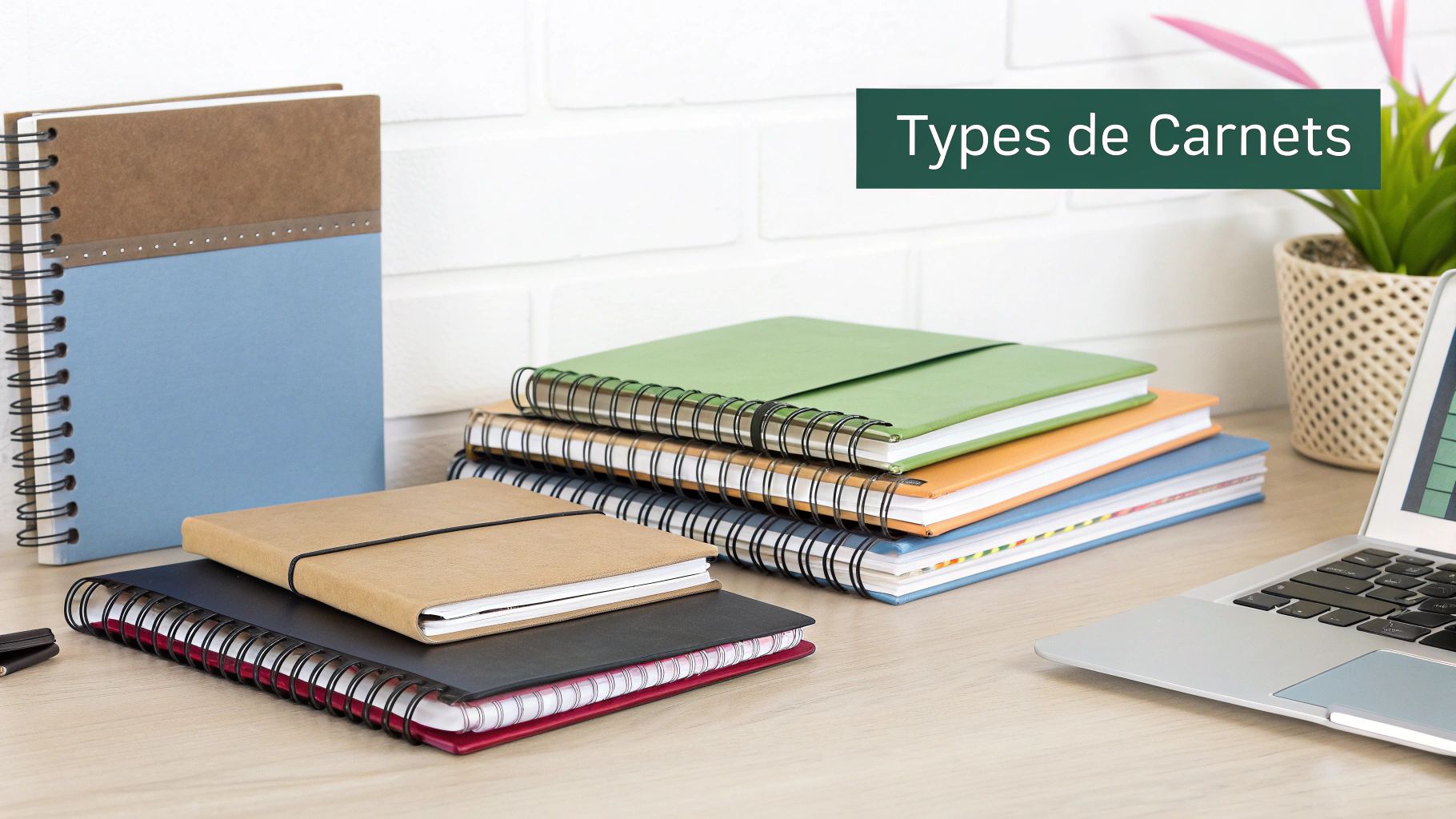
Between the ages of 6 and 12 , children experience their emotions intensely. Joy, sadness, anger… everything can seem overwhelming, sometimes even a little frightening. This is where notebooks and journals become true allies. They act like a secret garden, a confidant who listens without ever judging.
Think of it as a magical "worry box." Every time your child puts a fear, frustration, or question in it, the weight on their shoulders is lifted a little. Putting emotions on paper is an incredibly powerful gesture. It helps them find the words to express what they feel, gain some perspective, and calm the little storm raging inside.
And the good news? This tool is accessible to all families. All you need is a notebook and a few pencils to open a door to your child's world and give them the keys to their own well-being.
Putting words (and drawings) to emotions
For a child, being able to name an emotion is already a first step towards understanding it. Writing or drawing transforms an abstract and somewhat vague feeling into something concrete. The "butterfly in the stomach" can become a funny monster on the page, and an argument with a friend can turn into a little story.
This simple approach helps him develop his emotional intelligence. By putting his thoughts on paper, he gradually learns to:
- Identifying one's feelings : "Today, I am angry because..."
- Understanding what triggers them : "I feel sad when I think about..."
- Expressing one's needs : "To feel better, I need..."
This process is essential for building self-confidence. A child who understands what is happening inside is a child who feels stronger and better equipped to face life's challenges, both big and small.
The journal is like a mirror of emotions. It doesn't make them disappear, but it allows the child to face them, understand them, and feel less alone with them.
The importance of this tool is undeniable. For the start of the 2025 school year, the average family budget for school supplies is around €150, and a portion of this budget is naturally allocated to these forms of expression. With nearly 11.8 million students in France, notebooks remain a cornerstone of personal and academic development. To learn more, you can consult the school supply market figures for the start of the 2025 school year .
Some ideas to get started, without any pressure
The goal isn't to turn your child into a great writer, but to offer them a space where they feel completely free. To ensure the journal remains a pleasure and not an obligation, don't hesitate to suggest fun activities. The key is to show them that all their emotions are valid.
Here are some ideas for questions to ask him to inspire him at the beginning:
- My success journal : "What's the coolest thing you did today?"
- Inner weather : "Draw the weather in your heart right now (bright sunshine, clouds, a storm...)."
- The corner for minor sorrows : "Tell me about something small that made you sad and what might help you feel better."
- The dream box : "Draw or write the craziest dream you had last night."
- The smile detector : "What made you smile today?"
Your role as a parent is invaluable. By genuinely taking an interest in what your child expresses, without trying to correct them or minimize their feelings, you strengthen your bond. This exchange creates a climate of trust where they will feel safe sharing their world. The journal then becomes much more than just a notebook: it's a bridge between you, a tool to better understand each other and grow together.
Choosing the right notebook to stimulate creativity
Giving a child a notebook isn't just handing them another school supply. It's giving them a key to unlock the door to their inner world. The right notebook can truly make a difference: it transforms writing or drawing, which can sometimes seem like a chore, into a real adventure. It becomes a companion, an invitation to express themselves without judgment.
The format of the notebook, for example, has a significant influence. A lined notebook naturally guides the reader toward writing, perfect for aspiring novelists who want to put their stories down on paper. Conversely, a blank notebook is a blank canvas that beckons budding artists. And in between, there are dot-grid pages: a brilliant compromise that structures the space without imposing rules, ideal for playing with lettering or creating little games.
The best tip? Involve your child in the selection. Let them feel the texture of the blankets, choose their favorite colors, and imagine all the things they can create with them. It's this initial emotional connection that transforms a simple object into a true personal treasure.
Adapt the notebook to the child's personality
Every child is a world unto themselves. Their journal should reflect that. A very talkative and extroverted child will surely love a lined journal to record their day in minute detail. A more dreamy or artistic child, on the other hand, will thrive much more with blank pages to let their imagination run wild.
For those who are more organized or logical, a dot-grid notebook can even become a kind of simplified "bullet journal." They can use it to list their ideas, plan a cabin project, or draw diagrams. The goal is really to find the medium that suits their way of thinking and creating.
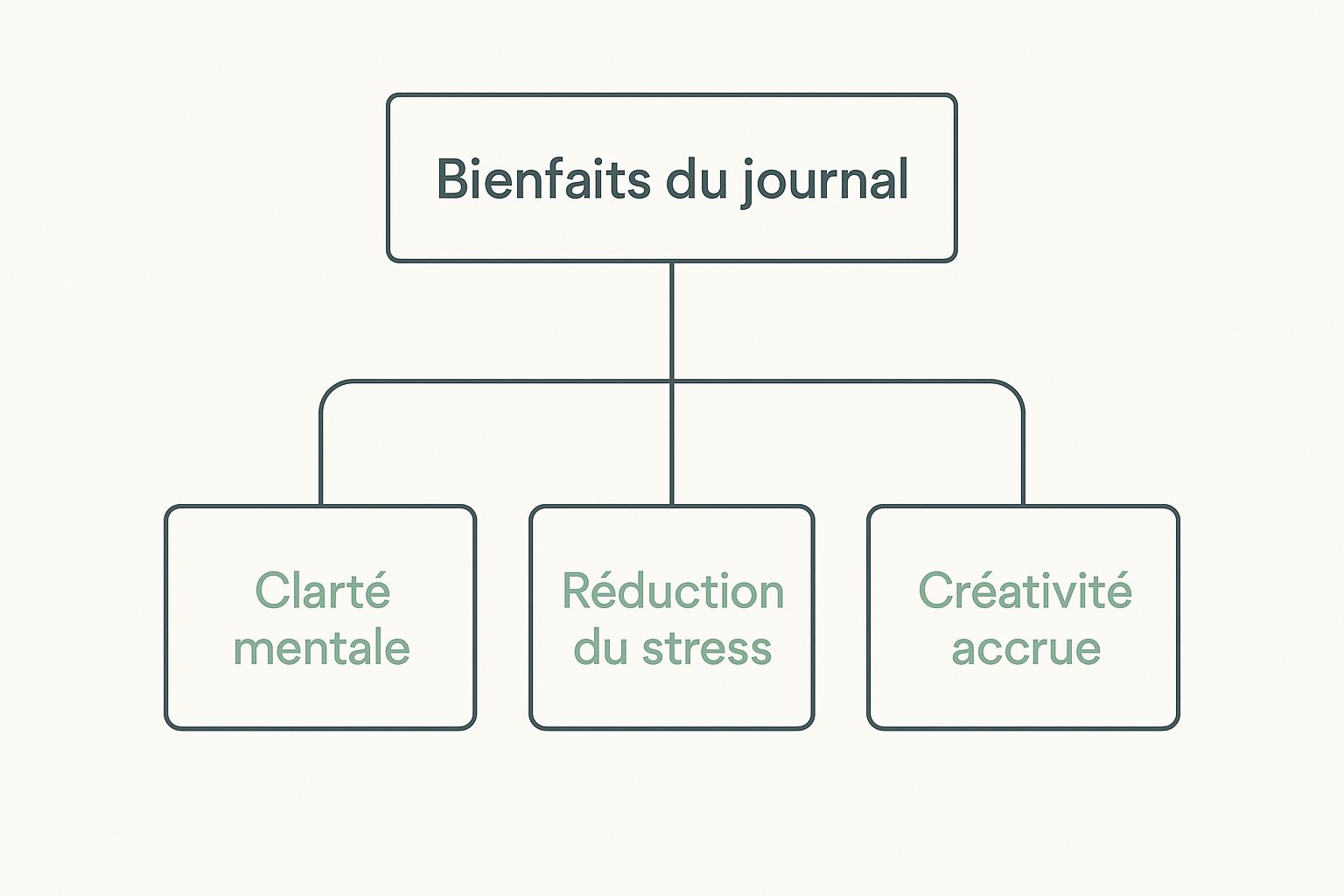
The image above clearly illustrates this: keeping a journal helps children gain clarity in their thoughts, reduce stress, and foster creativity. These are three essential pillars for your child's well-being.
To help you see things more clearly, here is a small table that can guide you in choosing the ideal notebook.
What type of notebook for which child?
| Notebook type | Ideal for | Advice for parents |
|---|---|---|
| Lined Notebook | The child who likes to tell stories, write stories, or keep a classic diary. | Encourage him to describe his days, his emotions, or to invent characters. |
| Blank Notebook | An artist at heart, someone who thinks in images, draws, doodles and loves total freedom. | Offer him colored pencils, markers, and let him create without any constraints. |
| Dot-to-dot notebook | The child who likes to structure their ideas, make lists, diagrams, or create games. | Show him how to create small calendars, track a project, or do doodling (creative scribbling). |
| Guided Notebook | The shy child, who is afraid of the blank page or who needs a little help to get started. | Choose a theme he loves (dinosaurs, space, friendship) to motivate him even more. |
This is, of course, just a suggestion. The most important thing is to observe your child and talk to them about what would make them happiest.
What if my child is afraid of the blank page?
For some children, a blank page is intimidating. Almost frightening. That's where guided notebooks like My Book Story come in and become invaluable allies. With their questions, little challenges, and spaces to fill in, they gently guide the child's first steps.
A guided notebook is like a conversation starting. It reassures the child by showing them that they are not alone with their paper and gives them ways to express themselves without pressure.
These notebooks are perfect for children who are a little more reserved or those who just need a little spark to get started. They provide a supportive environment while leaving plenty of room for personalization. Page after page, the child gains confidence, and the fear of the blank page eventually disappears.
Transforming writing into a family ritual
For a child to truly embrace their journal, the secret is to make it something to look forward to, a special moment. The idea is that journals and diaries should never be seen as a chore or an extension of homework, but rather as a gentle and comforting break. Simply creating a welcoming environment can make all the difference.
By associating this writing time with shared enjoyment and pleasure, you help them establish this habit in a positive way. Far removed from the pressures of school, this little ritual becomes a haven of well-being where their creativity can flourish freely. It's at this point that the notebook transforms from a simple object into a true companion.
Ultimately, the goal isn't to fill pages, but to create a connection. You're making precious memories while giving your child a wonderful tool for growth. It's a true gift for their self-confidence, their understanding of emotions, and, of course, for your relationship.
Create an atmosphere that makes you want to
The environment plays a huge role in inspiring a child to immerse themselves in their journal. No need for elaborate setups! It's simply a matter of creating an atmosphere that encourages relaxation and self-expression. Imagine a cozy little corner, with cushions and pleasant lighting.
This little cocoon sends a clear message to your child. It tells them: "This is a time for you, a space where you can be yourself, without judgment."
Here are some simple ideas to make writing a true family ritual:
- The perfect evening reading and writing nook. Settle in with a hot drink under soft lighting. Everyone takes their book or notebook, and you enjoy a moment of shared calm. It's the ideal way to gently wind down at the end of the day and soothe your minds before bed.
- The weekend creative workshop. On Saturday or Sunday afternoons, it's time to get out the markers, stickers, old photos, and notebooks while enjoying a nice snack. We have fun without any specific goal: drawing, gluing, writing a few words... just for the pleasure of it.
- The secret message book. Take a notebook that will be used solely for exchanging little notes. Your child writes something to you and leaves it on your pillow. You then write back. It's a tender and playful way to keep the lines of communication open.
These small rituals create a positive expectation and reinforce that all-important feeling of being part of a family cocoon where one feels good and safe.
A few sparks to get things started
Even with the most beautiful notebook, the dreaded blank page can be a little intimidating. To prevent your child from feeling stuck, don't hesitate to offer them little "starters," fun ideas to spark their imagination. It instantly transforms the exercise into a game.
The important thing is to maintain a light tone and never impose anything. The child must feel that they are the sole master of their creative space.
A good starting point is to ask an open-ended question that appeals to the imagination rather than memory. Think "What if..." rather than "What did you do...".
Here are some examples of fun ways to start the activity:
-
Creative questions:
- "If you could have one superpower, what would it be and why?"
- "Invent a completely crazy magic potion recipe!"
- "If our pets could talk, what would they tell us today?"
-
Drawing challenges:
- "Draw your day in three emojis."
- "Imagine and draw a map of a secret treasure island."
- "Take this shape (a circle, a square) and transform it into a funny monster."
-
Exploring emotions:
- "What color is your day today? Draw it."
- "Write or draw three things that made you smile."
- "If your anger were a cartoon character, what would it look like?"
These suggestions are meant to inspire, not to constrain. Encourage your child to use them as they see fit, because each page of their journal is a little celebration of who they are. By valuing even their smallest creations, you show them that their inner world is precious and worth exploring.
Creative ideas to fill your notebook
What if your child isn't a big fan of writing? This is a very common situation, and it absolutely doesn't mean a notebook isn't for them. Quite the opposite! There are countless ways to make these pages their own without necessarily writing long texts. A notebook or journal is, above all, a space of freedom where all forms of expression are welcome.
The idea is to show him that his imagination is the only limit. Every idea, whether drawn, pasted, or scribbled in a few words, has its place and value. By encouraging him to explore different avenues, you help him gain confidence and discover what he enjoys, without any pressure.
The gratitude journal in pictures
Gratitude is a bit like a muscle: it needs to be trained, and this can start from a very young age. Rather than simply listing the things he's grateful for, why not suggest he draw them? A candy shared with a friend, a goodnight hug, a ray of sunshine through the window… every little joy can become a work of art.
This visual approach makes the exercise much more fun and concrete. It helps the child connect positive emotions to images, which further reinforces this feeling of well-being. It's a simple yet incredibly powerful little ritual for learning to see beauty in the small things of everyday life.
The notebook for catching dreams
Dreams are a window into your child's rich imagination. A good idea is to encourage them to keep a dream journal, where they can write or draw, as soon as they wake up, what they remember about their nighttime adventures.
- For the youngest children: Drawing is king. A funny monster, a walk in the clouds, a conversation with the cat... anything goes.
- For older children: They can add some keywords, the names of the characters they met, or the main emotion they felt.
This little morning ritual is excellent for stimulating memory and creativity. It's also a wonderful opportunity to discuss sometimes deeper topics together, such as fears or desires, but in a light and fun way.
The treasure trove of a smash book
The "smash book" is a bit like the art of collecting life! It's a joyfully messy notebook where you stick everything that matters, without worrying about making it perfect. Ideal for children who love to amass treasures.
A smash book transforms everyday little things into precious memories. Every movie ticket or tree leaf becomes a witness to a moment of joy and a story to tell.
Suggest that he/she collect:
- Cinema, museum or bus tickets
- Wrappers from his favorite candies
- Photos of family or friends
- Stickers, ribbons, scraps of wrapping paper
- Dried flowers or leaves gathered during a walk
The smash book is a true celebration of everyday life. It's a creative activity that requires no special talent, just the desire to capture little snippets of happiness.
Today, finding unique notebooks and journals has never been easier. In 2024-2025, e-commerce growth in France reached a record €175 billion , representing a 9.6% increase. Personalized notebooks, often purchased online, are benefiting from this momentum, allowing many small French brands to offer truly authentic creations. To learn more, you can consult the key figures for e-commerce in France .
The family recipe book
Cooking is a wonderful way to share stories and unleash creativity. What if your child created their own recipe book, featuring all the family's favorite dishes? They could paste in photos of finished meals, draw the ingredients, or even jot down their own culinary inventions!
This activity strengthens bonds, gives the child a sense of pride, and shows them that they are part of a story. It's a treasure they can keep and add to throughout their life, a true culinary and emotional legacy. Each page becomes an invitation to cook, share, and enjoy delicious food together.
Cultivating confidence and creativity through notebooks and journals

Giving a child a notebook is much more than just a simple gift. It's offering them a personal and safe space where they can freely explore their emotions, thoughts, and dreams.
Keeping a journal helps him understand himself better and soothe his everyday anxieties. It's a wonderful tool for learning to put words to his feelings.
"A notebook is a mirror of emotions and a catalyst for the imagination." – Dr. Claire Martin, childhood specialist
Beyond the emotions, this space also stimulates his imagination and creativity. The goal is not to make him a future writer, but simply to give him a judgment-free refuge, a secret garden all his own.
To introduce him to it gently, here are a few simple ideas:
- In the evening, suggest that he/she fill out a gratitude page by answering a fun question.
- Celebrate every little drawing, every written word. Your enthusiasm is her best motivation to gain confidence.
- Make it a little family ritual, like a creative moment after snack time or before bed.
Every little step, even a simple scribble, helps build his self-esteem and independence. Consistency matters much more than quantity. Let him express himself as he wishes, without any constraints.
Anchoring this ritual in daily life
To make writing a soothing habit, the secret is to establish a dedicated and regular time. For example, just five minutes after snack time, where everyone takes out their notebook to write or draw something.
This shared time becomes a wonderful opportunity to strengthen the parent-child bond. It's also a learning experience for you: listening without interrupting, encouraging without trying to correct everything.
A ritual, even a very short one, can become a very reassuring emotional reference point for a child.
To avoid routine, you can launch themes each week:
- My three favorite moments of the day.
- The drawing of an imaginary adventure.
- A crazy little idea I had today.
These suggestions guide the child without stifling their spontaneity. This is also the approach we follow with My Book Story, which accompanies the child step by step for 12 weeks in the discovery of their own world.
Here's a brief overview of the benefits:
| Theme | Main benefit | Example of an activity |
|---|---|---|
| Gratitude | Cultivating optimism | Draw your best memory of the week |
| Imagination | Developing creativity | Invent and describe a fantasy character |
| Emotions | Strengthening emotional intelligence | To name an emotion and give it a color or a shape |
Giving a notebook like My Book Story is investing in a treasure that will grow with your child, filled with precious memories.
Start small, celebrate every step forward, and watch your child's confidence blossom day by day.
To begin this wonderful adventure, you can discover My Book Story. Visit our website to learn more and order the journal that will accompany your child.
It's a gift that nurtures her confidence, imagination, and daily well-being.
We answer your questions about children's notebooks
As a parent, you always have a thousand questions before suggesting a new activity to your child. That's perfectly normal! The idea of a notebook or journal is appealing, but it also raises some very legitimate questions. Let's sort it all out together.
At what age can my child start keeping a journal?
There's no hard and fast rule, but the age of 6 to 8 is often a good time to start. It's a pivotal period when children begin to handle a pen well and, above all, to become aware of their inner world and their emotions.
But don't get hung up on writing! A younger child can very well start with a sketchbook, a collage book, or even a doodle book. The important thing is to give them their own space to express themselves, however they choose.
He doesn't want to write, how should we react?
If your child refuses, it's often because they see it as just another homework assignment, a school-related constraint. The secret is to transform this perception and make the experience fun and completely free.
Here are some ideas to gently encourage him:
- Value all his creations. Suggest that he draw what he did today, invent a short comic strip or glue on souvenirs (a movie ticket, a pretty piece of paper...).
- Set creative challenges. Ask them fun questions: "If you had a superpower, what would it be? Draw it!" or "Imagine your cuddly toy could talk, what would it say?"
- Simply lead by example. Take your own notebook and sit down next to him to write or draw, without asking anything of him. Seeing him enjoying himself is often the best invitation.
Most importantly: never force him. This notebook should remain his refuge, a place of pleasure above all else.
How can we respect her privacy while also keeping an eye on her well-being?
This is THE crucial question. Respecting their privacy is the foundation for building a strong relationship of trust. The rule is simple and non-negotiable: never read their journal without their permission . When you give them the journal, make it clear that it's their personal space and that you won't be snooping through it.
By respecting his privacy, you send him a strong message: "I trust you and I respect you as a person." This is fundamental for him to feel safe enough to open up.
Of course, if you notice any changes in behavior that worry you (persistent sadness, anxiety, withdrawal), you need to open a dialogue. Speak to him directly about what you observe, gently, but without ever mentioning the diary. The goal is to keep the lines of communication wide open, so he knows he can come to you if something is wrong.
The My Book Story journal was specifically designed to accompany your child on this wonderful inner adventure, in a way that is both guided and fun. It provides a reassuring framework to help them put words to their emotions, unleash their creativity, and build confidence, page after page.
Discover the My Book Story notebook and embark on this wonderful adventure with your child.