


A short, positive mantra is a simple yet powerful phrase, like "I am capable" or "I am courageous." Repeated often, it becomes a real tool to help a child believe in themselves and develop their confidence, especially when things get tough.
The power of words to boost your child's self-confidence
You've probably seen your child tense up before a math test or sulk in their corner after an argument with a friend. In those moments, the words we use – and especially the ones they say to themselves – can make all the difference.
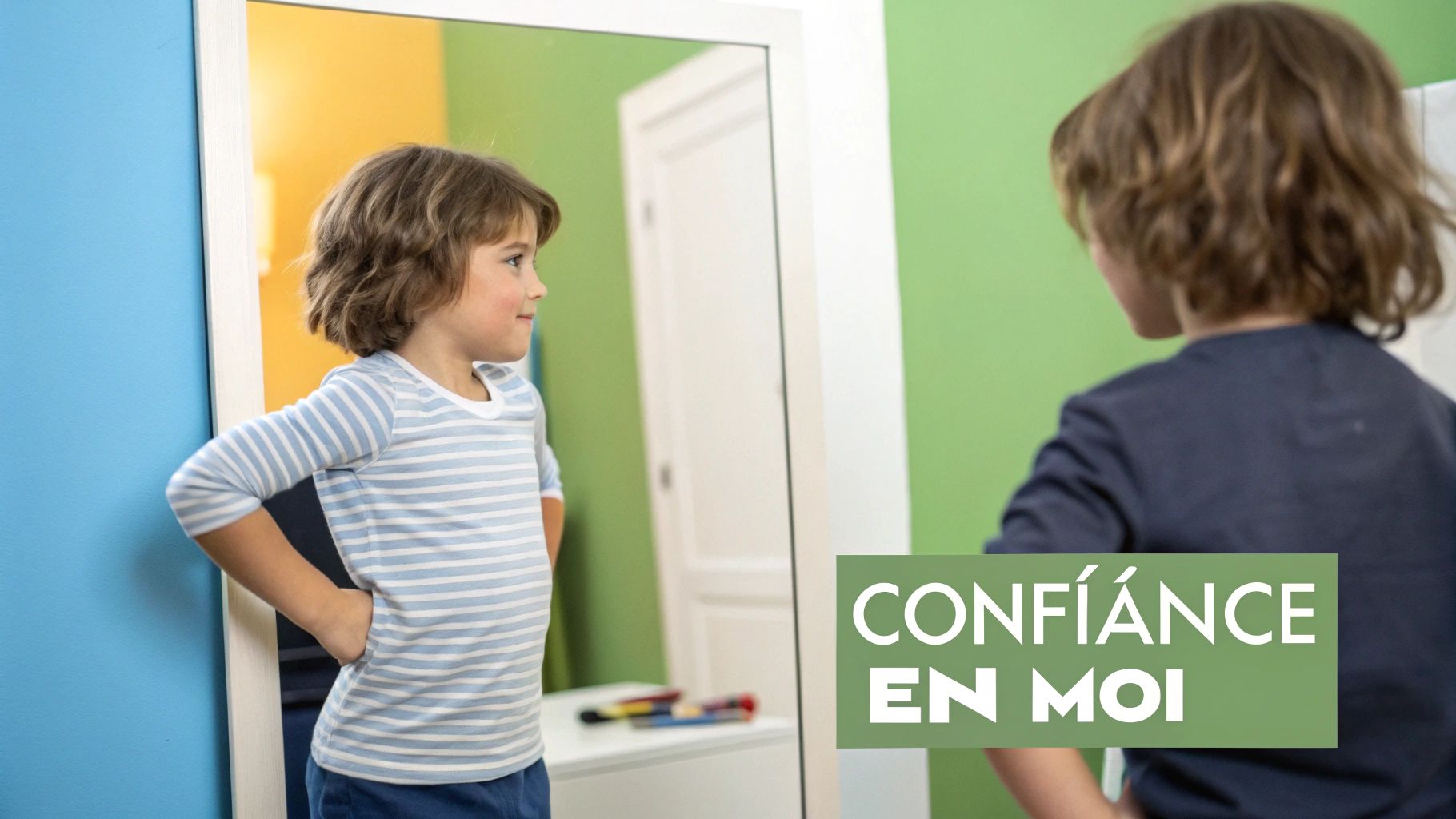
A positive mantra isn't a magic formula, far from it. It's more like an anchor, a reassuring point of reference. For a child between 6 and 12 years old , a key period when self-esteem is being built, these little phrases are invaluable allies. They help them build a positive self-image, brick by brick.
Transforming your inner voice into an ally
The true superpower of a mantra is its ability to replace the negative thoughts that arise unexpectedly ("I'm useless," "I'll never succeed") with an empowering affirmation. It's a very simple exercise that helps children to:
- Better manage your emotions such as fear, anger or sadness.
- Adopting a growth mindset , where a mistake is no longer a failure but an opportunity to learn.
- Becoming more resilient to overcome the small and large obstacles of daily life.
This practice is also gaining traction in schools. More and more teachers are incorporating positive affirmations into their classrooms to improve the atmosphere and boost students' confidence. If you'd like to delve deeper into the subject, numerous studies on the benefits of these practices are available.
A mantra is like a small seed of confidence that you plant in your child's mind. By watering it with kind repetitions, it becomes a strong tree, capable of withstanding storms.
As a parent, you have everything you need to give him this tool. The goal isn't to deny the difficulties, but to offer him the words to face them with courage and optimism. An essential skill for his well-being, both now and in the future.
How to create a mantra that truly speaks to your child?
For a short, positive mantra to work, it's not enough to simply recite it. It must come from the heart, born from a genuine conversation between you and your child. The secret is to transform this moment into a playful and engaging activity rather than a lesson.
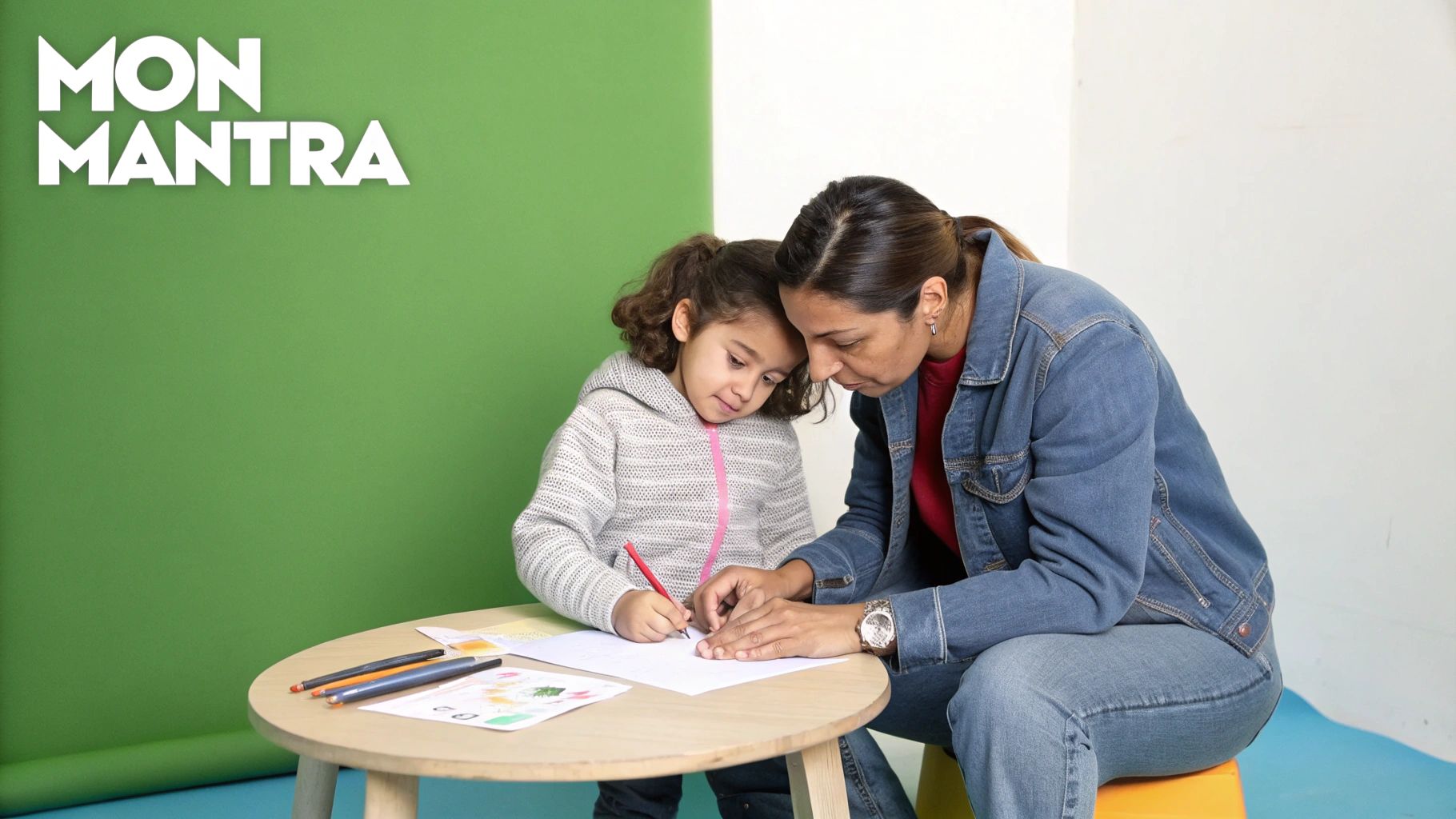
The first step is simply to talk. Open a dialogue with kind questions to understand what's bothering him, without upsetting him. The idea is to create a space of trust where he feels free to express his doubts or anxieties.
To pinpoint the need, together
Every child is different, and their mantra should reflect their personality. The goal is to find the sensitive point without making a mountain out of a molehill.
Here are some ideas to start the conversation:
- Regarding confidence at school: "Tell me, what do you find a little difficult in class right now?"
- Regarding friendships: "Do you sometimes feel a little left out in the playground?"
- For minor fears: "I've noticed you're having trouble falling asleep. Is there something bothering you?"
This little chat is a goldmine. If your child confides that they're afraid to raise their hand in class, the need isn't "to be the best," but rather "to dare to share their ideas." It's this nuance that will make all the difference.
Finding the right words, his own words
Once you've identified the challenge, it's time to turn it into a strength. Look for simple, positive words together that begin with "I." A short sentence of 3 to 7 words will be much easier to remember and repeat.
Your child's involvement is key to success. A mantra they helped create becomes their own phrase, their own little secret shield. It has a much greater impact.
Remember to avoid negations. Rather than "I am not afraid," which keeps the word "fear" at the center, opt for a phrase that directly evokes what you want to feel: "I am calm and courageous."
The My Book Story journal, for example, is a great tool for this. Your child can write their weekly mantra in it, draw on it, and truly make it their own. This makes it even more concrete and powerful.
Incorporate mantras into your family rituals
A short, positive mantra needs to be repeated to truly have an effect. The secret is to gently integrate it into key moments of the day. The idea isn't to add another chore to your already long list, but to transform this practice into a simple and joyful habit.
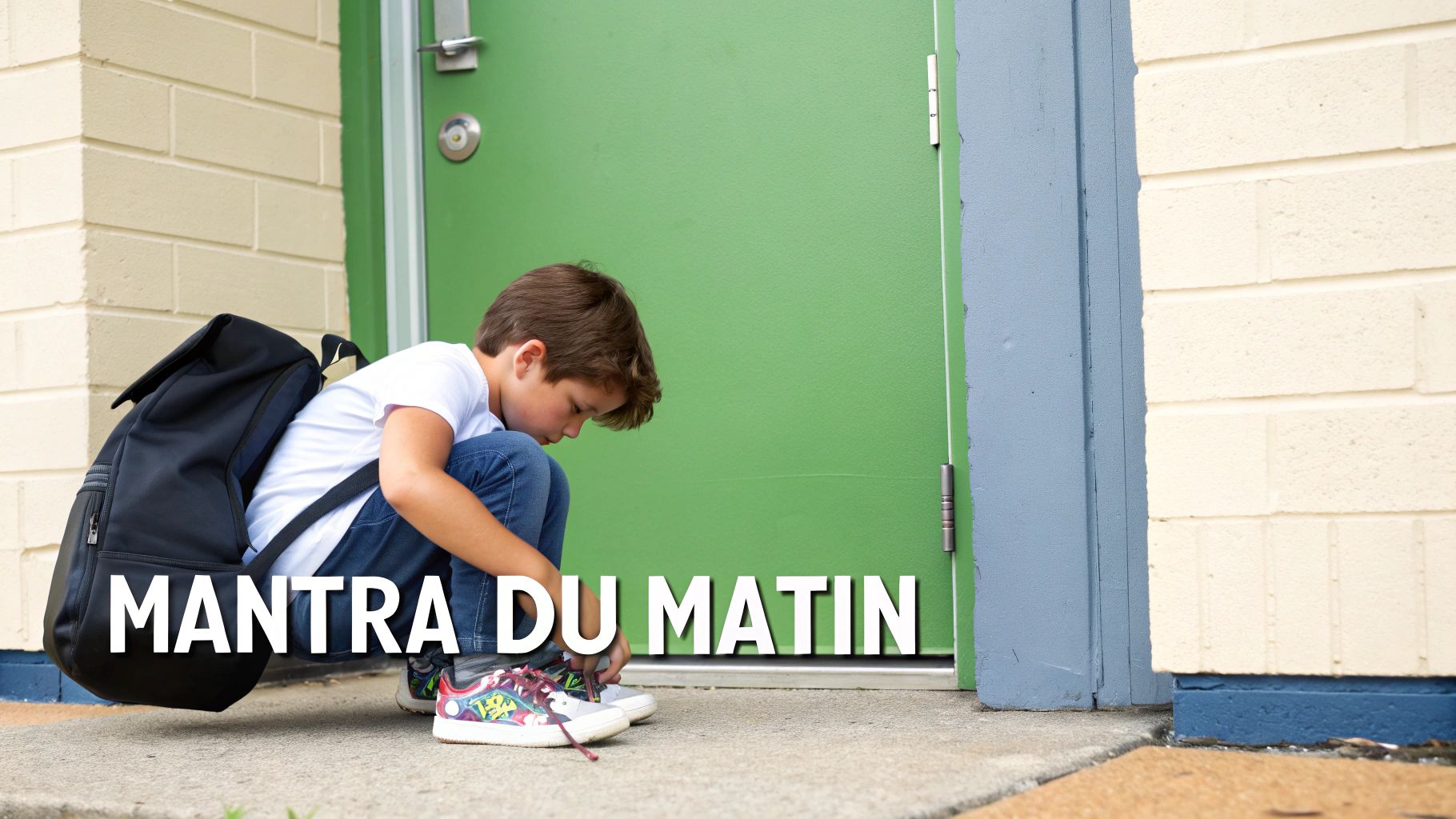
Think consistency over intensity. A short minute each day will have far more impact than a long session once a week. The easiest way is to incorporate the mantra into your existing rituals. It will then become second nature.
Simple rituals for every moment
The trick is to choose a mantra that fits perfectly with the moment, so that it resonates even more strongly.
-
In the morning, in front of the mirror : It's the perfect moment for a confidence boost. While brushing their teeth, your child can look at themselves and say, "I'm ready for a great day" or "I have everything I need to succeed." It's a little dose of positive energy before even leaving the house.
-
On the way to school : Whether on foot, by bus, or by car, this journey can sometimes be a source of minor anxieties. A mantra like "I am brave and I love to learn" can help calm nerves before arriving at the school gate.
-
In the evening, before going to sleep : To prepare for a peaceful and restful night, nothing beats a comforting phrase. During a cuddle, whispering "I am safe and loved" helps to chase away the day's worries and drift off to sleep with a light heart.
The key is to make these moments times of sharing and connection. It's not an imposed exercise, but a true gift, a time for bonding where your child feels your full support. It's good for them, and for you too.
These special moments are true breaths of fresh air in our busy lives. Knowing how to take time for oneself is a valuable skill for recharging one's batteries, for young and old alike.
What if we turned it into a creative game?
For children between 6 and 12 years old , the playful aspect is key to making the magic happen in the long run. Using a creative medium can really solidify the mantra. The My Book Story journal, for example, is a fantastic tool for this.
It offers a space where your child can write their mantra for the week, but that's not all! They can draw it, color it, or even imagine a little story around it. By making it their own creatively, the phrase becomes more personal, more powerful. It's much more than a simple exercise; it's the beginning of a beautiful inner journey.
Your role as a guide: the importance of leading by example
As a parent, your mindset is the most powerful model for your child. More than just a coach, you are their guide. They observe, absorb, and learn from how you manage your own doubts and frustrations. Your example is, without a doubt, their greatest lesson.

When you use a short, positive mantra to address a challenge, you demonstrate how to transform a negative thought into a strength. Consider verbalizing your own process; it's an incredibly effective technique.
Imagine you're assembling a piece of furniture and frustration is starting to creep in. Instead of sighing, try saying out loud, "Okay, this is a little complicated, but I'm patient and I'll manage." Your child will register this constructive response.
Accompany with empathy and patience
When your child is feeling uncertain, your reaction makes all the difference. The common pitfall is wanting to reassure them too quickly with phrases like "don't worry" or "it's nothing." Even if the intention is good, these words can make them feel that their emotions aren't valid.
The first step is to acknowledge what he's feeling: "I can see you're worried about your presentation tomorrow, it's normal to feel that way."
Then, instead of imposing a solution, subtly remind them of the tool you created together. You could whisper, "Do you remember our little magic phrase? 'I am proud of my work and I breathe calmly.' Shall we both try saying it?"
A mantra is a mental workout, not a magic switch. It requires patience, plenty of encouragement, and, above all, your daily example. Never forget to celebrate every small victory.
As a parent, you too can draw inspiration from this practice. Numerous studies show that parents who use positive affirmations for themselves are often calmer and more patient. To learn more, you can discover further data on this trend .
By embodying this philosophy yourself, you are not just giving it a phrase. You are giving it an essential life skill: the ability to become its own support.
Knowing when a mantra is no longer enough
A mantra is a great little boost, but it doesn't solve everything. It's a support tool, not a magic wand. As a parent, your instinct is your best ally in sensing when your child needs something more.
Sometimes, despite the rituals, the positive words, and all your good intentions, you feel that something is amiss. The growing anxiety or the persistent lack of confidence are signs to take seriously.
What are the warning signs?
If you notice that certain behaviors have persisted for several weeks, it might be time to dig a little deeper. Keep a close eye on your child if they:
- He withdraws more than usual, avoiding friends or group activities.
- He expresses very strong fears that paralyze him and prevent him from doing things he used to enjoy.
- Has very restless sleep, with repeated nightmares or difficulty falling asleep night after night.
- Switches from one mood to another suddenly and intensely (great sadness or anger that seems disproportionate to you).
- Often complains of stomach aches or headaches, especially on school mornings.
Recognizing these signs is not an admission of failure. On the contrary, it's proof of love and care. It's the first step in providing the right and appropriate help he truly needs.
If this list resonates with you, the very first thing to do is re-establish communication. Find a quiet moment, just the two of you, and gently open the door: "I get the feeling you're not feeling very well lately. I'd like to help you, would you mind telling me about it?"
A simple conversation can sometimes be enough to resolve things. But if that's not the case, there's no shame in seeking outside help. It's actually a healthy and courageous step.
A psychologist or specialized therapist will create a safe space where your child can express what's too much to bear. They will provide them with concrete tools to understand their emotions and regain their balance. Seeking professional help simply gives your child every chance to feel better.
We answer your questions about mantras.
Do you still have some doubts or questions about using mantras with your child? That's perfectly normal. When starting something new, we need to feel reassured. Let's unravel the most common questions parents have.
And if he thinks it's "for babies"?
This is a fairly typical reaction, especially around age 10 or 11. If your preteen rolls their eyes, simply change your approach. Stop talking about "mantras" or "magic phrases."
Instead, connect the idea to something he admires. Great athletes, for example, use phrases to motivate themselves before a match. Tell him about his " champion's motto " or his " superhero secret code ." You could say, "Even the greatest champions need to remind themselves that they're strong!" That immediately makes the exercise much more engaging.
How many times do we have to repeat it?
The key here is consistency, not quantity. It's better to say it once or twice a day with conviction, rather than having one big session a week that will quickly be forgotten.
The easiest way is to integrate this little moment into an already well-established routine. Just before brushing your teeth in the morning, or during your evening cuddle. It only takes a few seconds.
The idea is not to aim for performance. It's just a simple and comforting little ritual, a seed of confidence that we plant and that will slowly germinate, day after day.
When do we change our mantra?
Trust your instincts and, above all, listen to your child. A mantra is a living tool; it must evolve along with the child.
When a new challenge arises—a sports competition, an important presentation, or even starting at a new school—it's the perfect time to brainstorm a new mantra together. The important thing is that the mantra resonates with them now and helps them through what they're experiencing.
Give your child a space of their own to explore their thoughts and build confidence. The My Book Story journal is the perfect companion to turn this habit into a truly creative and personal adventure.