


Talking to a child about "making the world a better place" can seem daunting, almost intimidating. Yet, the best way to approach it is to break down this grand idea into small, everyday actions, full of meaning and joy. The secret is to show them concretely that their actions matter , whether it's sharing a toy with a friend or taking care of a small plant on the balcony.
How can you inspire your children to make the world a better place?
Think of this guide as a family adventure, much more than just a list of lessons to recite. Changing the world often starts in the living room, with simple actions and great conversations. The idea is to help children, aged 6 to 12 , understand that they have real power to beautify their surroundings and take care of our planet.
Rather than embarking on complicated projects, we will focus on three simple areas that are within everyone's reach and that lay the foundations for active and caring citizenship.
These three pillars – kindness, ecology and generosity – are at the heart of our family approach.
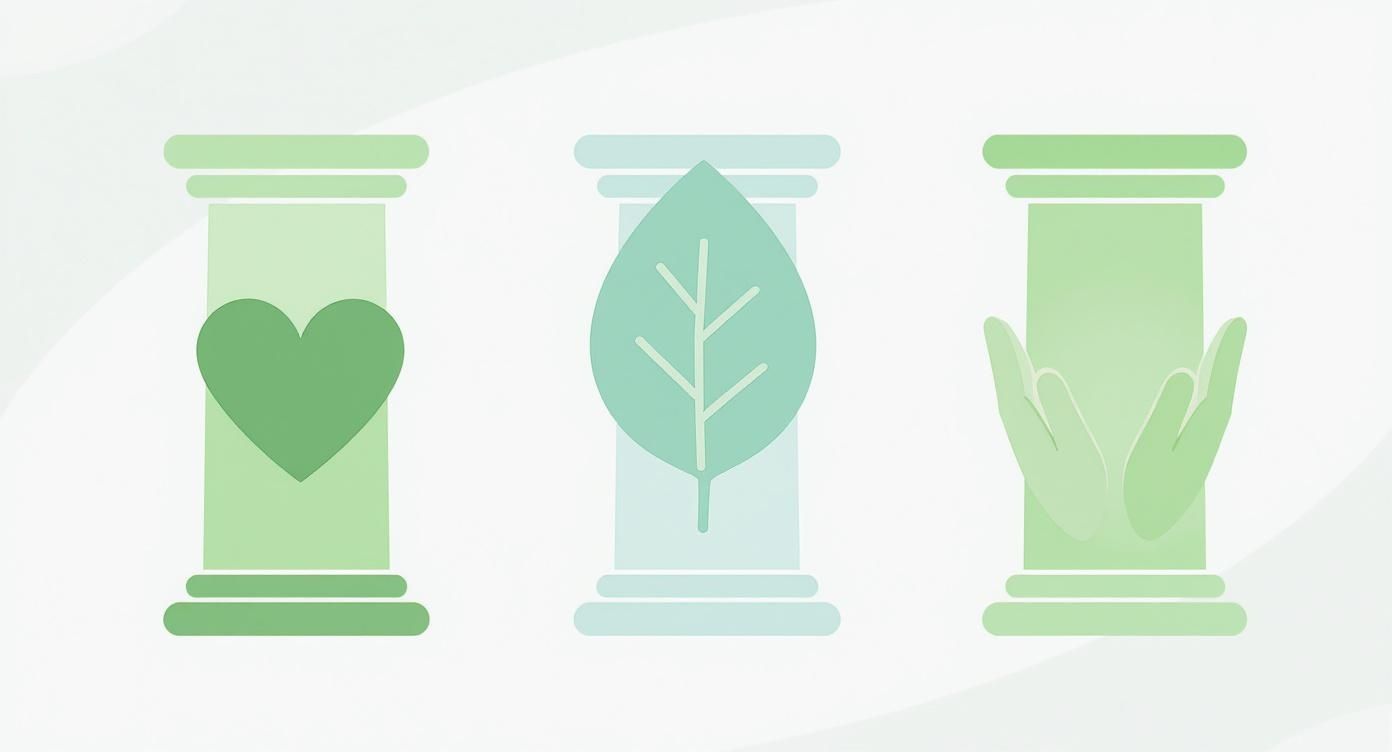
This small infographic helps to visualize how these ideas, far from being abstract, are connected and above all very accessible, even for the youngest.
Create habits that have heart
By incorporating acts of kindness or respect for nature into your family rituals, you help your child build self-confidence. These small tasks quickly become precious memories, and without even realizing it, they instill values that will stay with them throughout their life.
The important thing is not to do extraordinary things, but to do ordinary things with an extraordinary heart. That's where the true power to change things lies, step by step.
This approach goes far beyond simply ticking off a "good deed" on a list. It allows you to cultivate essential skills for growth:
- Emotional intelligence : Learning to put words to one's emotions and to recognize those of others is a superpower.
- The feeling of being capable : By seeing that a small action can bring a smile or make a flower grow, the child realizes that he has a positive impact.
- Connection to the world : He understands that he is part of a whole – his family, his neighborhood, nature – and that he has a role to play in it.
Through playful activities and open-hearted discussions, you will help him become a little citizen who is an active participant in his world, both aware and happy to be able to contribute to it.
To help you start these conversations, here is a small table that summarizes the three pillars and suggests a first concrete action to do together.
The 3 pillars of a positive impact within the family
A summary of the key concepts in this guide, explained simply to start a discussion with your children.
| Pillar | What this means for a child | Our first action together |
|---|---|---|
| Kindness | It's about being kind to people, animals, and yourself. It's about caring for others and doing good for them. | Give a genuine compliment to each family member today. |
| Ecology | It's about taking care of our planet, as if it were our big home. We don't throw anything on the ground and we love trees. | Create a "recycling brigade" at home to sort waste while having fun. |
| Generosity | It's about sharing what you have: a smile, a toy, a little of your time. It's not necessarily about giving things away. | Sort through your toys or books to donate one to a charity. |
Use this chart as a starting point. The important thing is to find the actions that resonate with you and integrate them naturally into your daily life, without pressure.
Developing empathy through everyday actions
Empathy is much more than just a quality. It's the superpower that helps our children connect with others, understand what they're feeling, and act with kindness. Rather than simply repeating "be nice," we can give them concrete tools to strengthen this emotional intelligence.
Every day is full of little opportunities to practice. A bedtime story, a scene observed at school pick-up, or a family movie... anything can become a pretext for exploring the world of emotions. The secret? Turn what you see into a conversation.
Turning observation into conversation
Instead of giving them all the answers, try asking open-ended questions. This sparks their curiosity and encourages them to think for themselves. These little moments of sharing are precious: they nurture their emotional intelligence and, as a bonus, strengthen your bond.
Here are some ideas to start the discussion:
- During a story: "How do you think the character is feeling at this moment? What makes you think that?"
- On returning from school: "I noticed a child playing alone in the playground. How could we help him feel less alone tomorrow?"
- At dinner: "What was the best moment of your day? And the most difficult?"
To take it a step further, why not create an "emotions journal"? Your child can draw or paste pictures that represent what they felt or what they perceived in others. It's their own space to visually express what is sometimes difficult to put into words.
These little conversations, day after day, are far more impactful than a grand moral lesson. They show your child that their emotions, and those of others, truly matter and deserve to be heard.
By helping him put himself in other people's shoes, you're not just teaching him to be kind. You're giving him the tools to build strong friendships and become a thoughtful and caring adult. Every little interaction becomes an opportunity to plant a seed of kindness.
We need to take care of our planet together!
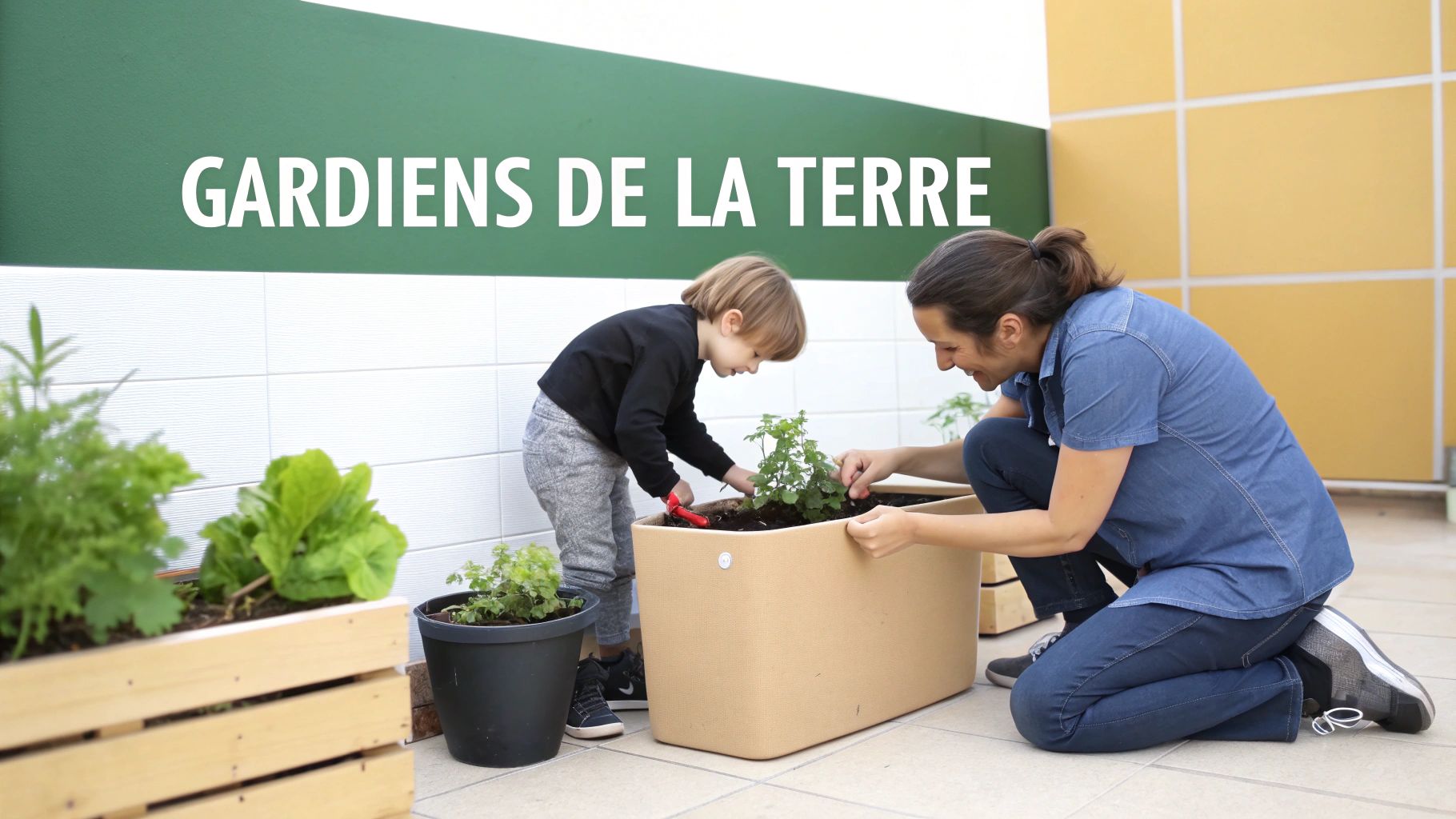
Talking about ecology with children doesn't necessarily mean giving alarmist speeches. Quite the opposite! It's a wonderful opportunity to show them that they have real power: the power to become guardians of our beautiful planet. And what if we turned it into a family game, where everyone becomes an everyday superhero?
The idea is to make them feel that every little gesture really counts. Turning off the light when leaving their room, choosing a reusable water bottle instead of yet another plastic bottle... These simple reflexes, when repeated day after day, become solid habits for life.
Moreover, beyond what we do at home, our travels are also important. For families who love to travel, greener options exist, such as renting a hybrid car in Morocco to explore the country while minimizing their environmental impact.
Ecology, child's play!
Instead of imposing strict rules, why not make it more fun? Recycling, for example, can become an exciting mission if you create a "recycling treasure corner" with bins that the children have decorated themselves. The yellow bin for plastics, the green for glass... each color becomes a category of task.
Here are some challenges to set for your little guardians of the Earth:
- The zero-waste snack challenge: We're taking on the challenge of not throwing away any packaging after snack time for one week. It's all about fruit, homemade cakes, and reusable pouches of fruit compote!
- Our mini balcony composter: It's a great hands-on activity that lets you see the magic happen: peelings gradually transform into rich soil for your houseplants.
- The "Energy Patrol": Every evening, a family member is designated to walk around the house and make sure that all unnecessary lights are turned off and standby devices are unplugged.
These small actions, taken together, have a huge impact. Moreover, the figures prove it: between 1990 and 2024, greenhouse gas emissions in France fell by 32% . This demonstrates that our collective actions truly matter for the future of our children. To learn more, you can consult the data from the Ministry of Ecological Transition.
An idea for her creative journal
To help these habits become ingrained, nothing beats a little creative activity. Suggest that your child draw "their dream planet" in their journal. Right next to it, they can write or draw three small actions they promise to take each day to make our Earth look a little more like their drawing.
It is a simple and positive way to strengthen one's sense of agency and to nurture that precious connection one has with nature.
Making generosity a family ritual
Generosity is something that is cultivated. And the best breeding ground is everyday family life. To help your child understand that they, too, can make the world a better place , the secret is to integrate small acts of sharing into your routines. The idea is for them to become as natural as brushing your teeth at night. We're not talking about grand sacrifices, but rather simple rituals that give meaning to everyday life.
It is through these very concrete experiences that your child discovers that generosity is not just about money. It is above all a heartfelt impulse, a way of connecting with others.
Create sharing rituals that speak to your family
For generosity to become second nature, it must be visible, tangible, and above all, joyful. The trick is to create family traditions, recurring gatherings that anchor this value over time.
Here are some easy ideas to explore and adapt:
- The "sharing box": What if, with each change of season, everyone chose one or two toys, books or clothes in good condition that they no longer use? We put them together in a pretty box decorated for the occasion, then we decide as a family which local charity we are going to donate them to.
- The compliment jar: A simple glass jar on the sideboard, and that's it! Everyone can slip in little anonymous notes to thank another family member or highlight a kind deed. We read the messages together once a week. It's a wonderful way to share appreciation.
- "Solidarity Wednesday": Once a month, we give ourselves a small mission. It could be preparing biscuits for the neighbors, helping grandparents in their garden, or even making pretty cards for the residents of the local retirement home.
By making generosity a shared activity, you show your child that giving feels just as good as receiving. Their self-esteem is strengthened: they feel useful and capable of bringing joy to those around them.
Invisible generosity, but so precious
Let's not forget to value the acts of generosity that are not always visible. Sharing one's time, offering a listening ear, or lending a hand is just as important as giving objects.
Take the time to acknowledge these quiet acts of generosity in everyday life. For example, when your child helps their little brother tie his shoelaces, when they take the time to listen to a friend who is sad, or when they spontaneously offer to help set the table without being asked.
By putting words to these actions – “It was really generous of you to help him” – you make him realize the value of his gesture. He learns that kindness is a real strength and that every small interaction is a chance to make the world a little kinder, one person at a time.
The creative journal: a playground for good ideas
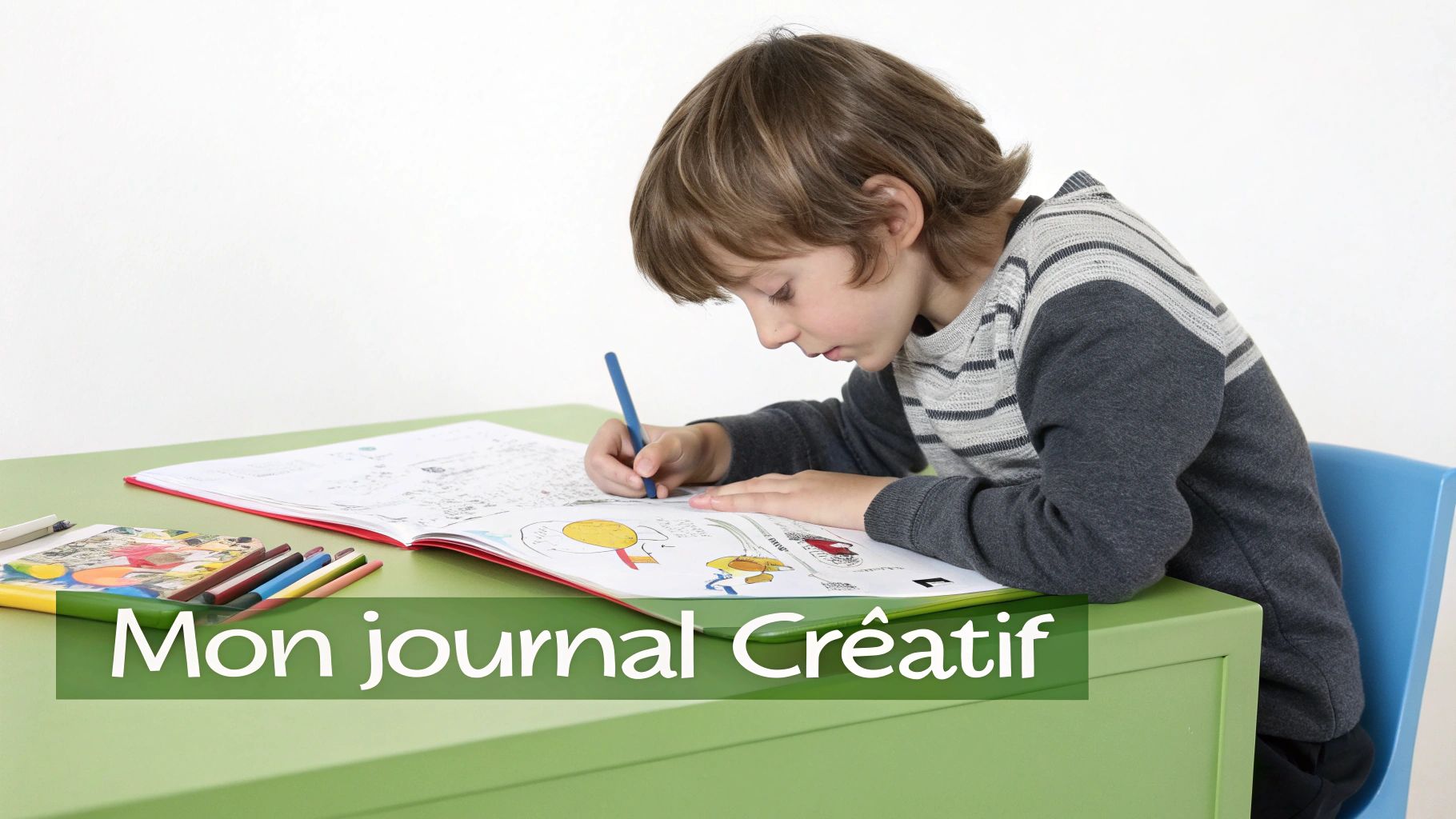
Sometimes, the greatest revolutions begin on a simple sheet of paper. For a child, putting their ideas and dreams down on a page is an incredible way to make them real. This is where the creative journal comes in. Forget the simple notebook: it's a true space of freedom where imagination takes flight and projects come to life.
This tool is a little bit magical. It helps children transform somewhat vague concepts, like "save the planet," into concrete and highly motivating missions. It's the perfect place to give shape to their ideas and organize their plans to make the world a better place , without any pressure. The only goal? To have fun and let their creativity flow.
Themed pages to stimulate the imagination
To keep the experience fun, don't hesitate to suggest amusing and inspiring themes to your child. The idea isn't to "fill" pages, but rather to create a world that reflects their personality. This journal will quickly become their secret headquarters, the foundation of all their great ideas!
Here are some ideas to get started:
- My Good Deeds Treasure Map: Your child can draw on it or stick a sticker for each small act of kindness performed. Watching this map fill up is a source of immense pride and motivates them to continue!
- The Inventor's Workshop: This section is dedicated to pure, unadulterated creativity. Here, he can design crazy machines to clean the oceans, imagine gadgets to help animals, or even invent a device to make sad people smile.
- My secret plan to change things: Here, we get down to business! He can, for example, draw up plans to build a birdhouse, list the ingredients to prepare biscuits to offer to the neighbors or organize a toy collection with his friends.
The important thing is to value every idea, even the most far-fetched. This journal is a fantastic exercise in creativity and problem-solving, skills that will serve her throughout her life.
How to keep the flame alive?
To ensure this time remains enjoyable, the golden rule is simple: never impose it. The journal belongs to your child; it's their private sanctuary. Encourage them to use whatever they can find: markers, colored pencils, collage materials, glitter... There are no rules, except one: express themselves freely.
By transforming his dreams into drawings and action plans, he learns something fundamental: his ideas matter , and he has the power to make them a reality. Each page turned is a step closer to confidence in his ability to have a positive impact on the world around him.
Are you asking yourself questions? That's normal!
Embarking on the adventure of making the world a better place as a family raises many questions. That's perfectly natural! Let me shed some light on the most frequently asked questions so you can move forward with confidence.
How do we talk about sensitive topics?
Discussing poverty, injustice, or pollution with a child aged 6 to 12 isn't always easy. The key is to find the right balance: being honest, but without passing on our adult anxieties.
The secret is to use simple, concrete words that make sense to him. Instead of dwelling on the problem, you can immediately shift to solutions, to what you , on your own scale, can do. For example: "You know, some families have less than we do. That's why we can donate the toys you don't use anymore; it will make a great gift for them!"
What if he feels very small in the face of problems?
Your child might feel a little overwhelmed, or even discouraged, by the magnitude of the task. This is a perfectly human reaction. When this happens, it's the perfect time to remind them of the incredible power of small actions.
Do you know the legend of the hummingbird? It's a perfect little story for that. It tries to put out a huge forest fire by carrying water, drop by drop, in its beak. Every drop counts. Every action counts.
Celebrate every small victory. The smile of the neighbor who receives one of her drawings, the little plant that grows in the garden thanks to her care... All of these are concrete proofs that her actions have an impact. That's what will fuel her motivation.
How can we prevent the momentum from losing momentum?
Consistency is far more important than perfection. A small action each week is better than one big project once a year. The idea is to integrate these actions into your family routines, so they become second nature.
Above all, keep it fun and joyful! When caring for others and the planet becomes an excuse to have a good time together, it's no longer a chore. It simply becomes part of who you are as a family.
The My Book Story journal is a fantastic tool to support you on this journey. It's filled with creative activities and simple questions that help your child get to know themselves better, build confidence, and turn ideas into actions. Discover how it can enrich your family time right here .