


As parents, we all want our children to grow up to be caring adults, capable of making the world a better place . But how do we translate this grand ideal into simple, concrete actions that a child can understand? The secret lies in transforming empathy and a sense of responsibility into small, everyday family adventures that nurture their self-confidence and emotional well-being.
Teaching your child to change the world, one step at a time
You probably dream of seeing your child grow up to be an engaged and caring adult. The problem is that the idea of "making the world a better place" can seem overwhelming, even a little vague, for a young child. The trick is to simplify it into fun and concrete actions they can do right now, thus transforming important values into positive family rituals.
The goal isn't to put pressure on them, quite the opposite! It's about showing them that every little gesture truly matters. By incorporating these moments into your routine, you give them confidence in their ability to make a difference, and you boost their self-esteem.
Transforming big concepts into fun rituals
Forget long, moralizing speeches and focus on action. Talking about solidarity is all well and good, but baking a cake together for an elderly neighbor is much more meaningful. Explaining environmental issues takes on its full significance when you embark on a fun "recycling mission" as a family, sorting waste while having fun.
The idea is to show your child that their world isn't limited to their bedroom or the playground. Every interaction is an opportunity to spread kindness and make the environment more pleasant for everyone.
This approach allows us to connect important values to positive emotions and happy family memories.
Here are some easy ritual ideas to get started:
- Tabletop conversations : Instead of simply asking "How was your day?", try adding a question like, "Did you do anything kind for anyone today?" or "Did you see anyone do a good deed?". This promotes kindness.
- Bedtime stories : Choose books with heroes who demonstrate empathy, courage, or who help their community. This is a great source of inspiration for your child's personal development.
- Weekend missions : A simple walk in the park can become a "nature cleanup" operation, and gardening becomes a way to take care of our planet, while developing patience.
By doing this, you're not just teaching your child to be a good citizen. You're giving them the tools to develop their emotional intelligence, creativity, and self-esteem. Every small action becomes a building block for a better world, and also for a more confident and fulfilled child.
Developing empathy, one step at a time
To truly want to make the world a better place , you must first learn to connect with others. For a child, this superpower is empathy. And the good news is: it's cultivated much more easily through small, everyday actions than through grand speeches. Your role, as a parent, is to help them develop this key emotional skill.
Everyday situations, like an argument at school or even a story you're reading together, are valuable opportunities. Your child tells you about a fight in the playground? It's the perfect moment to analyze everyone's emotions together. A simple anecdote then transforms into a real lesson in emotional intelligence.
Turning arguments into learning opportunities
Instead of immediately trying to determine who is right or wrong, try approaching the situation with genuine curiosity. By asking open-ended questions, you help them put themselves in their classmate's shoes and see the impact of their own actions.
Here are some ideas to start the discussion with your child:
- "How do you think your friend felt at that moment?"
- "What could we have done to make him feel better?"
- "And if that happened to you, what would you need?"
This simple approach shows him that everyone's emotions are important, even when they disagree. It's a fundamental skill that will help him build healthy and strong friendships and strengthen his self-confidence.
By thinking this way, your child no longer sees just a problem, but an opportunity to understand and make amends. They learn that their actions have a real impact on the hearts of others.
To take it a step further, why not launch "kindness missions" as a family? It's easy! The idea is to perform small acts of kindness, but intentionally. It could be leaving a thank-you note for the mail carrier, giving a drawing to a neighbor, or offering help to a classmate who's struggling with their homework.
Every little action proves to him that kindness is a choice, and that it brings happiness. Recording these acts in his My Book Story journal helps transform them into positive memories and nurtures his pride. It's a tangible way to see the good he spreads around him.
Transform your home into an eco-friendly playground
Ecology can seem a bit serious. But what if we turned it into a thrilling adventure for your child? The idea is simple: transform the house into a super laboratory where taking care of the planet becomes child's play. We'll leave aside the grand pronouncements and focus on concrete actions, small missions that show them that they, too, can make the world a better place .
The secret? Give your child an active role. By entrusting them with small, age-appropriate responsibilities, you're doing much more than just teaching them to sort. You're boosting their self-confidence and helping them understand that even their smallest actions truly matter.
Green missions for everyday little heroes
Every room in the house can become the headquarters for an eco-friendly mission. The goal is to integrate these habits into your daily life without them becoming a chore, transforming them into family rituals.
Here are a few ideas to get you started:
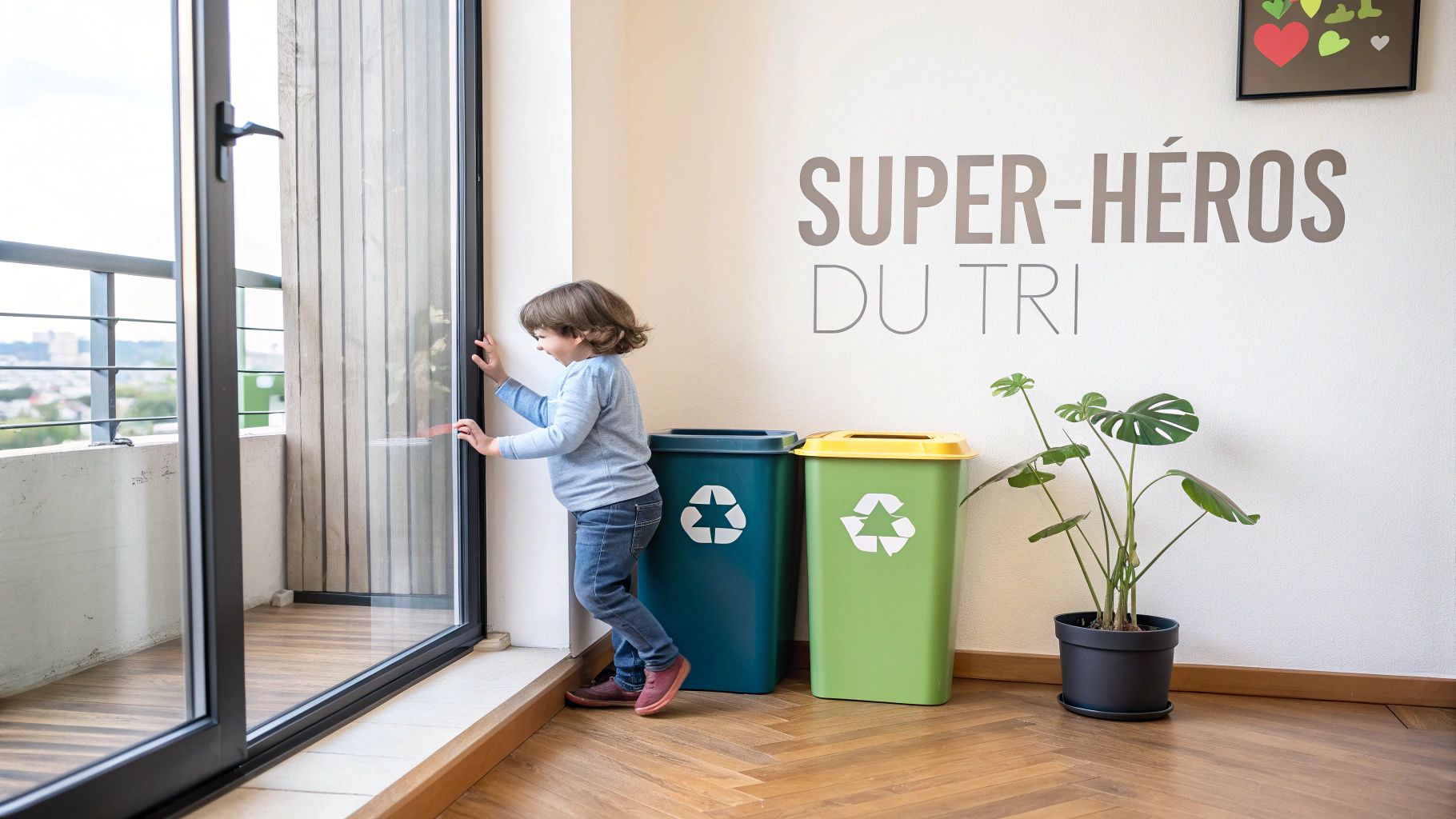
- Become the recycling master: Set up a super simple sorting system with colored bins or fun stickers. Your child will be the "recycling chief," responsible for making sure each item goes in the right bin. A great way to develop their sense of responsibility.
- Adopt a mini-composter: No need for a big garden! A small kitchen or balcony composter is perfect for showing them, firsthand, how peelings are transformed into compost. A real science lesson that stimulates their curiosity.
- Launch the "waste hunt": Once a week, go on a commando mission around the house. Who will find the most lights left on unnecessarily, chargers plugged in unnecessarily, or dripping taps?
Give him fun titles like "Guardian of Light" or "Water Superhero." He's no longer doing a chore; he's performing a crucial mission for the planet! This boosts his pride and sense of accomplishment.
Each mission becomes a source of pride and personal growth. That's much more effective than a long explanation.
For older children, you can even talk about renewable energy. It's a very concrete topic! In France, for example, it already covered 15.8% of our primary energy consumption in 2023, creating over 118,000 jobs in the process. If this topic interests you, you'll find more information in the key figures for renewable energy .
To give you even more ideas, here are some themed missions that your child can record in their journal.
| Fun eco-friendly missions for 6-12 year olds |
| :--- | :--- | :--- |
| Mission Name | Child's Objective | Creative Idea for the Journal |
| Anti-Plastic Agent | Reduce single-use plastic consumption. | Glue found cardboard or glass packaging and draw alternatives. |
| Energy Detective | Identify sources of electricity waste. | Draw a plan of the house with red "X"s on appliances left on standby. |
| Secret Garden Keeper | Tend to a plant or a small vegetable garden. | Take photos of your plant every week and note its growth. |
| Master Composter | Ensure the right waste goes into the compost. | Draw the different layers of compost and the little creatures that work there. |
By recording all these successes in their My Book Story journal, your child is not just keeping track of their actions. They are building, page after page, positive memories and permanently anchoring these eco-friendly habits that will make them a responsible citizen.
Getting involved in your local community as a family
The adventure of making the world a better place often begins right around the corner. Your neighborhood is a fantastic playground to show your child that their actions have a direct and visible impact on their environment, thus strengthening their sense of belonging and well-being.
When these initiatives are transformed into family missions, the child understands that he is part of something bigger. He realizes that his contribution, however small, makes everyone's life more pleasant and supportive.
Micro-adventures for a big impact
You don't need to think big to get involved locally. It's simply a matter of identifying small opportunities to do good around you and turning them into fun activities to do together.
Here are a few simple ideas to try out this weekend:
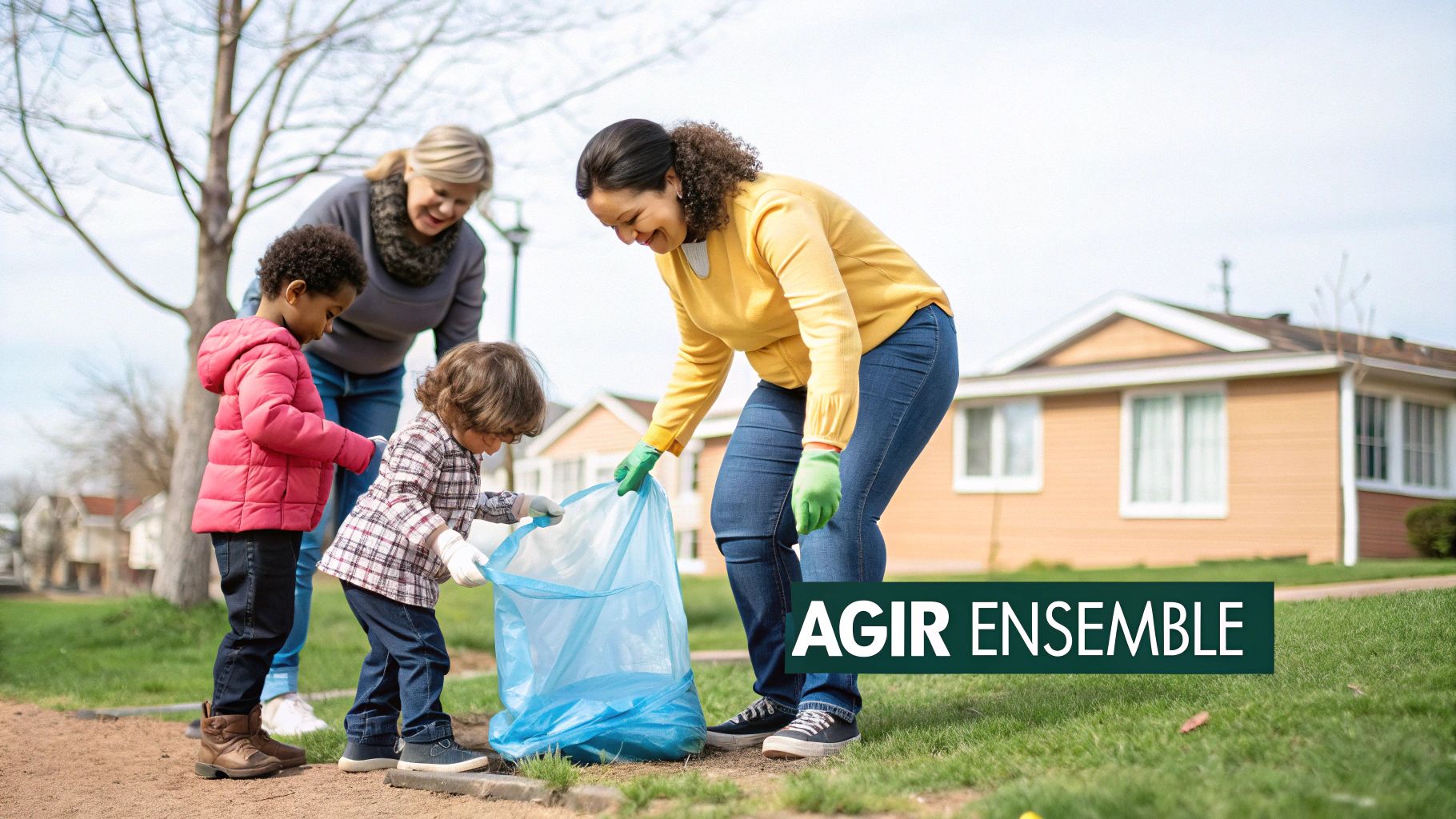
- Clean Park Operation: Next weekend, organize a trip to your local park, armed with gloves and bags. The mission? Leave the place even cleaner than when you arrived. It's a very concrete action that demonstrates the importance of taking care of the spaces we share.
- The Sharing Box: Why not install a simple wooden crate in front of your house? Invite your child to leave toys they no longer use inside, so other children can enjoy them. This simple gesture teaches them about sharing and generosity in a concrete way.
- A helping hand with groceries: Offer to help an elderly or mobility-impaired resident of your building carry their shopping. It's a service that costs nothing, but it creates a bond between generations and teaches respect.
These small actions strengthen a sense of belonging and show your child that they have the power to improve their own environment. Moreover, these actions contribute to broader goals, such as improving quality of life. In France, for example, 23 urban areas still face challenges regarding air quality. You can consult the complete data in the sustainable development statistics.
By getting involved locally, your child learns a fundamental lesson: caring for their community is like caring for a large community garden. Every little flower planted makes it more beautiful for everyone.
Creativity to bring his ideas to life
What if your child's imagination was their greatest superpower for making the world a better place ? Rather than a long speech, an artistic creation can touch people's hearts and inspire them to take action. It's an incredible way to share powerful messages in a positive and gentle way, all while developing their creativity.
As a family, embark on projects that blend fun and commitment. These creative moments aren't just entertaining activities; they show your child that their voice truly matters and that their talents can have a real impact. It's a wonderful way to help them build confidence in themselves and their ideas.
Art as a way to make one's voice heard
You don't need to be a great artist to get started! The most important thing is to let your child's imagination take the lead. By doing so, they learn to transform an idea or value that is dear to them into something tangible, which is very rewarding for their personal development.
Here are some creative ideas to get you started as a family:
-
Posters that bring a smile : Choose a theme that resonates with you, such as recycling or the importance of being kind. Get out your markers, magazines for collages, and lots of colors to create posters to put on your door or in the building's common areas.
-
A song for the planet : What if you invented new lyrics to a melody everyone knows to talk about saving water? It's a super fun way to remember good everyday habits.
-
A homemade puppet show : Make puppets from old socks and imagine a short story about helping each other neighbors or respecting animals. Simple and effective for conveying values!
These activities are also an excellent opportunity to discuss important topics, such as the energy transition. In France, the development of renewable energies has progressed significantly, reaching 24% of our primary energy production. These efforts contribute to a cleaner future. To learn more, you can take a look at the key energy figures for 2025 .
Every drawing, every song, every story is a little seed you plant together. Your child discovers that their creations aren't just pretty; they have real power. They can make people think, bring smiles, and even encourage others to get involved in turn.
Value every small gesture and cultivate the joy of taking action
To encourage your child to keep going, it's essential to celebrate their efforts, not just their successes. By valuing every small attempt, you nurture their motivation and self-confidence. After all, enthusiasm is the fuel that powers big changes!
We're not aiming for perfection, but for progress. By celebrating every gesture, even the smallest, you show them that what matters is trying. The grand, sometimes slightly intimidating mission of "making the world a better place" then transforms into a series of small, joyful victories that are within their grasp.
Make every good deed a memorable one
Turning these moments into family rituals helps to solidify this positive mindset. Why not create a "wall of pride" at home? You could display their drawings, photos, or little notes that recount their good deeds. It's an excellent tool for boosting their self-esteem.
By celebrating these moments, you show him that what he does truly matters, that his contributions are seen and appreciated. He will understand that changing the world is not an overwhelming task, but a collection of small joys that, put together, make a real difference.
Taking a moment each week to talk about it together is also an excellent idea. Here are some family rituals to cultivate gratitude and pride:
- The Good Deeds Jar: Put a jar in a prominent place. Every time someone does a good deed, they write a note and put it in. On Sundays, for example, you can read all the notes together. It's a great way to share!
- The dinner question: Once a week, start the conversation: "Tell me about the nicest thing you did or saw this week."
These simple habits create a positive and encouraging family environment. It's the best way to nurture your child's self-confidence and motivation .
We answer your parenting questions
Talking about big topics like solidarity or protecting the planet can quickly seem overwhelming, even a little daunting. We often wonder how to approach these subjects without our children feeling completely overwhelmed by the scale of the task. The solution is to always bring things down to a manageable level and focus on the emotional aspect.
How do we maintain a positive and motivating approach?
The secret is to drop the moralizing tone. Instead, emphasize the positive and concrete aspects of their actions. Rather than saying, "Don't waste!", why not try, "When you remember to turn off the light, you're helping the planet"? The idea is to show them that they have real power, however small, and to help them make the world a better place with a smile.
To make it resonate with him, use simple images. For example, you could compare society to a great sports team: everyone has a role to play to win the match, even the youngest player.
If your child tells you they feel powerless, that their efforts are pointless, remind them of this beautiful image: an ocean is made up of countless tiny drops. Every good deed is a drop that counts. And all together, they create something immense.
Answer their questions honestly, but always focus on what's possible, on solutions, and on the sense of pride they can feel. That's how you guide them with confidence, without passing on your own anxieties.
The My Book Story journal is designed precisely for this purpose: to transform these wonderful ideas into small, everyday actions and celebrate every step forward. Discover how it can help your child become a confident, well-rounded global citizen, ready to take action .