


What if a simple five-minute routine could transform your child's day and strengthen your bond? That's exactly what the Five Minute Journal offers—a simple and fun tool designed for 6- to 12-year-olds to help them see the bright side of things. Each day, a few questions are all it takes for your child to learn to recognize the little joys of everyday life, express gratitude, and build self-confidence.
What is the Five Minute Journal for children?
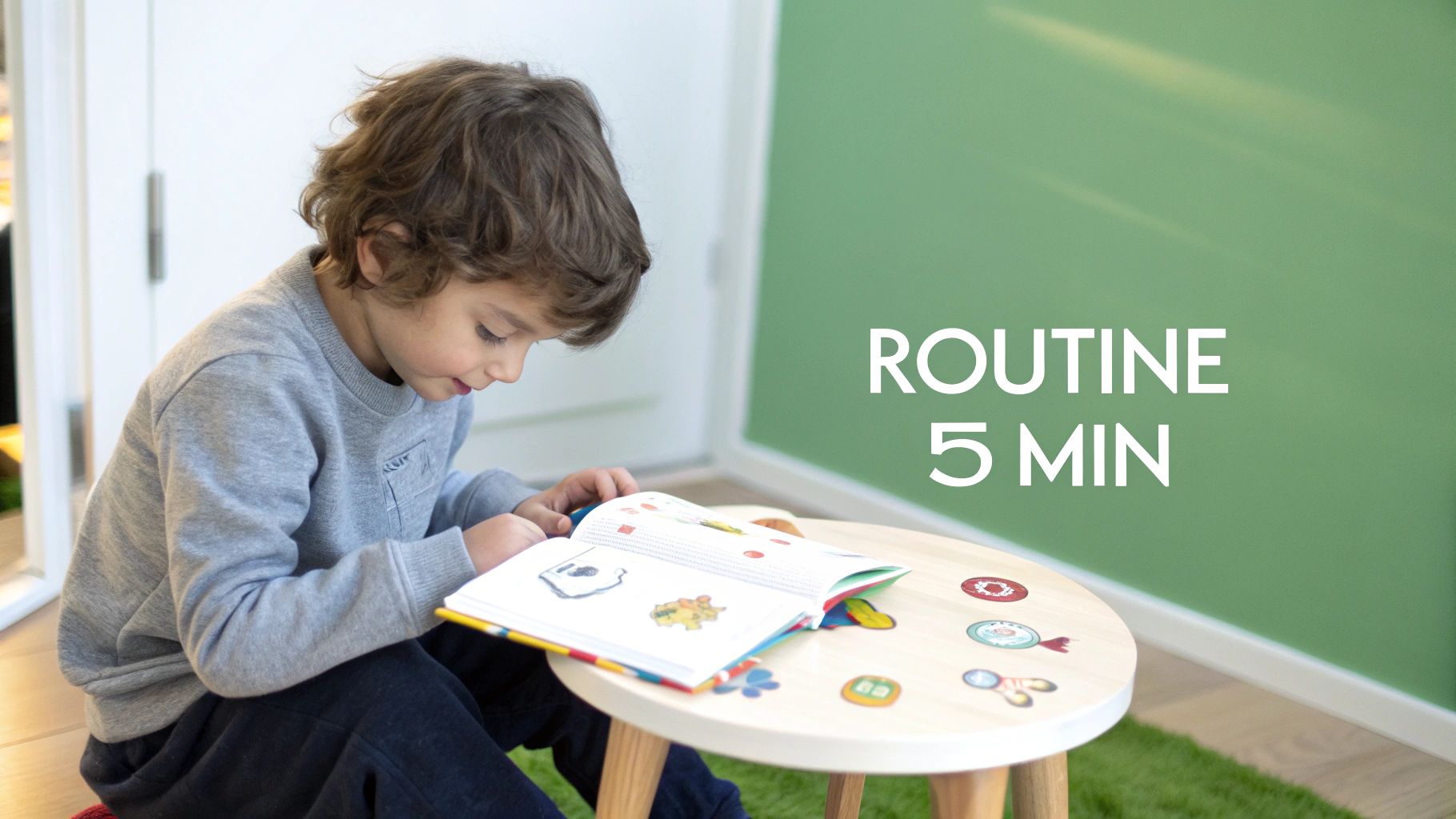
The Five Minute Journal is much more than a pretty notebook. It's a gentle method for cultivating a positive mindset, a kind of little family ritual. The practice is divided into two very short sessions, one in the morning and one in the evening, to gently guide your child's thoughts and open up a kind dialogue between you.
The advantage is that it fits very easily into the whirlwind of family life. In the morning, it's a way to start the day off right, by connecting for a few moments. And in the evening, it's a moment of calm to remember good times before falling asleep with a light heart.
To better understand the idea, here is a table that summarizes the essentials of this approach.
The Five Minute Journal at a glance
Quickly understand the fundamentals of this method to support your child.
| Key Principle | Benefit for the child (6-12 years old) | Time needed per day |
|---|---|---|
| Cultivating gratitude | Learn to appreciate the little things and see the positive. | Less than 5 minutes |
| Define an intention | He projects himself positively into his day and develops his confidence. | The morning |
| Reflecting on his day | Anchors happy memories and promotes peaceful sleep. | The evening |
In short, it is a very simple tool that can have great effects on your child's well-being, without adding to the family schedule.
A tool for growing and thriving as a family
Here, there's no pressure or performance goals. The aim is to create a small space for genuine and caring sharing. In just a few minutes, you help your child develop their emotional intelligence while strengthening your bond.
This method is based on very simple ideas:
- Concrete gratitude : The child is invited to name specific things for which they are grateful (a hug, a shared game, a good meal). This helps them transform an abstract feeling into something real.
- Positive intention : They are asked to imagine what could make their day great. This encourages them to take charge of their own happiness.
- Gentle reflection : In the evening, he thinks back on the best moments of the day. It's an excellent way to solidify positive memories and prepare for a good night's sleep.
By guiding your child to focus on what is going well, you are not teaching them to ignore difficulties, but to build the resilience needed to overcome them.
Why gratitude is a superpower for your child

At the heart of the Five Minute Journal method lies a simple yet incredibly effective idea: gratitude . Think of it as a happiness muscle. The more your child exercises it, the stronger they become at facing life's little annoyances and big challenges.
The principle is simple: each day, he takes the time to identify three things he is grateful for. It's not just a matter of politeness; it's a real skill that teaches his brain to seek out and notice the positive aspects of his surroundings.
Building trust and optimism
When a child learns to say "thank you" for simple things like a morning hug, a ray of sunshine, or a game together, they create a veritable storehouse of happy memories. It's a habit that helps them cultivate a realistic optimism . The goal isn't to deny frustrations, but to prevent them from dominating the conversation.
A child who practices gratitude learns to savor the small joys of everyday life, no longer taking them for granted. This awareness strengthens their self-esteem, as they realize they are surrounded by positivity and caring relationships.
Gratitude doesn't change the landscape, but it changes the way your child sees it. It's like a pair of glasses that helps them see the beauty, even on an ordinary day.
This practice of personal writing is becoming increasingly popular. While there are no precise figures for the Five Minute Journal , there's a real resurgence of interest in diaries in France. In 2020, 7% of French people said they kept one, compared to only 5% in 2018. This proves that more and more people, young and old, find comfort in putting their thoughts down on paper. To delve deeper into the subject, this analysis from the newspaper Le Monde is very interesting.
Concrete examples for your child
To help him get started, you can suggest a few ideas. Here are the kinds of small things he could jot down:
- A shared moment : "I am grateful for the story Dad read to me tonight."
- A personal achievement : "I'm proud to have succeeded with my drawing at school."
- A simple pleasure : "I loved the taste of the pancakes for breakfast."
- A kind gesture : "I appreciated it when my friend lent me his marker."
By encouraging him to be specific, you help him to truly feel and anchor these positive emotions.
How to start the family journaling ritual
Introducing a new habit as a family can seem like just another chore to add to the list. But with the 5-minute journal, the idea is quite the opposite: to make it a moment of play and parent-child connection.
The first step is finding the right time for your family. There's no hard and fast rule. Some love the energy of the morning, at breakfast, to start the day on a positive note. Others prefer the calm of the evening, just before story time, to reminisce about good times and soothe their minds.
The important thing is to create a small, regular meeting, a bubble of complicity that your child will look forward to.
Create a space to talk and listen to each other
To get your child engaged, your participation is essential. Show them that this moment matters to you. Take your own notebook and fill it out alongside them, sharing what you are grateful for and your small victories of the day. Your example is the best motivation.
Make it fun. Instead of saying "Come on, write your journal," try a more inviting approach like "How about we use our special moment to tell about our day?"
Ultimately, what the child writes on paper is secondary. What matters most is the dialogue you initiate. This moment becomes a shared conversation where everyone feels heard and valued, strengthening the bonds within the whole family.
To start the conversation and make the exercise fun, you can use questions that pique curiosity and encourage sharing.
Here are some question ideas to get you started.
Here are some tips for breaking the ice, especially at the beginning when the habit is not yet established:
-
The morning :
- "What could make your day really great today?"
- "If you could have one superpower just for today, what would it be? And why?"
- "Think of someone who makes us smile. Why does this person make us happy?"
-
The evening :
- "What was the best moment of your day, even if it was something really small?"
- "Did you learn anything new or funny today?"
- "If your day were a drawing, what would you draw?"
With these kinds of open-ended and creative questions, you transform a simple writing routine into a true ritual of connection. It's a golden opportunity to discover what's going on in your child's mind and heart.
Personalizing the journal to nurture her confidence and creativity
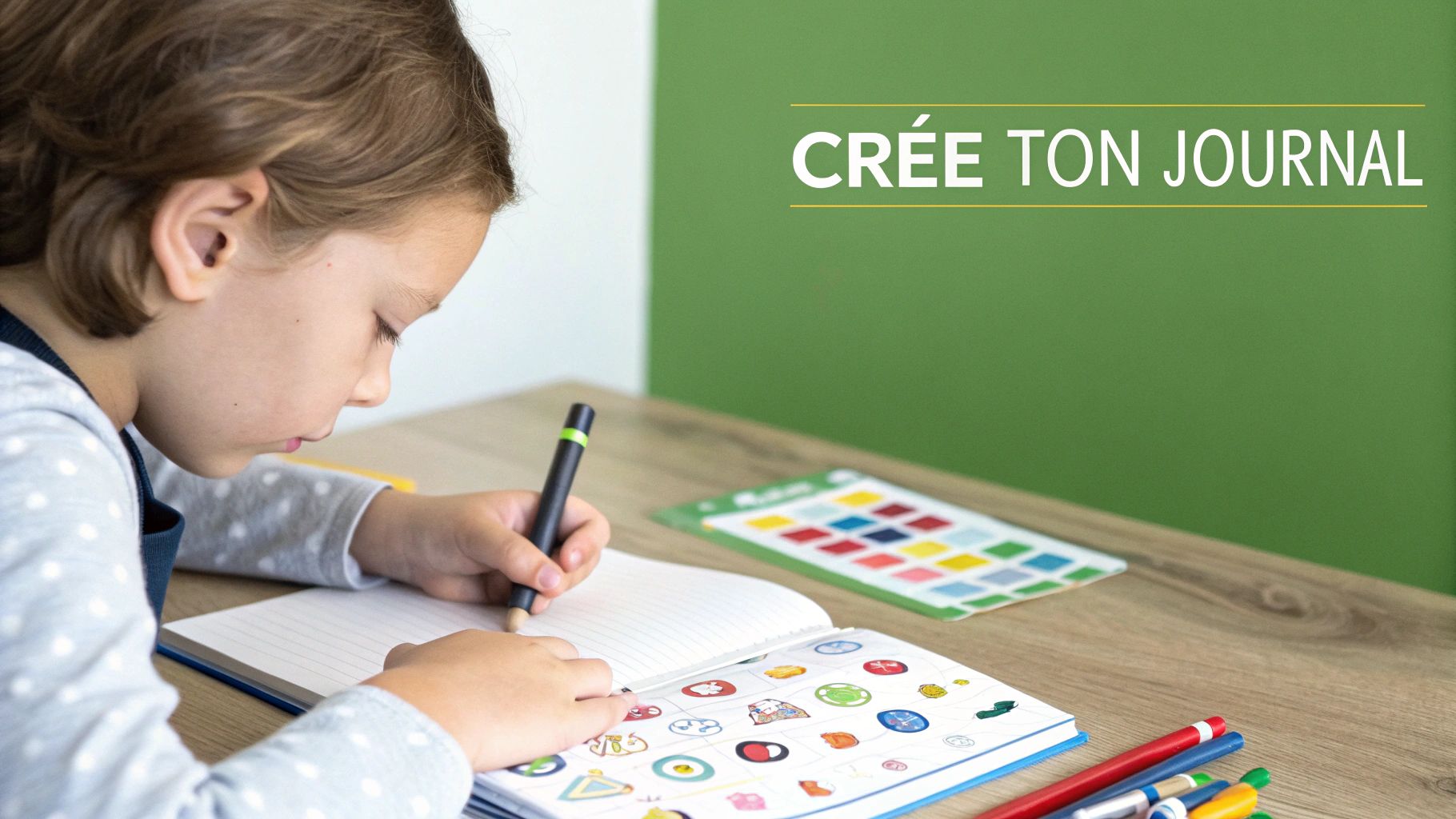
The real power of the 5-Minute Journal lies in its flexibility. Think of it as a basic recipe that you can adapt to suit your child's tastes and needs. The gratitude questions are a great starting point, but they're not set in stone.
The journal thus becomes a companion that grows and evolves with your child. One day, you might sense that they need a little boost to their self-confidence. Another day, their boundless imagination will be just waiting to be expressed.
By adapting the questions, you transform a simple notebook into a genuine tool for dialogue. You show your child that their feelings are important, and you offer them a safe space where they can be themselves.
Adapt the questions to your child's needs
Your best guide is listening. Your child's answers, silences, or enthusiasm are all clues to what's going on in their mind. Use these observations to steer the journal toward topics that truly resonate with them.
Here are some ideas for varying the questions depending on what you want to explore together:
- To boost self-confidence: Emphasize their successes and courage. Questions can help them become aware of their strengths and celebrate their efforts, whether they succeeded or not.
- To spark creativity: Favor open-ended questions, those with no right or wrong answer. The goal is to encourage them to dream, invent stories, and explore imaginary worlds.
- To cultivate empathy: Turn the conversation towards others. These questions encourage him to think about his friends, his family, and how he can bring a little sunshine into someone's day.
By adapting the questions, you're not just filling pages. You're opening a window into your child's inner world, showing them that you're there to listen and support them.
This small daily ritual, even if it only lasts a few minutes, weaves an incredibly strong and precious bond between you.
Ideas for questions to personalize your child's journal
To help you get started, here's a table with a few examples. Feel free to mix things up and invent your own questions as a family.
| Target | Example of a morning question | Example of an evening question |
|---|---|---|
| Self-confidence | What brave thing are you going to try to do today? | What are you most proud of today? |
| Creativity | If you could invent an imaginary animal, what would it look like? | If your day were a story, what would its title be? |
| Empathy | How could you make someone smile today? | What kind act did you see or do today? |
| Emotional Management | Draw the emotion you are feeling this morning. | Is there anything that made you sad or angry today? We can talk about it. |
The most important thing is to have fun and make this a pleasant experience. Let your child ask their own questions – it's even better!
Integrate this new routine smoothly, without any pressure.
For the 5-minute journal ritual to work, it must remain a moment of pleasure. Above all, don't see it as an extra chore. The secret is to be flexible and aim for consistency rather than perfection .

If one day your child doesn't feel like writing, that's perfectly fine. The important thing is to maintain this little ritual, this moment of sharing. Simply suggest other ways for them to express themselves.
And what about days when inspiration is lacking?
Sometimes the words don't come, and that's perfectly normal. The goal isn't to fill pages at all costs, but rather to create a little bubble of calm together.
Here are some ideas for these moments:
- Drawing to the rescue : Suggest that they draw their mood, a memorable moment from their day, or something that would make them happy. A simple doodle can say a lot!
- A simple discussion : Ask him the questions aloud. Simply expressing your thoughts can be just as beneficial as writing them down.
- The "treasure" notebook : Suggest that he/she stick a photo, a sticker or even a leaf from a tree that represents his/her day well.
Never force him. The idea is to encourage, not to coerce. Instead, emphasize the well-being he feels after this short moment, so that he associates it with something positive and comforting.
Indeed, this short format is designed to avoid becoming a mental burden. Its effectiveness lies entirely in its brevity, a concept that is increasingly popular. Just look at the success of podcasts like "En 5 minutes" to understand that this quick format resonates strongly in France. You can see for yourself how this format captivates French-speaking listeners and why it works so well in our busy lives as parents.
By transforming this moment into a ritual of connection that you both look forward to, you give your child a valuable tool to navigate their emotions, one small step at a time.
Happiness is something you learn a little bit every day.
Ultimately, the Five Minute Journal isn't just another pretty notebook on the bedside table. It's a true investment in your child's emotional well-being and the harmony of your family. In just a few minutes a day, you give them tools for life: developing resilience, seeing the glass half full, and, above all, noticing the little wonders of everyday life.
The idea isn't to add another task to an already busy routine, but rather to create a little bubble of connection. A precious moment to reconnect, truly listen to each other, and grow together.
It's an adventure that forges stronger bonds and plants the seeds of lasting happiness, one small step at a time.
So why not give it a try? Adapt it to your own style, to your family, and see for yourself the changes such a small habit can bring. Each completed page is a small victory, another step towards a child who is confident, calm, and full of imagination.
The most beautiful thing about all of this is sharing this moment and seeing your child blossom, one gratitude at a time. Your presence by their side is their greatest gift.
Your questions about the 5-minute news segment (and our answers!)
It's normal to have a few questions before embarking on this adventure with your child. Here are the most frequently asked questions from parents, to help you get started with peace of mind.
At what age can one start?
From age 6 onwards, it's often a good time, especially if you're there to support them at the beginning. Don't panic if their handwriting isn't perfect yet; that's not the point! The idea is to help them put words to their emotions, not to make them do a dictation exercise.
For younger children or those who don't like to write, turn this moment into a simple conversation. Your child can dictate their thoughts or even draw them. What really matters is opening up the dialogue and sharing this moment.
What if my child gets bored and finds it repetitive?
That's an excellent question! If things get routine, it's time to shake things up a bit and get creative together.
Some tips to keep the magic alive:
- Change the questions: Draw on the ideas in the article or invent your own. Why not talk about friends, nature, or the superpowers he would like to have?
- Suggest some themes: What if this week we focused on kindness? Or on adventure? Or even on the wildest dreams?
- Add some color: Get out the markers, stickers, glitter... Transform the journal into a small personal work of art.
The goal is for this ritual to remain a pleasure, a game. By following their wishes, you show them that their journal grows and changes along with them.
Do you need to buy a special newspaper or will a simple notebook suffice?
A simple notebook is perfect! In fact, it's often even better, because it offers complete freedom to draw, paste photos, and let their imagination run wild. Choosing and decorating it together is also an excellent first step for them to truly make it their own.
What matters isn't the container, but the content and the moment of connection you create. Ready-made journals can be a good starting point, but they're absolutely not necessary to sow seeds of happiness within your family. The key is to get started.
The My Book Story journal was designed to guide your child through this wonderful exploration in a simple and fun way. Discover how it can become a partner in their child's development.
Discover the My Book Story notebook and start your adventure today!