


School is much more than a place where you learn to read and count. It's a real adventure for a child , a decisive stage where they develop their personality. They develop their confidence, awaken their creativity, and make their first friendships. In short, it's where they shape their vision of the world and their love of learning.
Supporting your child at school for complete development
As a parent, seeing your child walk through the school gates for the first time is a whirlwind of emotions. You feel immense pride, but also a touch of worry. Will they be okay? How can you help them if they encounter difficulties? These questions are completely normal and demonstrate your love. See this time as a unique opportunity to strengthen your bond around a common goal: their well-being.
School life isn't just about grades on a report card. It's a rich and intense emotional journey. Small victories, moments of doubt, budding friendships, and first arguments all shape your child's personality. Your role isn't to pave the way for them without obstacles, but to give them the emotional tools and confidence they need to learn to overcome them on their own.
Transforming challenges into growth opportunities
This guide aims to provide you with concrete and supportive tips. Together, we'll explore how to turn school challenges into opportunities for learning and personal development. To achieve this, we'll focus on three key pillars.
- Emotional Well-being: The foundation of everything is teaching your child to put words to what they feel. A child who feels listened to and safe has a much freer mind to learn.
- Self-confidence: Highlight their efforts, not just their successes. This is how they'll learn perseverance and the ability to bounce back after failure. This will encourage them to dare and believe in their own abilities.
- Creativity and family rituals: Establishing small, calming rituals and creative moments together as a family creates a safe environment that strengthens bonds. School then becomes a positive experience, not a source of stress.
A child who feels emotionally supported isn't just a better student. They become more well-rounded, curious individuals capable of building healthy connections with others. Your support is key to their development.
We'll see how simple things, like an open after-school discussion or a shared creative activity, can become powerful allies. You'll discover how to turn the school adventure into a rewarding experience, not just for your child, but for the whole family.
Understanding what your child is experiencing at school
For a child , school is a whole world. A veritable whirlwind of emotions. There's the pride of successfully reading a word, the joy of meeting up with friends in the playground, but also the little knot in your stomach before a test. To help them navigate all of this, the first step is to learn to decipher what they're feeling. This is often the key to understanding their behavior, whether at school or once they get home.
Some days, the signs are obvious: a burst of tears before leaving in the morning, or, conversely, a huge smile as you walk out the door. But often, it's more subtle. A recurring stomach ache, an unusual silence at the table, or sudden restlessness can be signs that something is bothering him. Listening to these small changes goes a long way.
Create a real moment of exchange, not an interrogation
We all have this reflex. The famous question: "So, was school good?" And the famous answer: "Yes." End of discussion. To really know what's going on in their head and heart, you have to go a little deeper, with more open questions that show them that you're truly interested in their inner world.
Here are some examples to start an authentic conversation:
- “Tell me the funniest thing that happened to you today!” This immediately sets a positive mood and invites him to share a happy anecdote.
- "Was there a time when you felt a little sad or upset?" This question gives him permission to talk about what's wrong, too, without fear of being judged.
- “Did you learn anything surprising today?” This values learning and discovery, beyond grades.
- "Who did you play with at recess? What game did you play?" Talking about friends is often an easier way to address your own emotions.
By doing this, the return from school becomes a small ritual, a real moment of connection. You show him that all his emotions, the good and the bad, have their place and that you are there to hear them.
When words fail, play takes over
Sometimes, especially with younger children, putting words to what we feel can be mission impossible. In these cases, play and drawing are great allies. Suggest that they draw their day, act it out, or invent a story with their stuffed animals to tell it. You'd be amazed at what can come out of these creative activities!
A child who feels supported and understood at home will find it much easier to concentrate and learn in class. Helping them manage their everyday anxieties gives them the tools to become more resilient and prevents academic difficulties.
This support is even more crucial today. The challenges of the current education system are numerous and can impact children's well-being. Taking care of your child 's emotional balance is therefore not a detail. It is a powerful lever to help them feel good about themselves and give them every chance of succeeding. To learn more about this topic, do not hesitate to read the analysis on the challenges of education in France on learnthings.fr .
Building self-confidence, a pillar of success
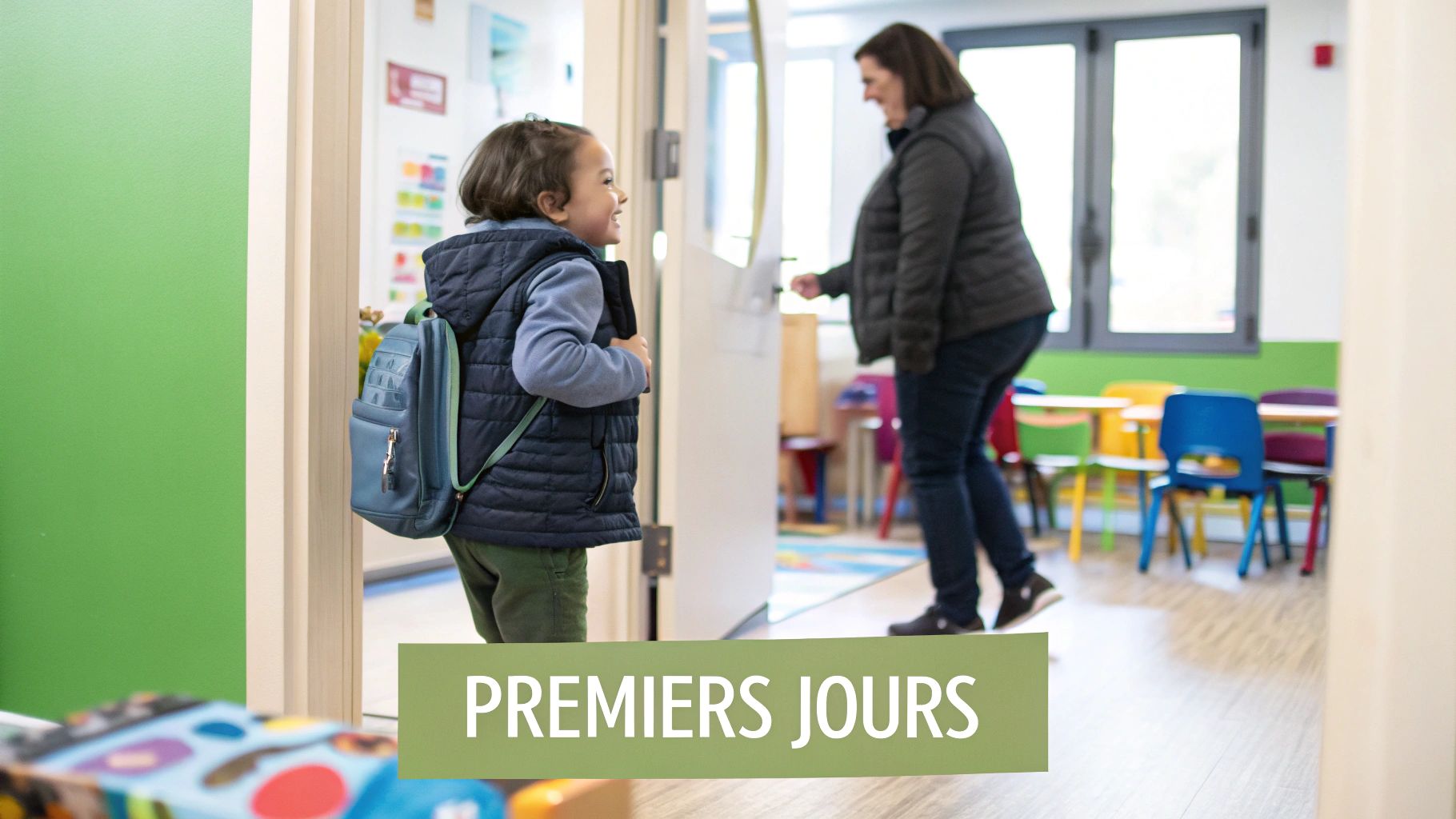
Think of self-confidence as the roots of a tree. It's what allows a child to grow, dare to learn, and not get discouraged at the first obstacle. It's not innate, far from it. Rather, it's a small inner flame that we can help grow, one kind word at a time, day after day.
A child who believes in their abilities won't be afraid to make mistakes. They'll see every mistake not as a failure, but as a new opportunity to learn. This confidence is crucial for their school career, of course, but it will be just as crucial for the rest of their life. And it's built in the little things of everyday life: the words you choose, the experiences you encourage them to have.
Value the effort, much more than the grade
Our reflex is often to focus on the end result: the famous 18/20 in math or the perfect dictation. Obviously, these successes are pleasing! But by only valuing performance, we risk unwittingly creating a real fear of failure. The child could then hesitate to try, for fear of not being up to the task.
What if we shifted our perspective? Focus on the process. Notice and compliment the effort they put in, their persistence, the strategies they tested... regardless of the end result.
Rather than saying, "I'm proud of your good grade," why not try, "I saw how hard you worked to understand this exercise, and that's a real achievement." This small nuance changes everything. You're no longer celebrating a performance, but a much more valuable quality: tenacity.
Encourage his autonomy and initiatives
For a child to feel confident, they need to feel in control of their own world. Giving them small, age-appropriate responsibilities is a great way to foster that sense of competence. It can be as simple as packing their own school bag, choosing their own clothes in the morning, or helping with a chore like setting the table.
Likewise, encourage them to take initiative. Do they have an idea for a game, a craft, or even an outing? Listen carefully and, if possible, help them carry out their project. The message you're sending is powerful: "Your ideas have value, and you're capable of making them happen."
Make mistakes life lessons
Failure is part of the game; it's even an essential step in any learning process. Your response to your child 's mistakes is therefore absolutely crucial for their self-confidence.
Here are some ways to support him with kindness:
- Play it down. Show him that making mistakes is really not a big deal. To help him, don't hesitate to share your own childhood mistakes. He'll understand that everyone makes them.
- Analyze the situation with him. Help him, without ever judging him, understand what went wrong. Ask him questions like: "What could you try to do differently next time?"
- Celebrate resilience. Praise them for daring to try again after failing. It's this ability to bounce back that will build a growth mindset.
By creating a cocoon at home where effort is applauded and mistakes are seen as an opportunity to progress, you give your child the strongest roots to flourish with confidence, both at school and in their future life.
Using creativity to boost learning
Creativity isn't just about the pretty drawing proudly displayed on the fridge. It's actually a powerful motivator that helps your child better understand the world, find solutions, and, most importantly, make school lessons much more interesting. By stimulating their imagination, you're giving them the keys to building their own way of thinking and learning.
Creativity is often confined to the visual arts, but it can be found everywhere. It's simply the ability to make connections between different ideas. For example, transforming a history lesson about the Middle Ages into a short play with Playmobil figures is creativity. Using Legos to visualize multiplication is also creativity. These approaches anchor knowledge much more firmly than simply rereading a notebook.
Bringing school subjects to life
The trick is to connect the sometimes abstract concepts of school with concrete, fun experiences. Learning then becomes an adventure in which your child is the hero, and memories are much easier to create.
Here are some simple ideas to try as a family:
- For history: Suggest that he create a short comic strip about the life of a historical figure or build a model of a castle with old cardboard boxes.
- For math: Cooking is your best friend! Explore fractions by baking a cake or use dried beans to form groups and understand division.
- For French: What if you invented a different ending to their favorite book together? Or why not create a "funny words dictionary" to enrich their vocabulary while having fun?
This image illustrates well the importance of the family environment in learning, by showing different facets of children's work habits. 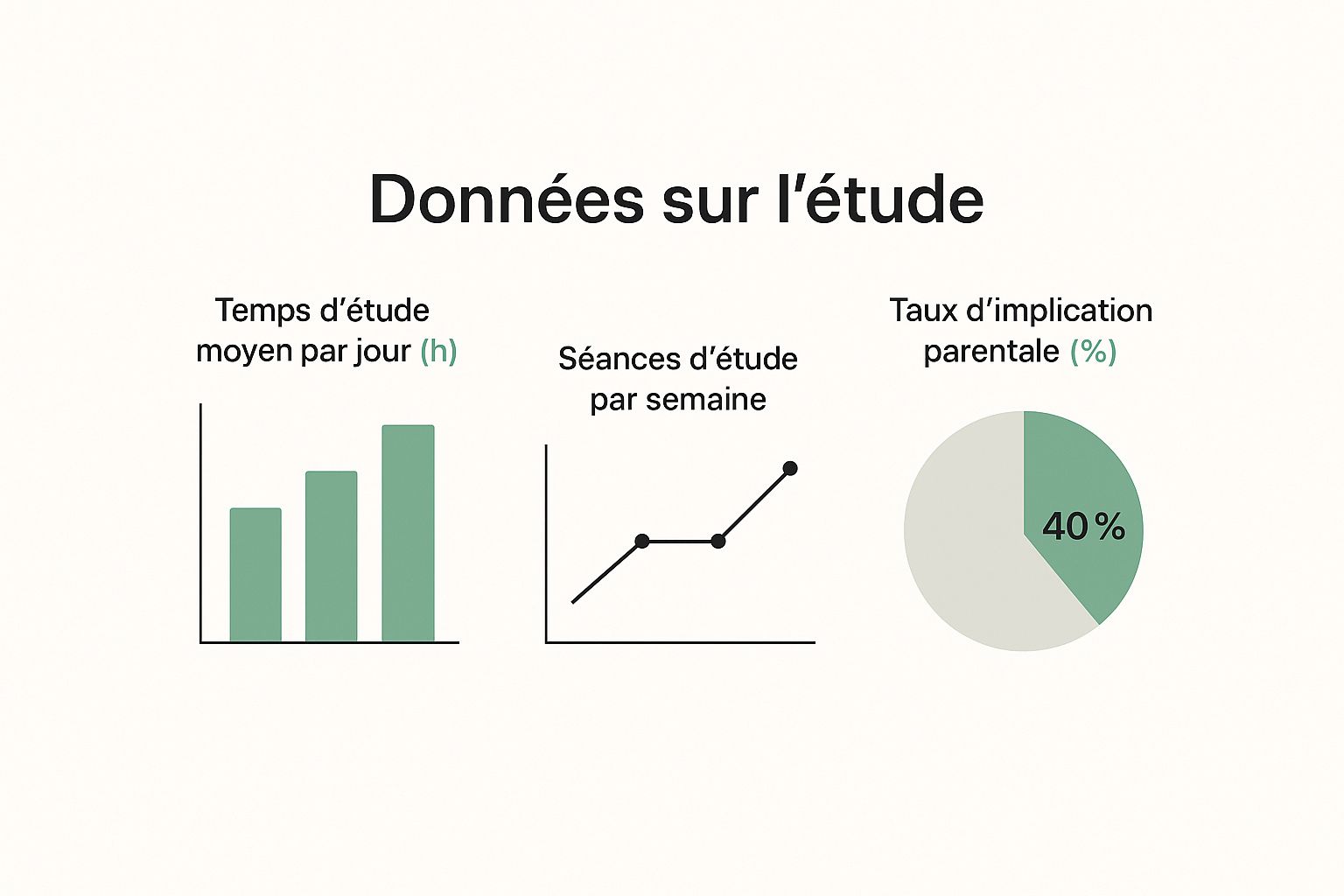
We see that the framework and support of parents play a key role in making homework time truly effective.
The table below gives you other ideas for transforming homework into moments of play and discovery.
Creative activity ideas to support school subjects
This table offers concrete examples for linking creativity and school learning at home, using simple tools.
| School subject | Associated Creative Activity | Benefit for the child |
|---|---|---|
| Sciences | Create a mini garden on the balcony to observe the growth of plants. | Understanding the cycle of life, patience and observation. |
| Geography | Draw an imaginary treasure map using the cardinal points. | Learning about orientation and map symbols. |
| Music | Make instruments with recycled objects (boxes, rubber bands). | Exploration of rhythm, sounds and coordination. |
| LANGUAGES | Play simple role-playing games in another language (ordering at a restaurant). | Practice speaking in a relaxed and fun way. |
These ideas are just a starting point. The important thing is to follow your child's interests to keep the activity fun.
Creativity gives your child permission to make mistakes, experiment, and discover for themselves. It is in this process of exploration that confidence in their own intellectual abilities takes root.
A creative ritual to structure thinking
Integrating this approach into an already busy daily routine can seem complicated. Fortunately, there are tools designed to make your life easier. A journal like My Book Story offers a simple and supportive framework for children to express their thoughts and let their imagination run wild every day.
Through guided activities, they learn to structure their ideas while having fun. They can draw their daily emotions, write a short story inspired by an event at school, or take on a small creative challenge. This ritual becomes a moment of their own, where school learning blends with their inner world, strengthening their self-esteem.
This approach is all the more relevant given that schooling is central to the lives of millions of families. For the 2023-2024 school year, more than 15.6 million young people were enrolled in school in France, representing 22.7% of the population. To learn more, you can consult the data on schooling in France at education.gouv.fr .
Establish family rituals for a peaceful school year
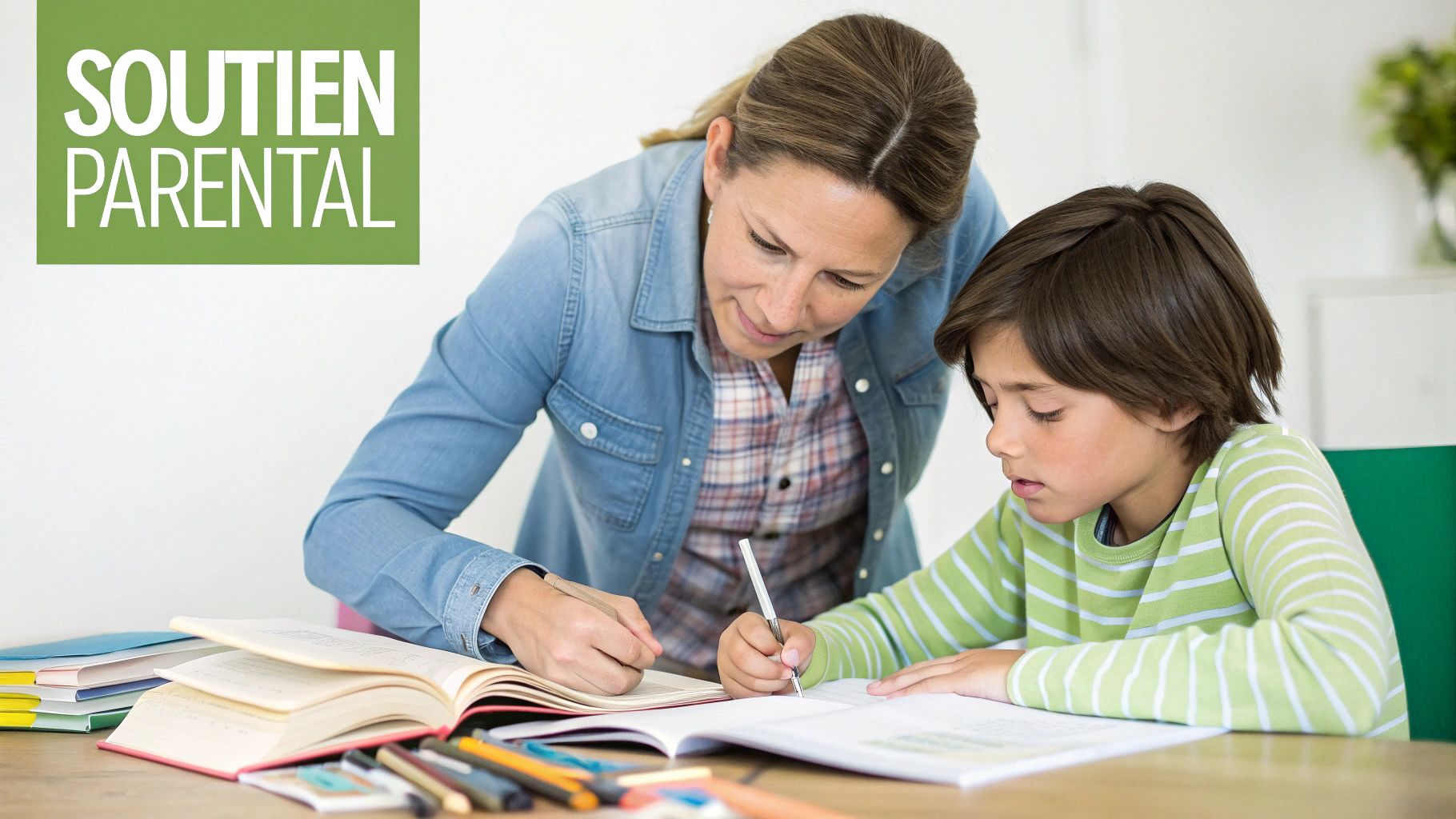
A child 's day at school is full of rules and schedules. To counteract this sometimes rigid structure, family rituals are real lifelines. Far from adding to an already busy schedule, they create predictable and intimate moments that deeply reassure the child and strengthen the family bond.
Think of these small habits as markers in their week. They help them juggle their obligations, better manage their fatigue, and channel their emotions after an often intense day. A ritual, even a simple one, is a concrete way to show them that you're there for them, beyond grades and homework.
Morning rituals to start the day off right
We all know it: morning often sets the tone for the entire day. The good news is that it's possible to turn the race against time into a much more pleasant experience with a few simple habits.
The idea is to create a routine that gently empowers him.
- Plan ahead the day before : Make packing your school bag and choosing clothes a game. It's a great way to avoid stress and last-minute forgetfulness.
- Use a routine chart : Especially for younger children, a small series of pictures (washing, dressing, breakfast) makes the steps clear and fun.
- Set aside time for a hug : Block off 5 minutes before you leave, not for a final check-in, but for a real hug or a word of encouragement. This small gesture refills their emotional tank for the day.
The ritual of returning home
After hours of learning and socializing, your child needs a break. Back from school is a crucial time to reconnect.
Resist the urge to ask right away if they have homework. Instead, offer them a decompression chamber: a shared snack where everyone shares a good moment from their day, a free play period, or just a quiet moment where they can do nothing. This transition is essential so they can refocus more easily afterward.
A good routine isn't just another obligation. It's a safe space where your child knows they can relax, be themselves, and share what's important to them, without any pressure.
Setting up a homework corner is also a very effective ritual. A small, quiet, and well-organized space, with all of their materials within easy reach, sends a clear message: this moment matters, and we're here to support them. It's a framework that helps them become more independent.
Become an accomplice in your child's development
Walking your child to school isn't just about making sure their homework is done. It's much deeper: it's about becoming their true partner in the incredible adventure of life. Your role as a parent is to help them build a truly solid emotional foundation.
This foundation is what will allow him to navigate successes and challenges with greater serenity. Your support and kindness are the fertile soil on which he will cultivate his self-confidence, his curiosity, and his love of learning.
Think of your school career as a unique opportunity to strengthen your family bonds. Every conversation after school, every encouragement you give when you're struggling, every small victory you celebrate together... all of this strengthens your relationship.
The keys to successful parent-child bonding
To support your child well, keep in mind a few simple but essential principles. Think of them as a compass that will help you guide your child on the path to fulfillment.
- Active listening: Offer him a space where he feels completely safe to share his emotions, his joys and his sorrows, without ever being afraid of being judged.
- Self-confidence: Highlight their efforts and tenacity, more than their grades. Show them that every mistake is simply an opportunity to learn and grow.
- Creativity: Stimulate their imagination! It's a superpower that helps them invent their own solutions and develop their critical thinking.
- Family rituals: Establish small, reassuring habits. These moments of connection anchor their daily lives and bring them a sense of stability and unconditional love.
Emotional well-being isn't the cherry on top; it's the key ingredient. A child who feels understood and supported has the freedom to explore, dare, and thrive.
By investing in this relationship of trust, you are giving them the greatest gift of all. School then becomes what it should never cease to be: a wonderful playground for play and discovery.
Your questions, our answers: school and your child's well-being
As parents, we have a thousand questions about our children's progress at school. It's completely normal! How can we help them stay motivated? And if they simply don't like going, what should we do?
This section is here for that: to answer your most frequently asked questions with concrete and caring advice. The idea is to turn every doubt into a new opportunity to strengthen your bond and support. Never forget that every child is unique; the best solution will always be the one that suits their personality and needs.
My child doesn't like going to school, what should I do?
When a child says they don't like school, our first instinct should be to listen without judging. It's essential to try to understand what lies behind these words. Is it a problem with a classmate? A subject that seems insurmountable? Or perhaps a more general anxiety?
Create a calm, trusting space where he feels free to tell you everything. Here are some concrete ideas:
- Talk to your teacher. Their perspective on what's happening in class is valuable for getting an overall picture.
- Highlight his successes , even the smallest ones, to build his self-confidence.
- Focus on the positive : an activity he loves, a friend he likes to play with, a fun time of day. This can help change his perception.
An "I don't like school" often hides a deeper emotion, such as fear of failing or a feeling of loneliness. Listening is your best tool for finding the real source of the problem.
How can I help him manage homework stress?
Ah, homework time... It can quickly become a source of tension at home. To make things run more smoothly, try to create a framework that's both reassuring and well-defined. Choose a quiet time, away from screens and other distractions, and above all, make sure they've had a real break to unwind after their day.
A practical tip: Break the work down into smaller, shorter assignments. The mountain of homework will immediately seem less daunting. Also, emphasize the effort he puts in rather than the perfect result. The most important thing is that he tries and learns from his mistakes.
And if he has few friends, should we be worried?
Every child forms relationships at their own pace. Some are real social butterflies, while others are happiest with one or two very close friends. If your child seems happy like this, there's really no reason to worry.
On the other hand, if you feel sad or isolated, you can give him a little help. Suggest that he invite a friend over to play or look for an extracurricular activity together that matches his interests. This will give him the opportunity to meet other children in a different and less intimidating setting.
This daily support is the best prevention against more serious difficulties. In France, dropping out of school is a reality: it affected 7.6% of young people in 2022, and particularly affected boys ( 9.2% ). Attentive and caring support from primary school onwards makes all the difference. To find out more, you can consult the data on dropping out of school on jobimpact.fr .
The My Book Story journal can be a wonderful companion for navigating these moments. It gives your child their own secret garden to express their feelings, celebrate their small daily victories, and build their self-confidence, one day at a time. Discover how the My Book Story journal can support your child's growth .