How to help a child concentrate: a guide for caring parents
Share
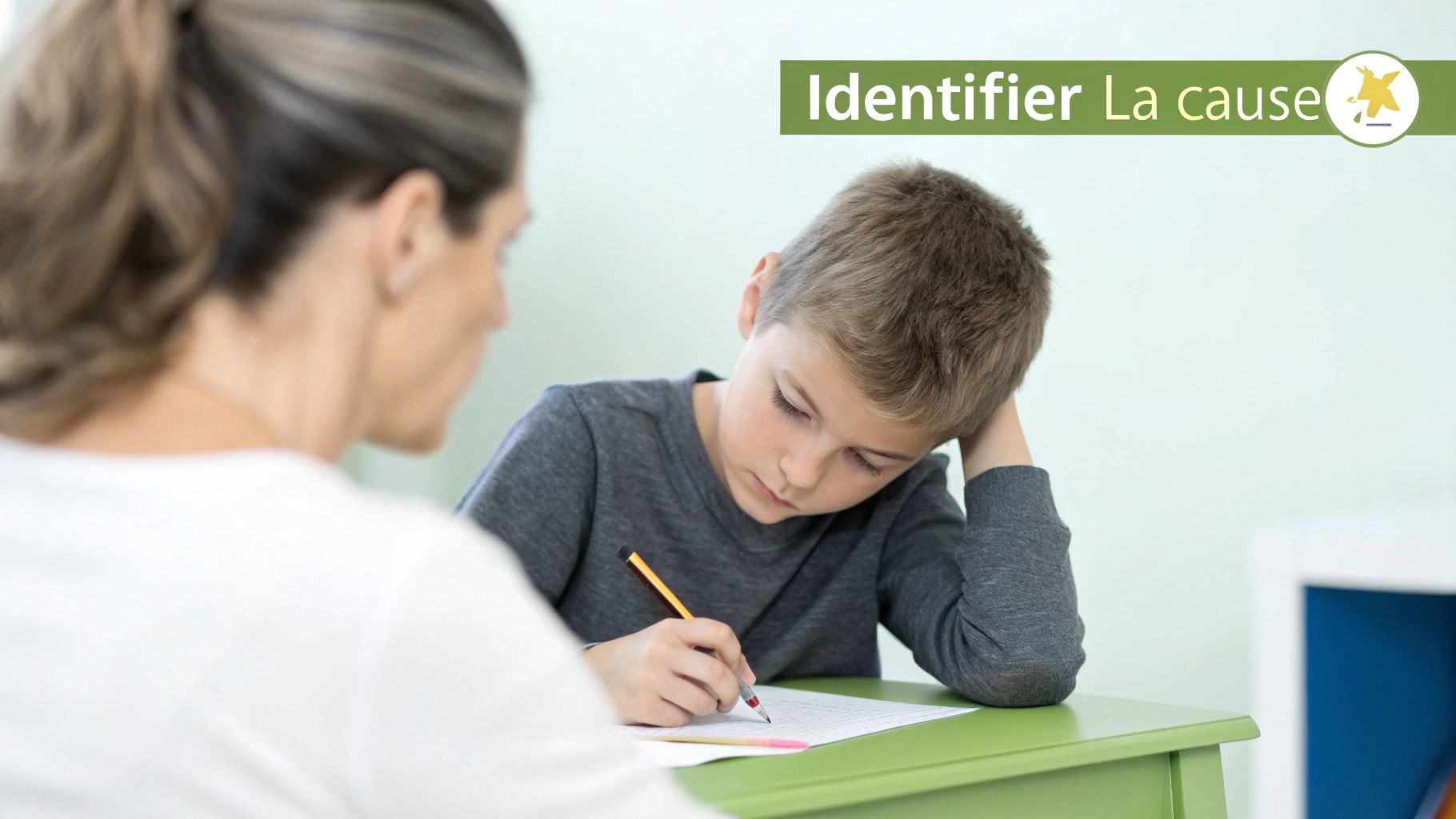
Before seeking miracle solutions, the very first step in helping your child concentrate is to observe them with kindness. The idea is to understand what's really behind their distraction. Is it fatigue? Boredom? Passing anxiety? By finding the right source, you can provide them with appropriate and effective support.
Uncovering the real reasons for the lack of concentration
Does your child abandon their homework to gaze at the clouds outside the window? Do they forget half the instructions, or seem unable to sit still for more than ten minutes? It's easy to conclude that it's simply a lack of willpower. But before that, it's essential to look beyond the curtain with empathy.
Understanding what is really happening is the key to helping him. A child who struggles to concentrate is not a child who doesn't want to , but very often a child who can't .
This small difference changes everything. It shifts us from a judgmental stance to a supportive one. Concentration isn't a gift from heaven; it's a skill that develops with the support and love of one's family. And like a muscle, it can become fatigued, undertrained, or disrupted by all sorts of things.
Common but often overlooked causes
Sometimes the reasons are right under our noses, but we don't see them. A school day for a child aged 6 to 12 is a real mental and emotional marathon. They have to juggle classes, friends, and rules to follow... In the evening, it's no surprise that their "attention tank" is completely empty.
A lack of concentration isn't always a sign of a problem. It's often a message: "I'm exhausted," "It's too much for me," or "I don't see the point." Your best diagnostic tool is listening and loving observation.
Take the time to observe his daily routine. Does his restlessness appear mainly when he's tired or hasn't slept well? Good sleep is essential for concentration. Another common culprit is diet. A sugary snack might give him a boost, but the subsequent energy crash makes concentration nearly impossible. Opt instead for a piece of fruit, nuts, or a dairy product.
Warning signs or simple distraction?
How can you tell if it's a passing distraction or a sign of a deeper need? It's a question many parents ask themselves. Daydreaming a little is normal and even healthy for creativity. But certain signs, if repeated, can raise a red flag.
Here are some suggestions to help you see things more clearly:
Frequency: Does he only have trouble concentrating for homework, or does it happen in almost every situation, even during games he loves?
Impulsivity: Does he tend to interrupt, act without thinking, or have trouble waiting his turn?
Motor restlessness: Does he constantly fidget in his chair, get up all the time, or have trouble staying still, even in quiet moments?
It's important to know that these behaviors can sometimes be linked to a neurodevelopmental disorder. In France, it's estimated that around 6% of school-aged children are affected by attention deficit hyperactivity disorder (ADHD), which is roughly two children per class. It's one of the major causes of concentration difficulties. If you'd like to learn more, you can explore the information available on this disorder .
The key role of the emotional environment
An anxious, stressed, or worried child simply cannot concentrate. All their mental energy is already used to manage their emotions. A conflict with a friend at school, a fear they don't dare admit, a change at home... any of these can be enough to overwhelm their attention span.
Take a moment to talk with him calmly, without pressure. Ask him open-ended questions about his day, his friends, and how he felt. For example:"What was the best thing that happened to you today? And the worst?" or "I noticed you seemed a little worried when you got home. Is something bothering you?" A child who feels listened to and safe is much more receptive to learning. The goal isn't to find someone to blame for his distraction, but to create a trusting environment where he feels comfortable.
Creating a nurturing environment at home
Your child's environment has a huge influence on their ability to concentrate. We tend to forget this, but a well-organized and calming space isn't a luxury. It's a real tool to help them focus their attention. Creating this "nest" doesn't require a complete overhaul, but rather making a few simple and well-thought-out adjustments with them.
The goal is simple: to transform one's workplace into a refuge where one's mind can rest, far from the outside tumult and constant demands.
Create a space just for work
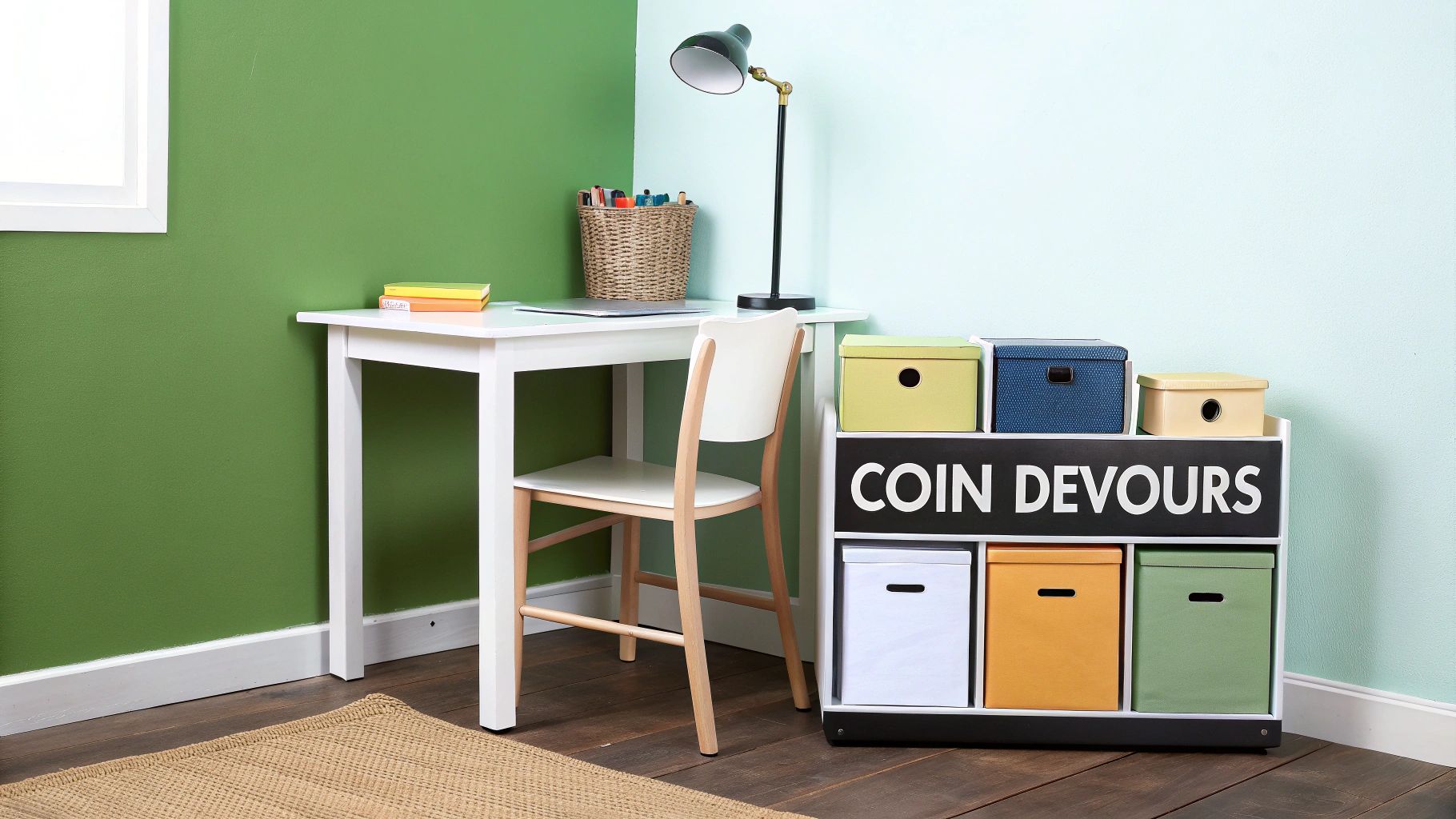
Even in a small apartment, it's essential to designate a specific area for homework. It's not the size that matters, but its clearly defined purpose. Working at the kitchen table, amidst meal preparations, sends a confusing message to a child's brain.
A small desk in a corner of his bedroom or living room, even separated by a simple screen, is enough to create a symbolic boundary. When he sits down there, his brain understands: "This is the time to concentrate." This space should be associated with calm and learning, not play.
This basic principle helps the child to structure their thinking and to more easily get into "work mode". They know what is expected of them in this space, which also reduces anxiety and the tendency to procrastinate.
Eliminate visual and auditory distractions
Our children's brains are programmed to react to anything that moves or makes noise. Filtering this information constantly requires a colossal effort. Every colorful toy within sight, every tablet notification, every conversation in the background is a thread pulling their attention away from their task.
To help a child concentrate , it is therefore necessary to clean up some of these distractions.
On the desk: Keep only the bare essentials for the task at hand. A pencil holder, a notebook, and a book are enough. The rest of your supplies? Put them in labeled boxes right next to it.
On the walls: Avoid overly busy posters directly opposite the desk. Opt instead for a neutral wall or a corkboard where he can display a drawing or his schedule. Simple and effective.
For your ears: Turn off the television, even if it's in another room. If ambient noise is unavoidable (the joys of family life!), noise-canceling headphones can work wonders to create a bubble of silence.
Think of her workspace as a landing strip for her attention. For her to land smoothly, the strip must be clear, without any obstacles.
In our hyper-connected world, this quest to avoid distractions is more important than ever. A study has shown that the average attention span has plummeted to just 8 seconds ! This decline is largely attributed to digital overstimulation, which fragments our attention. To learn more, you can read the full study on this trend .
Organize the material for clear thinking
A messy desk is often a reflection of a cluttered mind. When your child spends ten minutes looking for an eraser or their red pen, their concentration is depleted before they've even started.
Setting up a storage system isn't about striving for perfection; it's primarily a way to free up mental space. And the best way to do this is to create a simple and visual system. For example, use different colored containers for markers, pens, and pencils, or stick labels with drawings on storage boxes.
Checklist for an optimized workspace
Item to check
Why this is important
Simple action to implement
Light
Good lighting prevents eye strain and keeps you awake.
Place the desk near a window and add a good desk lamp.
Storage
Having equipment that is accessible and organized limits interruptions and frustration.
Use labeled boxes or colored jars for each type of material.
Seated
A comfortable chair at the right height promotes good posture.
Check that his feet are touching the ground and that his back is straight.
Distractions
Toys and screens within easy reach are constant temptations.
Remove from the field of vision anything that is not necessary for the task.
By involving your child in this process, you empower them. They are no longer simply passively receiving their homework; they become an active participant in their own learning environment. This structured approach then becomes a ritual in itself, a mental preparation that puts them in the best possible position to succeed.
Establish rituals that structure thought
Once your child's environment has become a nurturing and attentive space, the next step is to structure their time. Children, especially between the ages of 6 and 12 , need predictability. Routines are their best allies: they transform the potential chaos of a day into a series of clear and reassuring steps.
Far from being a constraint, these habits are actually helpful guides that free the mind. Instead of constantly asking themselves, "What should I do now?", your child can fully dedicate themselves to the task at hand. It's a real springboard to independence and self-confidence.
The morning routine: a springboard for the day
The way the day starts often sets the tone. We all know that a chaotic morning, with everyone rushing around, is the perfect recipe for sending a stressed and distracted child to school. Conversely, a calm and well-oiled morning routine puts them in the best frame of mind to learn.
The idea is not to establish a military schedule, but rather a logical and smooth sequence.
Plan ahead the night before: It's the best-kept secret to peaceful mornings. Choosing clothes, packing school bags, and setting the breakfast table the night before transforms the morning rush into a leisurely stroll.
Use a visual display: For younger children, a small list with pictograms (brush teeth, get dressed, eat lunch) works wonders. The child can check or move a label at each step, making them an active participant and proud of their progress.
This small structure teaches him, almost imperceptibly, to organize his thoughts and follow a plan. This is an essential skill for good concentration.
The decompression chamber after school
The return from school is a critical time. Your child has accumulated fatigue, emotions, and tension. Asking them to immediately tackle their homework is a bit like asking a marathon runner to sprint right after crossing the finish line. It's completely counterproductive.
He needs a "decompression chamber", a small transition ritual to smoothly move from the world of school to that of home.
The most important thing is not so much what this ritual contains, but the simple fact that it exists. It sends a signal to the body and mind: a new phase of the day is beginning, and it's time to pause before getting back to work.
This ritual can be very simple and, above all, must be appropriate for your child:
A shared snack: A quiet moment to discuss your day, without pressure.
Free play time:15 to 20 minutes to let off steam outside or play quietly in their room.
A moment of reading or drawing: Ideal for those who need a calming activity to recharge their batteries.
Only after this break will his brain be available again to focus his attention on homework.
Break down tasks to make them accessible
The phrase "Do your homework" can be paralyzing for a child. It represents a mountain, immense and undefined. The key is to transform that mountain into a series of smaller, much easier-to-climb hills. This approach makes the task less intimidating and offers quick, small victories that fuel motivation.
Rather than issuing a general "Do your homework" message, try a more sequential approach:
"Okay, let's start by getting out your diary to see what needs to be done today." (A simple and concrete first step)
"Okay, you have math and poetry. Which would you prefer to start with?" (Giving him a choice makes him an active participant)
"Great, math! Let's set the timer for 20 minutes and focus solely on this exercise." (A clear, time-bound objective)
Using a fun timer , like an hourglass or a small kitchen timer, is an incredibly effective trick. It makes time tangible and transforms effort into a game. Your child no longer feels like they're working endlessly, but rather tackling a small challenge within a set timeframe.
These rituals and this way of structuring work are directly inspired by the principles of instructional design, which aim to optimize learning. By involving your child in establishing these habits, you are not just giving them rules to follow, but valuable tools for managing their time, energy, and ultimately, their own attention.
What if we strengthened our attention span while having fun?
Let's forget for a moment the idea that concentration is a chore. Let's see it instead as a muscle: to become stronger, it needs to be trained, and what better way to do that than through play? It's your child's natural language, the arena where they learn without even realizing it.
By incorporating fun and well-chosen activities, you help him develop his attention away from the pressure of homework, while sharing a real moment of complicity.
These moments of play are much more than just a distraction. They are a golden opportunity to create new connections in the brain, to work on patience, and to strengthen working memory. All this, in a joyful and positive atmosphere.
Board games: perfect for strategy and patience
Board games are fantastic tools for helping a child concentrate . They require them to follow rules, wait their turn (which isn't always easy!), observe others, and think before acting. Each game is a complete workout for their busy little brain.
Think of the tried and tested classics:
Chess or checkers: Ideal for learning to anticipate the opponent's moves and to plan for the long term. Intense concentration is required.
Puzzles: Whether it has 100 or 500 pieces, a puzzle teaches patience and visual discrimination. Your child must stay focused on the shapes and colors to find the right piece. It's an excellent exercise in perseverance.
Memory games: Perfect for working memory, they force the child to remember the location of the cards while remaining focused on the game.
Here, the important thing is not to win, but to get involved. Remember to celebrate effort and perseverance, not just victory.
Attention is like the beam of a flashlight. The game teaches your child to focus that beam on a single point, to intensify it, and to maintain it, even when everything is in motion around them.
Simple mindfulness exercises for a peaceful mind
Mindfulness isn't just for adults! Adapted for children, it becomes a sensory exploration game that helps calm the flow of thoughts and reconnect with the present moment. A few minutes a day is enough to see a real difference.
Here are some very simple ideas to try together:
Listening to sounds: Lie down, close your eyes, and listen to all the sounds around you, without judging them. The ticking of a clock, a bird singing, a car in the distance... A great exercise to sharpen your auditory attention.
Mindful tasting: Take a small piece of fruit, such as a grape or a segment of clementine. Observe it, smell its aroma, then eat it very slowly, focusing on each sensation.
The cuddly toy breathing game: Your child lies on their back and places a cuddly toy on their tummy. The game involves breathing calmly to make their toy rise and fall, like riding a wave. It's a perfect soothing ritual before homework or bedtime.
These practices are all the more important given the close link between emotional well-being and concentration. According to the Enabee study published in 2023, 13% of children aged 6 to 11 in France have a probable mental health disorder. Among them, 5.6% exhibit emotional difficulties that, by generating anxiety or agitation, can seriously impair their ability to concentrate. To learn more, you can consult the full results of the Public Health France study .
Creativity: a superpower for attention
Creative activities are powerful catalysts for concentration. When a child is completely absorbed in their drawing, modeling with salt dough, or building a LEGO tower, they enter a state of flow . Time stands still; they are completely in their own world. It is the purest and most natural form of attention.
Encourage these moments by leaving creative materials within reach. There's no need to impose a theme; let their imagination do the work. The simple act of creating leads them to focus their mind on a project, to find solutions ("How can I make my construction stand?") and to see their idea through. It's a fantastic way to strengthen their focus while boosting their self-confidence.
Creative writing to channel energy and flourish
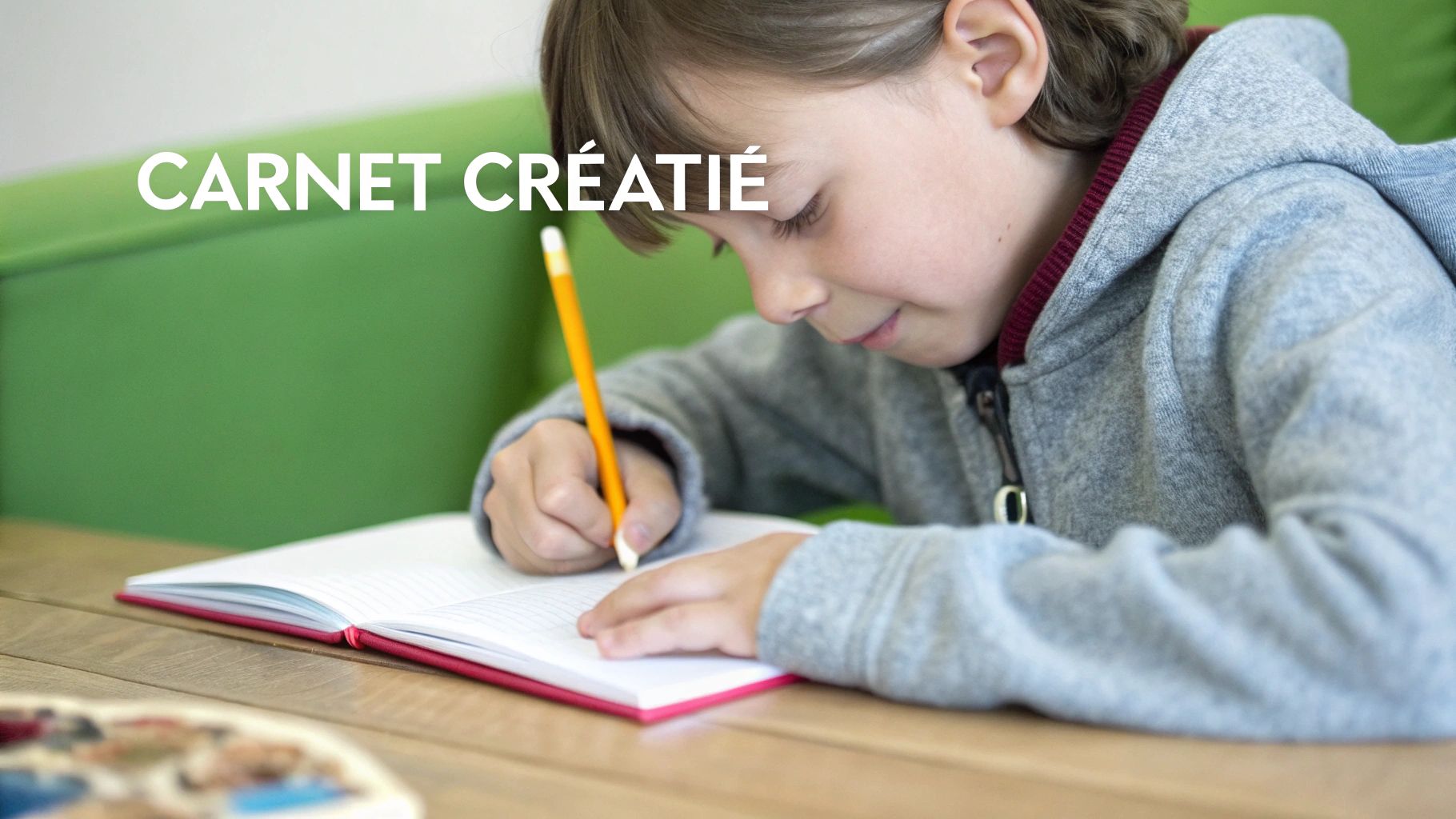
Now that we've established a conducive environment, routines, and games, it's time to discover a tool of often underestimated power: creative writing. Keeping a personal journal, far from being a simple chore, becomes a fantastic exercise in concentration and a powerful lever for self-confidence.
When a child invents their own story, they're not just playing with words. They're immersing themselves in their own world, a project that has meaning for them. And that's precisely what most captures their attention.
Turning writing into a small family ritual
For the magic to happen, writing must not become a chore. The idea is to gently integrate it into your daily routine, as a short and enjoyable moment. Fifteen minutes a day is more than enough to make this time a true exercise in focus.
The goal is to create a habit, a little time just for oneself. This ritual teaches the child to focus their mental energy on one thing at a time, a key skill for helping a child concentrate in the long term.
This moment can, for example, take place right after snack time, before starting homework. It's an excellent transition that helps calm the day's hustle and bustle and prepares the mind for more structured work.
A personal story, a project that has meaning
Unlike a prescribed exercise, writing one's own story engages the child emotionally. No longer a mere executor, they become the creator, the master of their own world. This involvement radically changes the dynamic in terms of concentration.
Here's how you can guide him without ever imposing anything on him:
Ask open-ended questions: "If you were a superhero, what would your superpower be? Tell me about your first mission!"
Give him some creative prompts: "I discovered a secret door in the garden. Behind it, there was…"
Start with his passions: If he loves dinosaurs, why not imagine the story of a T-Rex who dreams of flying?
By immersing himself in his story, he learns to follow his train of thought, to organize his ideas, and to ignore distractions. He no longer tries to concentrate; he simply does.
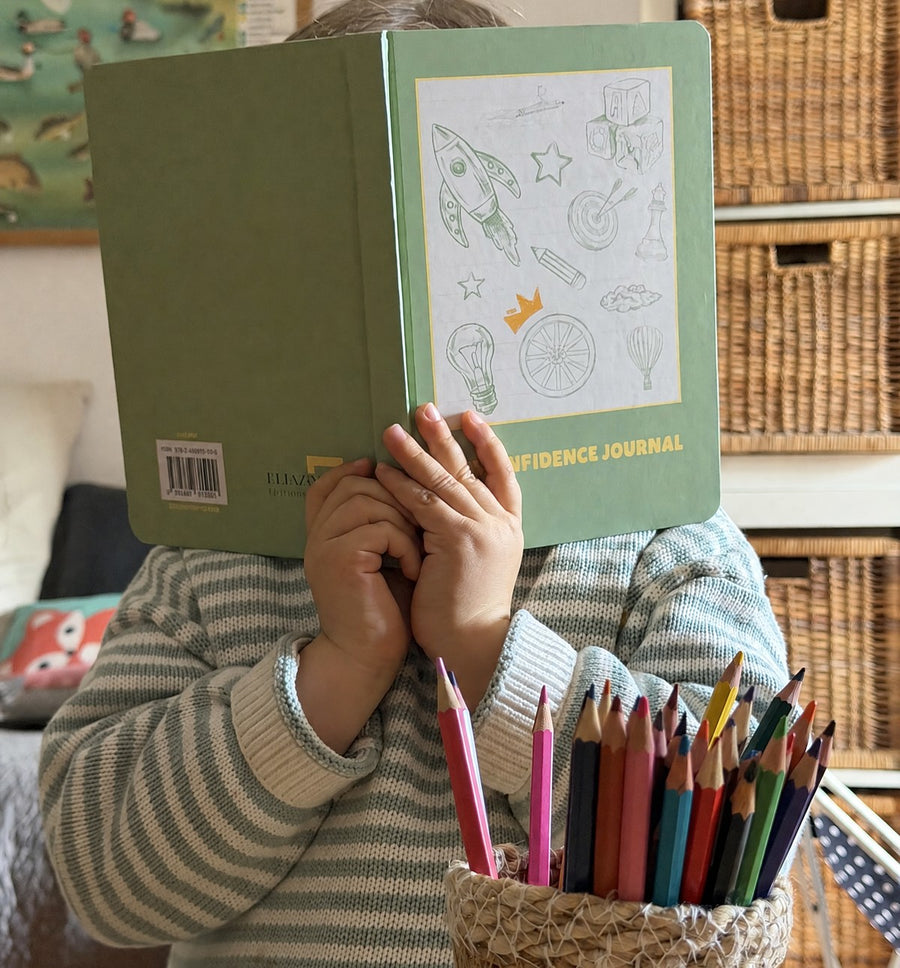
The notebook becomes a safe space where the child can explore their emotions, dreams, and even fears. By putting words to what they feel, they free up mental space, making their attention more available for other things.
Building self-confidence, page by page
Each new sentence, each completed chapter is a small victory. For a child who tends to get scattered, seeing that they are capable of completing a project is concrete proof of what they are capable of.
This sense of accomplishment is a real driver of self-confidence. It's no longer seen solely through one's difficulties, but also through one's ability to create. Moreover, creative, hands-on activities can produce similar effects by helping to develop this same focus.
Writing then becomes much more than just a tool. It's a wonderful way to nurture self-esteem, teach patience, and help children discover the joy of a job well done. Each page turned is a step closer to becoming a more serene and self-assured child.
We answer your most frequently asked questions
As a parent, it's perfectly normal to feel a little lost when faced with your child's concentration challenges. To help you gain some clarity, here are the most frequently asked questions, with direct and practical answers, always presented with a caring and supportive approach.
The idea is to give you concrete tips to better understand and support your child on a daily basis. Every child is different, of course, but these few keys should allow you to act with more confidence and peace of mind.
My child keeps fidgeting while doing their homework, what should I do?
Ah, the classic case! Most of the time, it's simply a sign that their body needs to move. Staying still is a real challenge for many children. The trick isn't to force them to stay perfectly still, but to find a way to channel that need.
Try to incorporate active breaks every 15 to 20 minutes . A few jumps, some stretches, or even just a quick trip to get a glass of water can really recharge their batteries. A practical tip: use a balance cushion (or "pad") on their chair to allow them to move discreetly, or a resistance band attached to the chair legs that they can push against with their feet.
Also consider their energy level after school. Have they had enough exercise? Sometimes, this restlessness masks frustration. Check that the task isn't too difficult and don't hesitate to break it down into smaller steps to make it less daunting.
When should you really be worried and seek medical advice?
That's an excellent question, and a perfectly legitimate one. The first thing to do is observe. If you've already tried adapting their environment and establishing routines, but the difficulties persist and are starting to affect their daily life, it's time to talk about it.
Your parental instincts are your best guide. If you feel that something is really holding things up, whether it's affecting their self-esteem, their grades, or their friendships, don't wait to seek an outside opinion.
A few signs might raise a red flag:
Difficulties are present in almost every situation , even during the games he loves.
He is very impulsive or has a lot of trouble managing his emotions when he is frustrated.
Teachers regularly share these same concerns with you.
Your family doctor or pediatrician is the first person to contact. They can provide an initial assessment and, if necessary, refer you to a psychologist, neuropsychologist, or psychomotor therapist for a more in-depth evaluation.
Are screens really the number one problem?
Screens aren't the devil incarnate, but it's true that excessive use can complicate things. They accustom the brain to instant gratification and intense stimulation. As a result, activities requiring slower effort, like reading a book or solving a problem, suddenly seem much less interesting.
The solution isn't to ban everything, but to find a balance with clear rules within the family . Set time limits and "screen-free" periods. A concrete action: establish a "screen basket" where all family devices (including parents'!) are placed during meals or homework time. Above all, avoid them just before homework—it overstimulates the brain—and before bed. Blue light disrupts sleep, which is essential for being alert the next day.
How can you tell if it's a lack of interest or a real attention problem?
Distinguishing between these two approaches is crucial to helping a child concentrate effectively. The best approach? Become a keen observer. Take notes on their behavior in different contexts.
If he can spend hours building LEGO castles but loses interest after two minutes of grammar, it's surely because he finds the task boring. On the other hand, a true attention deficit disorder is more generalized: it manifests itself in most activities, including those he's supposed to enjoy.
To be absolutely sure, try making homework more fun and connected to his interests. For example: turn review sessions into quizzes, use everyday objects to explain math, or link a history lesson to his favorite adventure movie. If his attention suddenly improves, you've found a clue: he needs to find meaning and interest in what he's doing.
With My Book Story , transform writing into a creative ritual that strengthens their focus and nurtures their confidence. It's an opportunity to offer them a supportive space to explore their imagination, channel their energy, and discover the pride of completing a project.