


Imagine boosting your child's confidence, stimulating creativity, and fostering their well-being, all in just one month. The 30-day challenges aren't just games; they're powerful tools for parents of children aged 6 to 12 who want to establish healthy habits and build stronger family bonds. By dedicating a few minutes each day to a focused activity, you create a positive ritual, free from the pressures of school and the constant presence of screens.
These daily challenges provide a fun and safe environment where your child can explore their emotions, discover new passions, and develop their independence. It's a simple yet effective way to help them build resilience, better understand their own strengths, and learn that perseverance pays off. The goal isn't perfection, but consistency and the joy of growing together, one small step at a time.
In this article, we've compiled a selection of 30-day challenges specially designed to support children's personal development. Each idea comes with practical tips and concrete examples to help you easily implement it at home. You'll find challenges to encourage gratitude, physical activity, creativity, and self-care. Get ready to transform small, everyday moments into big opportunities for learning and family connection.
1. The Daily Gratitude Challenge
One of the most transformative and accessible 30-day challenges for children is the gratitude challenge. The principle is simple: each day for a month, you and your child take a moment to identify and write down three things you are grateful for. This exercise isn't just a simple list, but a real training for the brain to notice the positive, even in the smallest details of everyday life.
This challenge helps cultivate optimism and reduce anxious thoughts by shifting attention from what's missing to what's already present. By sharing your gratitudes, you establish a powerful family ritual that opens up genuine discussions about emotions and highlights of the day, thus strengthening your child's emotional intelligence.
How can this challenge be implemented?
To make this challenge fun and tangible, here are some practical tips for parents:
- Create a "gratitude jar": Each day, write three things you are grateful for on small colored slips of paper and place them in a jar. At the end of the month, you can read them together to remember all the good times you shared.
- Be specific: Encourage your child to go beyond general answers. Instead of saying "I am grateful for my family," they could say, "I loved it when Dad helped me build my LEGO castle."
- Use open-ended questions: To start the discussion, ask questions like: "What's the funniest thing that happened to you today?" or "What moment made you smile?"
Concrete examples for children:
- "I'm grateful for Mom's hug this morning."
- "I loved the taste of the chocolate cake in the cafeteria."
- "I'm glad I managed to complete my math problem."
- As a parent, also share: "I'm grateful for your big smile when I got home from work."
This daily ritual, which takes only a few minutes, establishes a lasting positive habit and strengthens the parent-child bond. It's a wonderful gateway to mindfulness, perfectly suited to the world of 6-12 year olds.
2. The challenge of daily movement
The Daily Movement Challenge is a great way to integrate physical activity into the family routine in a fun and pressure-free way. The goal is simple: each day for 30 days, dedicate at least 15 to 20 minutes to a physical activity chosen together. Far from being competitive, this challenge aims to celebrate the joy of movement, strengthen the body, and release accumulated tension.
This challenge helps children develop a healthy relationship with their bodies and understand that exercise isn't a chore, but a source of energy and well-being. It's also a perfect opportunity to disconnect from screens and reconnect as a family, sharing moments of laughter and connection. By making physical activity a ritual, you establish a healthy lifestyle habit that will last well beyond the 30-day challenge .

How can this challenge be implemented?
To ensure this challenge is a success and remains motivating for everyone, here are some ideas for parents:
- Create an "adventure calendar": Draw a calendar for the month and let your child choose or draw lots for the day's activity. This gives them a sense of control and makes each day exciting.
- Mix things up: The idea isn't to do the same thing every day. Alternate between a walk in the forest, a children's yoga session, a dance battle in the living room, or a game of ball in the garden.
- Set a key moment: Integrate the challenge into a specific time of day, such as after homework or just before dinner. Routine helps maintain commitment without having to think about it.
Concrete examples for the family:
- Monday: 15-minute "jungle animals" yoga session following an online video.
- Tuesday: Treasure hunt in the garden where each clue requires doing 5 frog jumps.
- Wednesday: 20-minute impromptu "Boom" with a playlist of the whole family's favorite songs.
- Thursday: Bike or scooter ride around the neighborhood to observe the colours of nature.
This challenge transforms physical activity into a shared game, strengthening not only your child's physical health, but also their confidence in their abilities and the bond between you.
3. The Creativity Challenge "One idea per day"
The "One Idea a Day" challenge is one of those 30-day challenges that fosters imagination and self-confidence. The goal is simple: for 30 days, your child (and why not you?) comes up with a new creative idea each day. It could be an invention, the beginning of a story, a drawing, a LEGO creation, or an imaginary recipe.
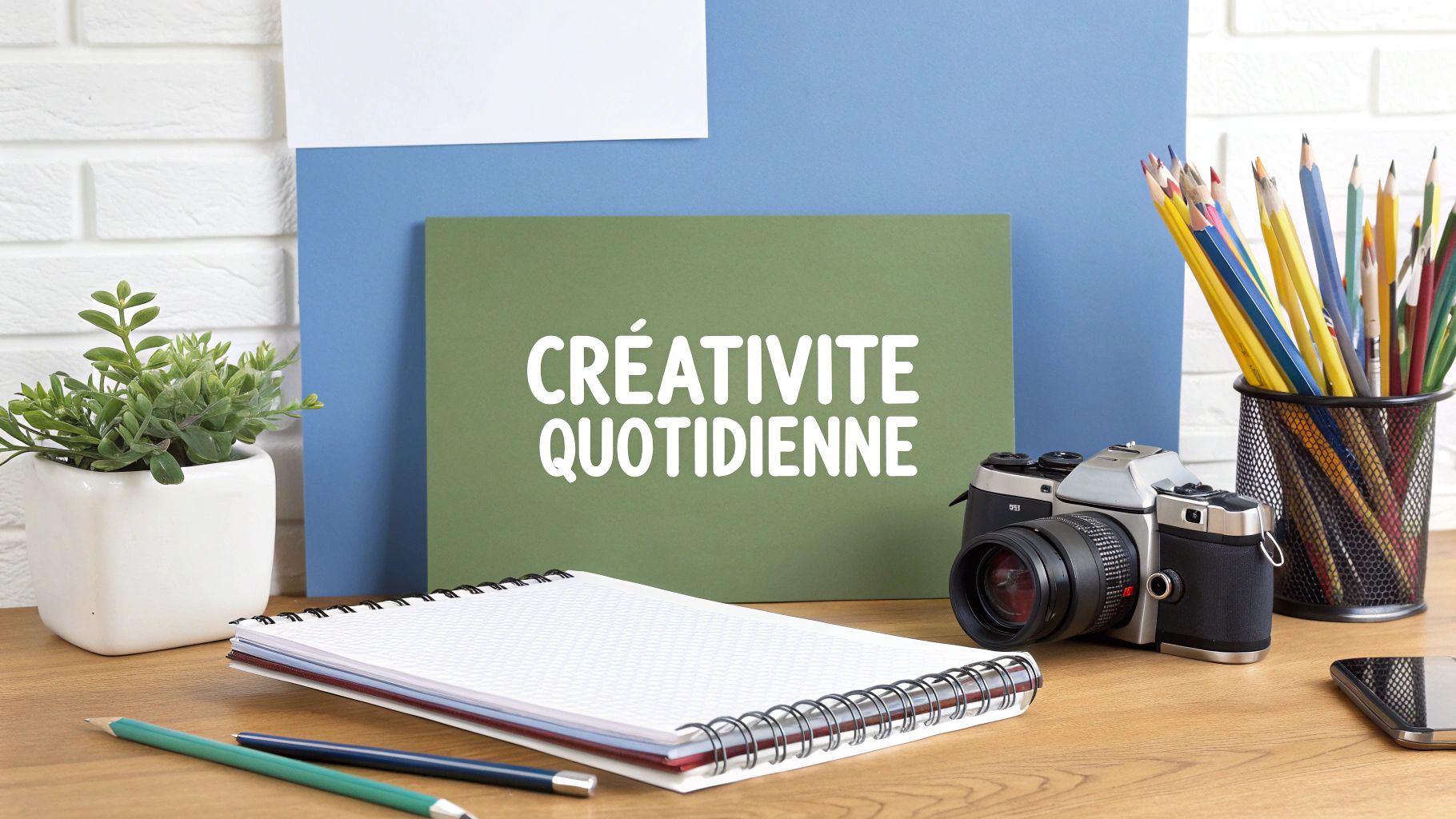
This challenge is an incredible opportunity to teach children that creativity is a muscle that can be exercised. It encourages them to think differently, not be afraid to make mistakes, and value every idea, even the most outlandish. It's a fun way to develop problem-solving skills and show that imagination is an endless source of enjoyment.
How can this challenge be implemented?
To adapt this challenge for a family with children, it is crucial to present it as a fun game:
- Create an "idea notebook": Give your child a special notebook where they can draw or write their idea of the day. It's their own private space, free from judgment.
- Provide a starting point: If your child is stuck, suggest a theme such as "funny superpowers", "fantastic animals" or "future modes of transport".
- Organize an end-of-month "exhibition": At the end of the 30 days, go through the notebook together. Celebrate the quantity and variety of ideas, not their "quality." It's an excellent confidence booster.
Concrete examples of children's ideas:
- Invent a machine that translates dogs' barks.
- Draw a treasure map to find the lost socks in the house.
- Create a new rule for the hide-and-seek game.
- Imagine a special dish with magical ingredients (like carrots that make you invisible).
This challenge transforms creativity into a family adventure, strengthening curiosity and the ability to find joy in the imagination.
4. The Challenge of Digital Detox
In an age of ubiquitous screens, one of the most relevant 30-day challenges is the digital detox challenge. The goal is to consciously reduce time spent on electronic devices (tablets, smartphones, consoles) to reconnect with the real world and human interaction. It's not a total ban, but an invitation to replace non-essential screen time with enriching activities.
This challenge helps improve concentration, sleep quality, and reduce irritability often linked to digital overstimulation. As a family, it's an opportunity to rediscover simple pleasures, communicate more, and show your child that there are countless ways to have fun and learn away from screens. This fosters their creativity and independence.

How can this challenge be implemented?
To approach this disconnection in a positive and collaborative way, here are some ideas for parents:
- Establish clear rules together: Decide as a family on screen-free times. For example, "no screens during meals" or "a maximum of one hour per day." Involving the child in the decision will make them more cooperative.
- Create an offline "activity box": Fill a box with screen-free activity ideas: board games, books, craft supplies, recipes, a magnifying glass to explore the garden, etc.
- Be a role model: Children imitate their parents. Lead by example by putting down your own phone and fully engaging in family activities.
- Keep bedrooms screen-free: Make the bedroom a sanctuary for rest and reading, by banning electronic devices, especially at night.
Concrete examples of alternatives:
- Replace the evening movie with a reading session of a book chapter aloud.
- On Sundays, organize a "screen-free Sunday" dedicated to an outing in nature, building a den in the living room, or an afternoon of board games.
- Instead of searching for information online, try finding it in a dictionary or a children's encyclopedia.
This monthly challenge is a great opportunity to rebalance family habits, stimulate the imagination and strengthen bonds by creating shared memories away from digital distractions.
5. The 30-Day Reading Challenge
One of the most rewarding 30-day challenges for developing a child's imagination and concentration is the reading challenge. The concept is to encourage your child to read a little each day for a month, whether it's a certain number of pages, a chapter, or simply for a set amount of time, such as 15 minutes. This challenge transforms reading into an exciting game rather than a school chore.
Establishing this daily habit fosters curiosity, enriches vocabulary, and improves comprehension. It's also a wonderful opportunity to create a calming ritual, away from screens. By exploring different literary worlds, your child develops empathy and a broader perspective, while simultaneously strengthening academic skills in a fun and independent way.
How can this challenge be implemented?
To make this challenge a captivating adventure, here are some practical tips for parents:
- Create a "reading passport": Make a small notebook where your child can write down each book read, draw their favorite passage, or stick a sticker for each day of reading completed.
- Vary the pleasures: Don't limit yourself to novels. Incorporate comic books, children's magazines, documentaries, or even poetry books to maintain interest and show that reading takes many forms.
- Set realistic goals: Tailor the goal to your child's age and reading level. For a young reader, the goal might be to read for 10 minutes a day, while a more experienced reader could aim for one chapter per evening.
Concrete examples of goals for children:
- "I will read a chapter of my adventure book every night before going to sleep."
- "We're going to read a comic book together after dinner."
- "This month, I'm discovering a new poem every day."
This daily ritual makes reading a source of pleasure and escape. It's a simple yet powerful way to cultivate a love of books that will stay with your child throughout their life.
6. The 30-Day Meditation Challenge
Introducing children to meditation is a precious gift for their emotional well-being. This challenge involves integrating a short meditation session into their daily routine for a month, starting with just a few minutes. Far from being a complicated practice, meditation for children is a playful exploration of breath and bodily sensations to calm the flow of thoughts.
This challenge is one of the most effective 30-day challenges for improving concentration, reducing impulsivity, and helping children better manage their emotions. By learning to observe their thoughts without clinging to them, they develop a powerful tool for coping with school stress or everyday anxieties. This ritual creates a shared bubble of calm, strengthening feelings of security and family connection.
How can this challenge be implemented?
To introduce meditation to your child in a simple and fun way, follow these parenting tips:
- Start very short: Begin with sessions of 2 to 5 minutes maximum. The important thing is not the duration, but the regularity. Choose a quiet time of day, such as after school or just before bedtime.
- Use guided meditations: There are many online resources (videos, podcasts) offering stories and exercises specifically designed for children, with themes such as kindness, sleep, or concentration.
- Create a comfortable space: Set up a cozy little corner with cushions or a rug where you can sit comfortably. This space will signal to your brain that it's time to relax.
Concrete examples of exercises:
- Use a simple metaphor: "Imagine your thoughts are clouds passing across the sky of your mind. You don't need to catch them, just watch them go by."
- Try the "spaghetti meditation": Ask your child to stretch their whole body out like raw spaghetti, then relax completely like cooked spaghetti.
- Offer attentive listening: Ring a bell or a singing bowl and ask him to raise his hand as soon as he no longer hears the sound.
This challenge isn't about "emptying your mind," but rather about learning to be present. It's a fundamental skill that will serve your child throughout their life.
7. The challenge of the daily compliment
One of the most powerful 30-day challenges for emotional intelligence and social skills is the daily compliment challenge. The concept is simple: each day for a month, your child is asked to give a sincere compliment to someone. This could be a family member, a friend at school, or a teacher.
This challenge is an excellent way to learn to observe the positive in others, develop empathy, and strengthen social bonds. By focusing on the qualities and actions of others, children learn the value of recognition and the positive impact of their own words. It's an exercise that fosters kindness and self-confidence, both for the giver and the receiver.
How can this challenge be implemented?
To ensure this challenge is authentic and supportive, here are some ideas for parents:
- Discuss what constitutes a good compliment: Explain to your child that a sincere compliment focuses on an action, a quality, or an effort, rather than on appearance. For example, "I really liked how you shared your toys" is stronger than "I like your t-shirt."
- Create a "kindness tree": On a large sheet of paper, draw a bare tree. Each time a compliment is given, the child can draw a leaf on the tree. Watching the tree blossom is a beautiful visual metaphor.
- Lead by example: Incorporate this habit yourself by offering sincere compliments to your child and other family members. Your child will learn by imitation.
Concrete examples of compliments:
- To a friend: "You had a great idea for our recess game."
- To his brother or sister: "Thank you for helping me tidy my room."
- To a parent: "I loved the story you read to me tonight."
- To his teacher: "I understood the lesson well today, thank you."
This daily ritual not only helps develop social skills, but it also teaches your child that kindness is an active choice that makes the world around them a little brighter.
8. The "Try a new food" challenge for 30 days
Starting a food challenge as a family is a great way to explore new flavors and develop culinary curiosity. One of the most engaging 30-day challenges involves trying a new healthy food every day for a month. The goal isn't to force the child to like it, but simply to encourage them to "try it," without any pressure.
This challenge is a fantastic opportunity to diversify your child's diet, cook together, and discuss what gives our bodies energy. By involving your child in choosing and preparing food, you give them the tools to build a positive and adventurous relationship with food, while also fostering their independence.
How can this challenge be implemented?
To turn this challenge into a successful family adventure, here are a few ideas:
- Create a "flavor passport": Draw or print a small notebook where your child can stick stickers or draw each new food they have tasted. This transforms discovery into a collecting game.
- Involve the child in the shopping: Give them a mission at the supermarket, such as "find a vegetable we have never eaten" or "choose a fruit with a funny color".
- Cook together: Plan "cooking workshops" where your child can help wash vegetables, mix a simple salad dressing, or assemble a colorful fruit salad. Involvement makes them more inclined to try new things.
Concrete examples of foods to discover:
- A child might say: "Today we tasted roasted chickpeas, they're crunchy like chips!", "I helped make a soup with red lentils, it was orange.", or "I discovered yellow kiwi, it's sweeter than green."
- As a parent, encourage the effort: "Well done for trying it! It doesn't matter if you like it or not, the important thing is that you tried. We'll put an 'Adventurer' stamp in your passport."
This challenge makes it easy to establish healthy habits in a fun way. It's a collective exploration that nourishes the body and strengthens family bonds through moments of sharing and discovery.
9. The 30-Day Personal Wellness Challenge
Learning to take care of oneself is an essential skill for a balanced life. The personal well-being challenge involves incorporating a daily activity for a month, dedicated to nurturing your child's mental, physical, and emotional well-being. The goal is to show them that it's important to take time to recharge, just like you would with an electronic device.
This challenge normalizes the concept of "self-care" and teaches children to listen to their own needs. By establishing these small routines, you give them the tools to manage stress, develop self-compassion, and build a healthy relationship with themselves. It's a concrete way to teach them that their well-being is a priority.
How can this challenge be implemented?
To adapt this challenge for children and make it fun, follow these parenting tips:
- Co-create a wellness calendar: Sit down with your child and list together wellness activities they enjoy. Fill in a calendar for the next 30 days with one activity per day, alternating between them.
- Start small: There's no need to plan an hour a day. Activities lasting 10 to 15 minutes are perfect for starting out and creating a habit without it becoming a chore.
- Mix up the activities: Vary the pleasures between "passive" treatments (a bubble bath, listening to calm music) and "active" ones (a walk in nature, doing some stretches, drawing).
Concrete examples of wellness activities:
- A child might choose: "Take a bubble bath," "Spend 15 minutes coloring undisturbed," "Go for a bike ride after school," or "Say 'no' to an activity to have some quiet time."
- A parent can model this behavior by saying, "Tonight, I'm going to read a book for 20 minutes because I need to relax."
This challenge is a powerful introduction to emotional autonomy. It helps your child identify what makes them feel good and actively integrate these practices into their daily life for better management of their emotions and energy.
Comparison of the 9 30-day challenges
| Challenge | 🔄 Implementation complexity | 💡 Resource requirements | 📊 Expected results | 💡 Ideal for... | ⭐ Key benefits for the child |
|---|---|---|---|---|---|
| 30-Day Gratitude Challenge | Weak | Very low - 5 minutes per day | Improved well-being, optimism | Developing a positive outlook on life | Emotional intelligence, anxiety reduction |
| 30-Day Movement Challenge | Weak | Low - no equipment required | Improved physical fitness, energy management | Channeling energy and integrating a healthy routine | Confidence in one's body, pleasure in moving |
| 30-Day Creativity Challenge | Average | Low to moderate - notebook, pencils | Development of creative thinking | Stimulating imagination and confidence in one's ideas | Perseverance, self-expression, problem-solving |
| 30-Day Digital Detox Challenge | Medium to high | Low willpower and family planning | Improved concentration, better sleep quality | Reduce screen time and reconnect | More creativity, improved family relationships |
| 30-Day Reading Challenge | Weak | Low to moderate access to books | Vocabulary enrichment, imagination | Cultivating a love of reading | Concentration, empathy, escape through imagination |
| 30-Day Meditation Challenge | Average | Low - quiet space, online resources | Stress reduction, better emotional management | Learning to calm down and manage one's thoughts | Emotional regulation, increased concentration, inner calm |
| 30-Day Compliment Challenge | Weak | Very weak - observation and kindness | Improvement of social skills | Developing empathy and kindness | Social intelligence, strengthened friendships, positivity |
| 30-Day Food Tasting Challenge | Average | Average - races and preparation | Culinary curiosity, diverse diet | Expanding the range of tastes in a fun way | Healthy relationship with food, reduction of neophobia |
| 30-Day Self-Care Challenge | Average | Low to medium difficulty - varied time and equipment | Awareness of one's needs, stress management | Learning to listen to your body and your emotions | Emotional autonomy, self-compassion, burnout prevention |
Ready to embark on this journey? The 30-day trip starts now.
Now you're armed with a wealth of ideas to transform your family's daily life. From gratitude and movement to digital detox and creativity, each of these 30-day challenges is a gateway to new habits and deeper conversations with your child. The goal isn't perfection, but rather cultivating consistency and connection.
These challenges are much more than just activities. They are powerful tools for building resilience, strengthening self-esteem, and nurturing the imagination. By committing to them together for a month, you show your child that big changes begin with small, repeated actions, one day at a time. It's an invaluable lesson in discipline, perseverance, and the power of intention.
The keys to a successful family challenge
To get the most out of this experience, keep a few basic principles in mind.
-
Personalize the adventure : Let your child choose the challenge that excites them most. A challenge they choose is already halfway to victory. Involve them in creating the "rules" and tracking their progress so they feel fully in control of their journey.
-
Celebrate the effort, not just the results : The most important thing is the journey you've taken together. If you miss a day, it's okay. The key is to pick it up again the next day with the same motivation. Highlight every attempt, every effort, and every small victory.
-
Create a visible ritual : Use a calendar, chart, or dedicated notebook to mark each completed day. This visualization of progress is extremely rewarding and helps maintain motivation, especially for younger children. Checking a box or sticking on a sticker becomes a small moment of shared pride.
Beyond 30 days: turning the challenge into a lasting habit
One of the magical aspects of 30-day challenges is their ability to lay the foundation for lasting habits. A month is the ideal length of time for a new practice to become ingrained in daily life without seeming insurmountable. Once the challenge is over, take some time to discuss it with your family: What did you learn? What was easy or difficult? Which parts of the challenge would you like to continue?
Perhaps the gratitude challenge will become a weekly ritual, or the creative challenge will inspire a newfound passion for drawing or writing. The goal isn't to accumulate challenges, but to use this period of intense engagement to discover what truly enriches your child's life and your family dynamic.
The true treasure of these 30 days is not the finish line, but the transformation that takes place along the way. It's the opportunity to plant seeds of well-being, confidence, and curiosity that will continue to grow long after the challenge is over.
The greatest gift you can give your child through this adventure is your time and attention. These moments of connection, listening, and encouragement are the foundation upon which they will build their self-confidence and worldview. So, what challenge will you choose to begin your journey?
To accompany your child on this wonderful adventure and help them keep track of their emotions, progress, and achievements, the My Book Story journal is the ideal tool. It offers a supportive space to document each step of your 30-day challenges , transforming the experience into a precious memory to cherish. Discover how My Book Story can become the perfect companion for your next family challenge.